Veneer Materials and Fabrication Methods: How to Choose for Your Teeth
When researching veneers, you may come across unfamiliar terms such as feldspathic ceramic, lithium disilicate, pressing, and milling. Even after learning what they mean, you may still wonder: “Which option makes sense for my teeth?”
Choosing a veneer material starts with the color and shape you want to change and the condition of your remaining natural teeth. Materials differ in how they reproduce color and withstand force, while fabrication is the process of turning a material into the intended shape. Before comparing names, understanding which differences matter for your concerns can help you make sense of the consultation.
What Should I Consider When Choosing a Veneer Material for My Teeth?
Consider your desired color and shape, your teeth’s existing color and position, the remaining tooth structure, and your bite together. Even when two people want brighter front teeth, their starting points may call for different levels of translucency and different veneer thicknesses.
What you most want to change | Differences to consider first | Why they matter for your teeth |
|---|---|---|
A color that blends naturally with neighboring teeth | Light transmission and shade variation across the veneer | Translucency can let the natural tooth color show through, but it can also reveal a dark underlying shade. |
A brighter appearance for dark teeth | Masking ability and the thickness required | Greater translucency alone does not necessarily achieve the brightness you want. |
A change in shape with less tooth preparation | Required thickness and available space for added material | Even a thin veneer can make an already prominent tooth look more protruded. |
Reducing the risk of fracture during use | Material strength, remaining tooth structure, bonding, and bite | Even a strong material requires assessment of the tooth it will be bonded to and the forces it will receive. |
This table is a starting point for connecting the material differences below to your concerns, rather than a guide to choosing a material on your own. Let’s look at why color, thickness, and bite can change the decision.
How Do Veneer Materials Differ, and What Do Those Differences Mean for My Concerns?
Veneer materials fall broadly into ceramics and composite resin. When comparing them, consider whether they can achieve your desired color and translucency, how they withstand force, and what care they require. The table below connects those differences to changes you may want to make.
Material | Main characteristics | What it means for your concerns |
|---|---|---|
Feldspathic ceramic | Fine control of shade and translucency; regional adjustments when dental porcelain is built up in layers; relatively low material strength | The goal differs depending on whether you want to retain a bright natural tooth shade or mask dark discoloration. High translucency is not always an advantage when discoloration needs to be covered. |
Lithium disilicate | Generally higher material strength than feldspathic and leucite-reinforced ceramics; different translucency options within the same material family | To brighten dark teeth, the translucency and thickness must be selected to mask the underlying shade, even within this material family. Choosing the material does not replace planning for the desired brightness. |
Leucite-reinforced ceramic | Reinforced strength while retaining translucency; generally lower strength than lithium disilicate | Alongside the desired translucency, consider the thickness and bonding conditions needed to withstand the forces on your teeth. Adequate masking of a dark underlying shade also needs to be checked. |
Composite resin | Direct shaping on the tooth and relatively straightforward repair of some damage; more attention to staining and wear than with ceramics | For a small gap or a limited change in shape, compare what resin can improve with whether covering the whole front surface is necessary. Consider ongoing care for staining and wear as well. |
Even if a material catches your interest, its name alone cannot determine the final color or how much tooth preparation will be needed. With the same material, the final color can vary with the product’s translucency and thickness, the underlying tooth color, and the shade of the bonding cement.
Support from the tooth and the bonding conditions also matter, particularly with feldspathic ceramic, which has relatively low material strength. Next, consider how much preparation your desired change may require and what forces the veneer will receive once bonded.
What Else Matters If I Want Less Tooth Preparation and Long-Lasting Veneers?
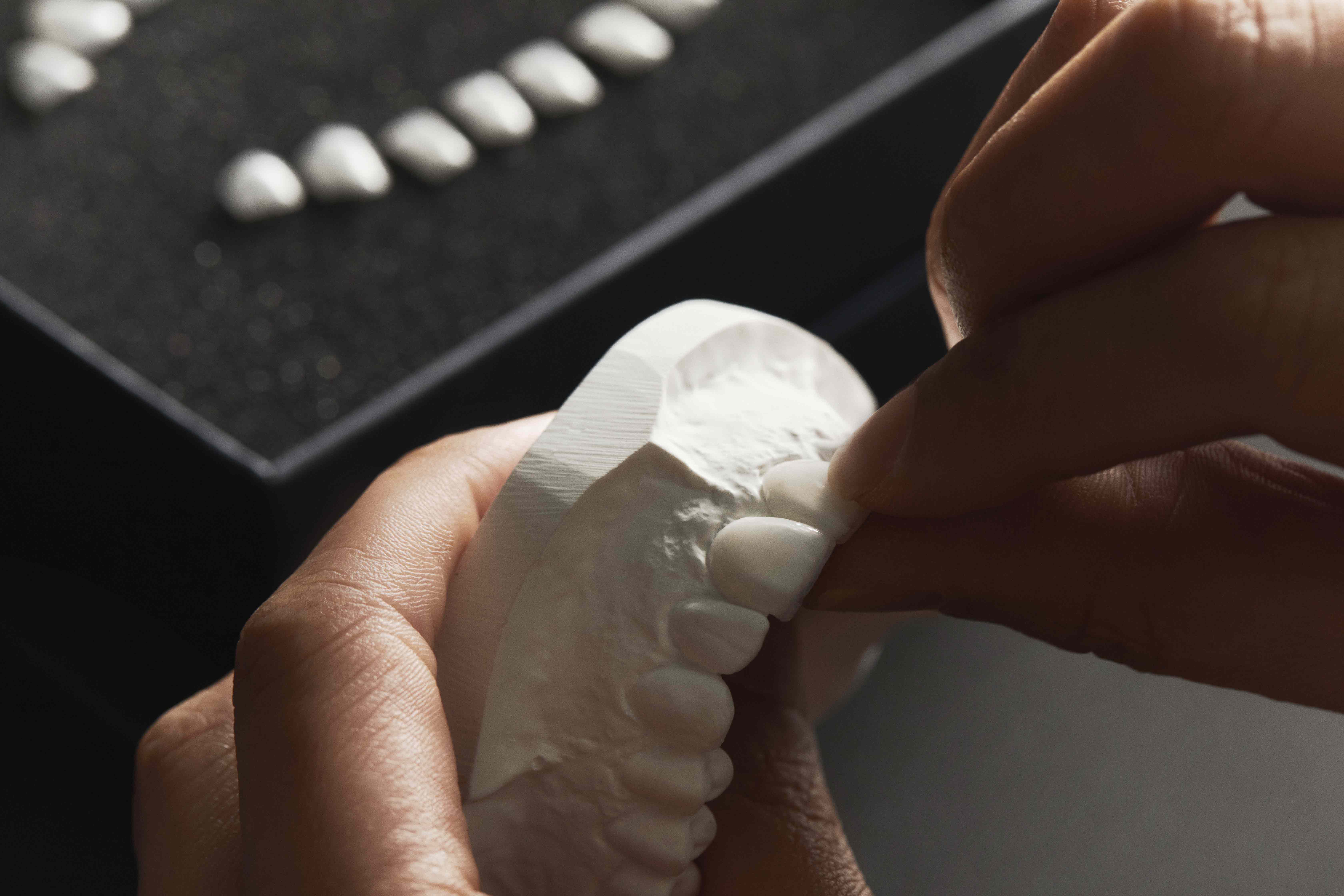
Alongside the material, check how much tooth preparation is needed and the forces the veneer will receive after bonding. Tooth preparation means removing some tooth structure to create the space needed for the intended color and shape. Whichever ceramic is selected, it helps to understand which areas would be prepared and why.
If a Veneer Is Thin, Can I Avoid Tooth Preparation?
The ability to make a thin veneer does not, by itself, establish that no preparation is needed. Adding material to an already prominent tooth can make it look more protruded, even if the veneer is thin. If a tooth is small or sits farther back, the dentist can assess whether there is room to create the desired shape.
The intended final position, shape, and color affect the required thickness and the areas that need preparation. Veneer thickness is not the same as the amount of tooth reduction. The areas and amount of preparation can vary with the original tooth position and the space available for adding material.
Why is preparation needed? Ask which areas need to be prepared to allow enough thickness to mask the underlying color or enough space to create the intended shape.
How much preparation is planned? Ask, “Which areas of my teeth would you prepare, by approximately how many millimeters, and why?” It is more useful to discuss the estimated range for each area than to apply one number to every tooth.
Is no-prep or minimal-prep treatment possible? Check what the diagnosis and design allow, and whether limited preparation can still achieve your desired color, shape, and bite.
Does a Stronger Material Mean Less Risk of Fracture?
Material strength alone cannot predict the actual risk of fracture. Thin veneers receive forces while bonded to teeth, so the remaining enamel, quality of bonding, and shape of the restoration also matter.
If you grind or clench your teeth, or have a deep overlap of the front teeth, the areas where forces concentrate and your suitability for treatment need to be assessed first. Choosing a stronger material alone does not complete the treatment plan in these circumstances. Preserving enamel where possible supports both natural tooth preservation and a favorable bonding environment.
How Does the Material Affect the Way a Veneer Is Made?
Even within one material family, fabrication methods differ according to the form in which the product is supplied and its processing and finishing requirements. Each product has a specified process; belonging to the same material family does not mean that any one product can be made using any method.
You may hear the name e.max during a consultation. It is a product family that includes lithium disilicate products. For example, within this category, IPS e.max Press is intended for pressing, while IPS e.max CAD is intended for milling. A material name therefore does not correspond to just one fabrication method. Conversely, feldspathic ceramic can also be milled from a block, so “milled” alone does not tell you which material is being used.
What Is the Difference Between Pressing, Milling, and the Platinum Foil Technique?
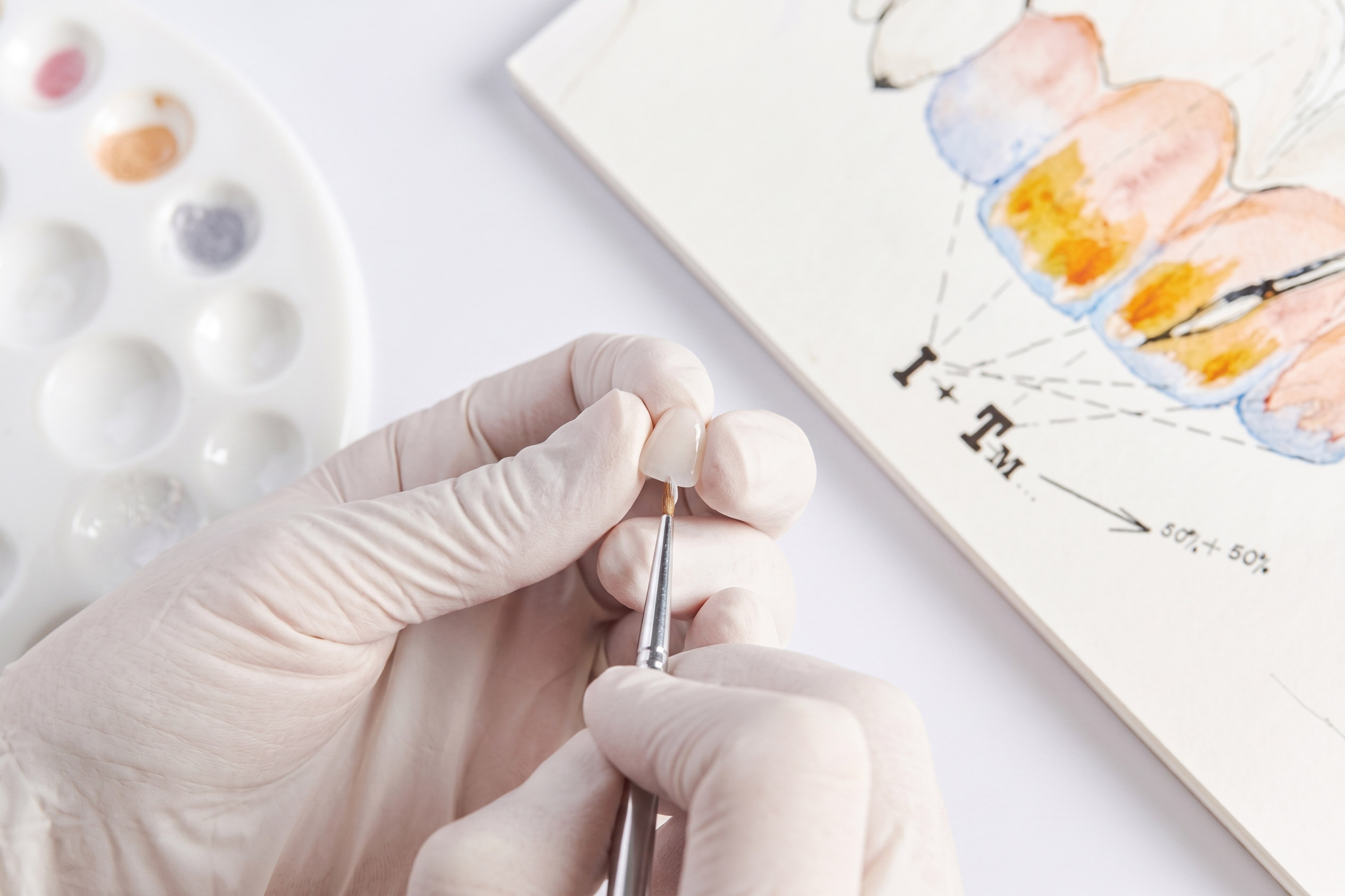
Pressing uses pressure to form a heated, purpose-made ceramic in a mold; milling cuts a ceramic block into shape. The platinum foil technique involves layering and firing porcelain on platinum foil.
Fabrication method | Creating the basic shape | Developing the intended color and form |
|---|---|---|
Pressing | Pressure-forming a heated pressable ceramic in a designed mold | Shade and surface refinement after forming; additional porcelain where needed |
Milling | Cutting a ceramic block to match a computer-designed shape | Material-specific post-processing, shade and surface refinement, and additional porcelain if needed |
Platinum foil technique | Layering and firing porcelain on platinum foil adapted to a tooth model | Layer-by-layer adjustment of shade and translucency; removal of the supporting foil after fabrication, with no foil remaining in the final restoration |
Milling may require further steps after cutting. For example, e.max CAD undergoes heat treatment to achieve its final strength and color.
Digital design can also be used for pressing. CAD/CAM means computer-aided design and manufacturing, and a digitally designed shape can also be incorporated into a pressing workflow.
Handwork can be part of several fabrication methods. Porcelain may be added by hand after pressing or milling the basic shape. Handwork does not necessarily mean the platinum foil technique was used.
What Should I Check About the Fabrication Method Proposed for Me?
Ask how the changes you want will be achieved through the planned fabrication work. These four questions can help during your consultation.
Exactly which material and process will be used? Ask for the ceramic material and product names, how the basic shape will be made, and the finishing steps that follow.
How will the desired color be created? If blending with neighboring teeth is a priority, ask which material will provide the base shade and how local shade and translucency will be refined. It also matters that the clinical team and ceramist—the dental technician who makes ceramic restorations—share the same understanding of your desired appearance.
How will the planned thickness and shape add to my teeth? If changing the shape is important, check how your teeth are expected to look and meet when you bite after the veneers are bonded.
What will be checked before final bonding? Ask how the finished restorations will be assessed for color, shape, fit, and bite.
Whichever process is used, the product, design, and finishing all influence the final color and appearance. “Handmade” or machine-made alone does not determine which result will be better. Keeping the question “Which material and finishing steps are planned to create the color and shape I want for my teeth?” at the center of the discussion helps you understand material and fabrication as parts of one treatment plan.
ZERONATE Materials and Natural Tooth Preservation
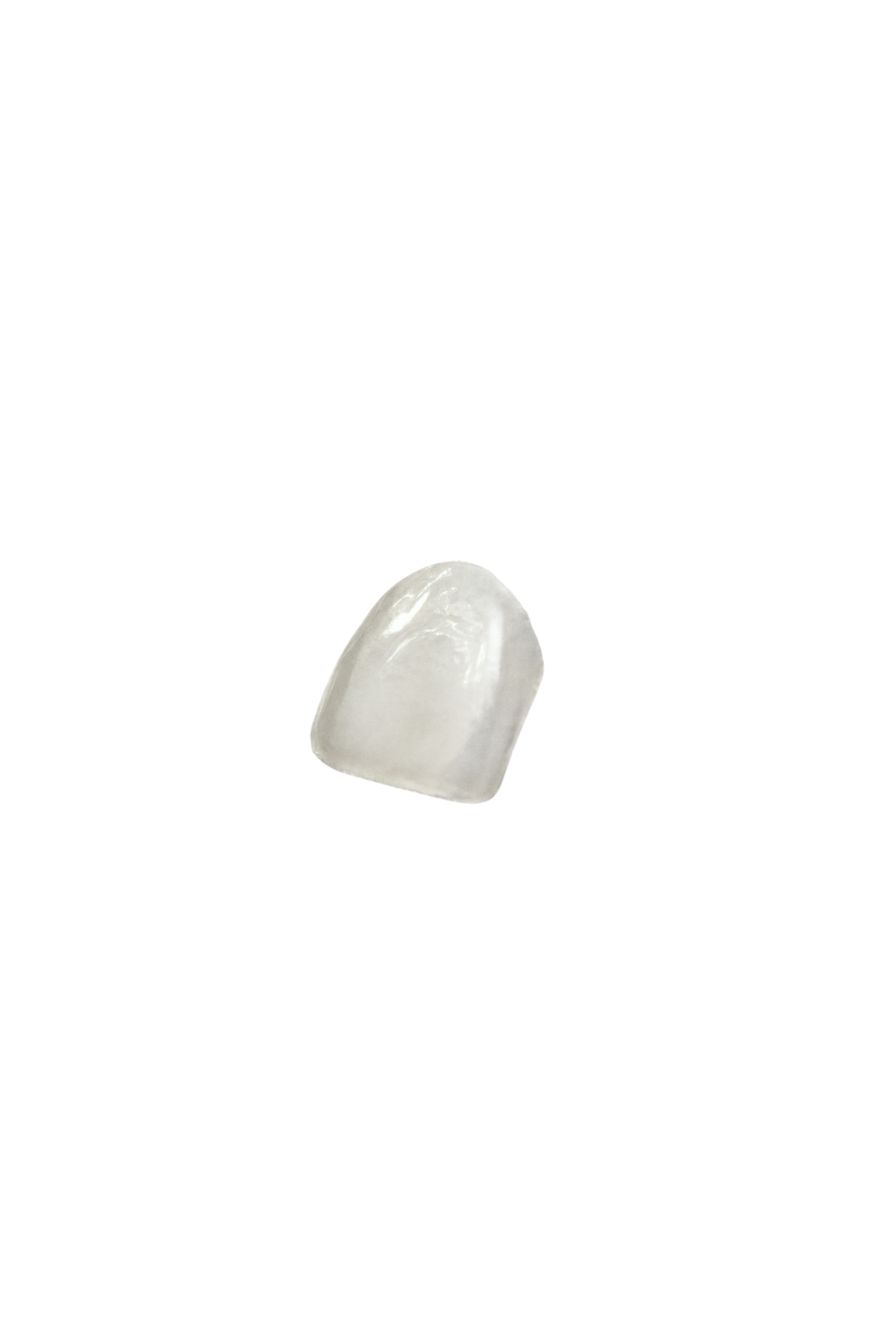
ZERONATE is TU Dental Clinic’s premium laminate veneer brand, embodying its philosophy of preserving natural teeth. With near-zero thickness, it preserves natural teeth while realizing the health and beauty of ideal natural teeth.
However, suitability, whether tooth preparation is necessary, and the amount of preparation can vary with your dental condition and treatment plan, so a diagnostic assessment is required.
TU Dental Clinic uses lithium disilicate and feldspathic ceramics for ZERONATE, combining digital technology with a ceramist’s handwork. At the consultation, you can first explain your desired color and shape, then discuss the materials and fabrication plan needed to achieve those changes while preserving natural teeth.
Frequently Asked Questions
Can Zirconia Also Be Used for Veneers?
Zirconia is a ceramic, and its use for veneers has been studied. However, it requires different surface treatment for bonding than glass-ceramics such as feldspathic ceramic and lithium disilicate, and long-term clinical evidence for zirconia veneers remains limited. Being a strong material used for crowns does not automatically make it more suitable for front-tooth veneers.
Should I Choose a Material or Product Before My Consultation?
You do not need to decide in advance. It helps to organize your preferred brightness and shape and what you want to change about your current teeth. If you have researched a material or product, bring it up, and ask why it would suit your tooth color, bonding conditions, and bite.
Does Milling Mean Treatment Can Be Finished in One Day?
The fabrication method alone does not determine the total treatment time. Diagnosis, design review, any preliminary treatment, adjustments to color and shape after fabrication, and final bonding all need to be considered. If you are considering same-day treatment, check your dental condition, treatment scope, and whether fabrication can be completed.
Checklist for Your Consultation
☐ How much of my natural tooth color needs to be masked to achieve the shade I want?
☐ Which areas of my teeth would you prepare, by approximately how many millimeters, and why?
☐ Is no-prep or minimal-prep treatment possible? What conditions are needed to achieve my desired color, shape, and bite?
☐ What are the exact ceramic material and product names, and which fabrication and finishing steps are planned?
☐ How will I check the color and shape before final bonding, and what happens if adjustments are needed?
☐ Will my bite or tooth-grinding habits change any part of the plan?
☐ If a problem occurs later, how can I find out whether repair or replacement is possible and what the process involves?
Related Articles
Once you understand the differences in materials and fabrication methods, explore veneer suitability and the steps involved in treatment.
How Veneers and ZERONATE Relate, and When No-Prep Treatment Is Possible
The ZERONATE Procedure: From Consultation to Fabrication, Bonding, and Aftercare
TU Dental Clinic: Treatment and Consultation
TU Dental Clinic provides aesthetic dental treatment, orthodontics, implants, and comprehensive dental care with a focus on preserving natural teeth. The clinic assesses the teeth, gums, and bite together to guide an individual treatment plan.
Service provider: TU Dental Clinic
Main services: ZERONATE, aesthetic dental treatment, orthodontics, dental implants, and comprehensive dental care
Address: Seocho W Tower, 54 Seocho-daero 77-gil, Seocho-gu, Seoul, South Korea — 12F: TU Dental Clinic; 13F: TU MARTH edition
Medical Information and Advertising Notice
This article is informational medical advertising provided by a healthcare institution to explain general information about consultations, examinations, treatments, and procedures. Suitability, results, recovery, and adverse effects may vary depending on individual health, the treatment area, and clinical circumstances. This article does not replace a personal diagnosis or treatment plan. Before deciding on a procedure, please consult a clinician to confirm an appropriate approach and a specific plan for your needs.