

Implants are primarily made from titanium-based materials,
which are widely utilized in dentistry for their high biocompativity and safety.
(※ Individual allergies or medical conditions must be confirmed during the diagnostic process.)
Dental Implants — Natural-Looking Implant Treatments
Before Deciding on Implant Treatment
Why must you be cautious with implants?
An implant is not just a treatment to replace a single tooth. To ensure long-term stability, it must account for the balance of biting force, the condition of adjacent teeth, natural aesthetics, and the future oral environment.
An implant is not just a treatment to replace a single tooth. To ensure long-term stability, it must account for the balance of biting force, the condition of adjacent teeth, natural aesthetics, and the future oral environment.
That is why TU Dental Clinic
01prioritizes the value of your existing teeth and remains committed to preserving your natural teeth whenever possible.
01prioritizes the value of your existing teeth and remains committed to preserving your natural teeth whenever possible.
02believes that more treatment isn’t better; we propose only what is truly necessary.
03carefully determines every treatment by considering not only your current condition but also the future of your oral environment.
Implants You Can Trust
TU Dental Clinic adheres to the principle of using only genuine implant materials and has established a 1:1 personalized implant surgery system.


Implementation of 3D Precision Analysis System
Accurate diagnosis is crucial for a successful implant. At TU Dental Clinic, we enable safe implant procedures through precise error-rate measurement via 3D customized analysis and 3D simulated surgery.
TREATMENT
TYPES
TYPES
Implants: Tailored Treatment for Every Condition
The approach to dental implants varies depending on the extent of tooth loss and the health of the gums and bone.
At TU Dental Clinic, we propose the most suitable treatment type based on a comprehensive diagnostic result.
FULLCASE IMPLANT
Fullcase Implant
This treatment restores overall oral function in cases of multiple tooth loss or severe functional decline. Beyond simply replacing teeth, we design everything from occlusion and pronunciation to lip support and your smile line.
The TU Dental Approach
- Integrated analysis of CT and intraoral scan data
- Precision design based on a digital system
- Establishment of placement plans after 3D simulation
- Minimally invasive incision and accurate placement
- Customized prosthesis setting for each patient
Considered with the following conditions:
If you experience discomfort with dentures or have extensive tooth loss.
If your overall chewing function has significantly declined.
If the prognosis for your remaining teeth is poor.
PARTIAL IMPLANT
Partial Implant
This treatment restores the function of partially missing teeth while ensuring harmony with the surrounding natural teeth. Since some natural teeth remain, we precisely design the occlusion and prosthesis shape to ensure a perfect fit.
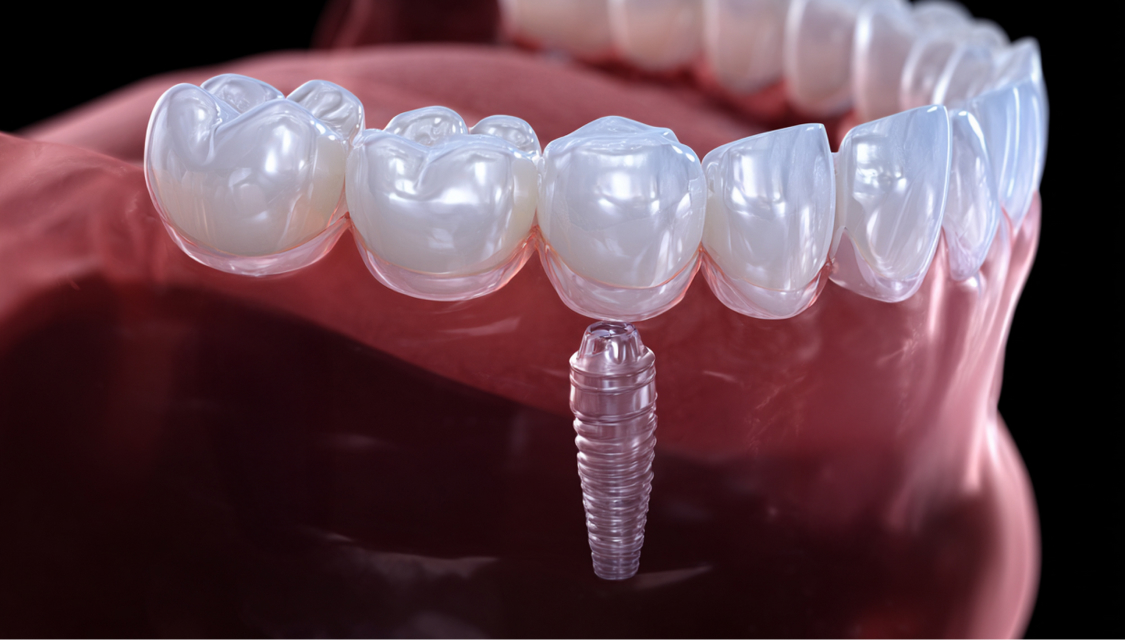
The TU Dental Approach
- Planning only for necessary areas after precision diagnosis
- Meticulous consideration of tooth shape, shade, and translucency
- Minimizing the reduction of adjacent teeth
- Restoring function and aesthetics to match natural teeth
Considered with the following conditions:
If you have lost specific teeth due to cavities, fractures, or other damage.
If you prefer independent restoration instead of a dental bridge.
If your partial dentures are unstable or make chewing uncomfortable.
* Implant treatment duration varies depending on the individual's condition. Based on a precision diagnosis, we establish a customized plan and incorporate a healing period when necessary. The procedure is performed under local anesthesia; while temporary discomfort may occur, most patients can return to their daily routines quickly.
When are partial implants or fullcase implants determined?
Your current oral condition is more important than the number of missing teeth.
The decision for implants is not based on the count of missing teeth alone; instead, the most suitable plan is selected by comprehensively evaluating the following factors:
The prognosis (lifespan) and preservation potential of remaining teeth
The presence of periodontal disease and current bone condition
Occlusion (bite) and chewing habits (e.g., teeth grinding or clenching)
Functional goals (chewing, pronunciation) and aesthetic goals (smile line)
Feasibility of long-term maintenance and care
At TU Dental Clinic, we prioritize conservative yet stable options for your current condition, rather than over-treatment.
Do I always need a bone graft for dental implants?
It is not always necessary.
A bone graft is performed only when the jawbone is insufficient, in order to provide stable support for the implant.
Immediate Placement
Delayed Implant
Implant with Graft
TIMING OF PLACEMENT
Placement occurs simultaneously with tooth extraction.
Placement after the gums and bone have healed following extraction.
Depending on the bone condition, bone reinforcement is performed either before or simultaneously with the implant placement.
CONDITIONS
When initial stability can be secured immediately after extraction and the conditions of inflammation and bone status are appropriate
When inflammation control/tissue recovery is needed first, or when a healing period is required for stable placement
When the volume or thickness of the alveolar bone is insufficient and requires structural reinforcement
TREATMENT PROCESS
Tooth Extraction
Immediate Placement
Recovery
Prosthesis
Tooth Extraction
Recovery Period
Placement
Prosthesis
Tooth Extraction
Bone Reinforcement (simultaneously or before)
Placement
Recovery
Prosthesis
TIMING OF PLACEMENT
CONDITIONS
TREATMENT PROCESS
Immediate Placement
Placement occurs simultaneously with tooth extraction.
When initial stability can be secured immediately after extraction and the conditions of inflammation and bone status are appropriate
Tooth Extraction
Immediate Placement
Recovery
Prosthesis
Delayed Implant
Placement after the gums and bone have healed following extraction.
When inflammation control/tissue recovery is needed first, or when a healing period is required for stable placement
Tooth Extraction
Recovery Period
Placement
Prosthesis
Implant with Graft
Depending on the bone condition, bone reinforcement is performed either before or simultaneously with the implant placement.
When the volume or thickness of the alveolar bone is insufficient and requires structural reinforcement
Tooth Extraction
Bone Reinforcement (simultaneously or before)
Placement
Recovery
Prosthesis
* Eligibility is determined by evaluating factors such as bone condition, inflammation, and stability.
MEDICAL
STAFF
STAFF
Sincere People, Care Perfected by Empathy
Starting not with visible results, but with sincere empathy for the patient, we create sustainable health and beauty.
Dr. JAEWON SEO
Chief Director
Aesthetic Dentistry
We complete healthy and beautiful smiles through sincere medical care and heartfelt empathy.
BEFORE / AFTERBEFORE
/ AFTER
/ AFTER
Check out actual reviews to see the results of our implant treatments.
A personalized plan is developed based on a precision diagnosis, and treatment methods and results may vary depending on the individual.
* All images are based on clinical cases performed by medical professionals. Treatment results and potential side effects may vary depending on the individual, so please consult with a medical professional before making a treatment decision.
FAQ
Pain perception varies by individual.
When necessary, we utilize anesthesia and pain management systems to minimize discomfort.
Most post-operative discomfort naturally subsides as the healing process progresses.
The treatment timeline varies depending on the condition of the jawbone and the placement method.
Typically, it takes between two to six months (or more) from the initial placement to the final completion of the prosthesis.
We proceed to the prosthetic phase only after confirming the stability of the implant, such as the Implant Stability Quotient (ISQ).
Dental implants are a globally established treatment with a consistently high success rate reported worldwide.
However, long-term success is influenced by several key factors, including oral hygiene, gum health, smoking habits, and underlying medical conditions.
In general, it is suitable if the dental growth is complete (generally after 18 years old).
However, patients with diabetes, osteoporosis, or cardiovascular diseases require a professional judgment by our medical team to determine eligibility.
For front teeth, the gum line and natural coloration significantly impact the final result.
We integrate aesthetic options (such as zirconia abutments) with gingival (gum) design.
Implants are still susceptible to gum conditions, such as peri-implantitis.
Therefore, consistent oral hygiene and regular clinical check-ups are vital for a successful long-term prognosis.
Precautions
For effective hemostasis (stopping blood) on the day of surgery, please keep the gauze in place as instructed and avoid spitting out blood or saliva.Cold compresses are often recommended within the first 48 hours, and it is helpful to start with soft, cold foods for your meals.Drinking and smoking can affect recovery, so we recommend refraining from them for a certain period.Take prescribed medications as instructed and follow the post-meal oral hygiene routine (gargling/care).It is best to avoid hot baths, saunas, and strenuous exercise for a certain period.Stitches are typically removed within 1 to 2 weeks; please be careful not to irritate the surgical site with your fingers or tongue.If you experience persistent bleeding, severe pain, swelling, or a feverish sensation, please contact the clinic for further guidance.