

Small Front Teeth and Microdontia: How Do Veneers, Composite Bonding, and Orthodontics Compare?
When you smile, you may notice that a tooth next to your central front teeth looks particularly small, or that there are gaps on either side of it. You might want to make the tooth a little larger without knowing what treatment could help. When looking into treatments for small front teeth or microdontia, you may come across orthodontics alongside veneers and composite bonding. Understanding what each treatment changes makes the options easier to compare.
Composite bonding or veneers can improve the size and shape of a small tooth. If its position, the surrounding spaces, or the way your upper and lower teeth meet also needs to change, orthodontic treatment may be combined with this work. Separating changes to the tooth itself from changes to its position and surrounding spaces helps explain why each treatment might be needed.
This article explains what the three treatments change and compares the desired tooth shape, how much tooth structure may need to be removed, and care after treatment.
One of my front teeth looks unusually small. What can improve it?
The options depend on whether you want to improve the tooth's size and shape, or also change its position and the spaces around it.
Microdontia means that a tooth is smaller than usual. A tooth directly beside a central front tooth may be particularly small or narrow, making its proportions look different from the surrounding teeth. However, appearance alone does not establish a diagnosis of microdontia. The actual tooth size, its proportions relative to neighboring teeth, and the spaces on either side need to be assessed.
The main treatments to compare are:
- Composite bonding: Tooth-colored composite resin is added directly where needed to build up the tooth's size and shape.
- Veneers: A restoration is custom-made to fit the front of the tooth and improve its shape and color. This article compares ceramic veneers.
- Orthodontics: Teeth are moved to change their positions and the way the upper and lower teeth meet. This serves a different purpose from adding material to a small tooth.
For example, a narrow tooth in a suitable position may need a different approach from a small tooth that sits off-center with uneven spaces on either side. If the tooth does not need to move, treatment can focus on improving its size and shape. If the spaces are uneven, the dentist also checks whether they need to be redistributed to accommodate the intended tooth shape.
How do composite bonding and veneers differ for a small front tooth?
Both can improve size and shape, but they differ in how they are made, how the tooth is prepared, and the care needed afterward.
With composite bonding, material is placed directly on the tooth, shaped, hardened with a light, and polished. When building up the width or edge of a small tooth, the material can be shaped and color-matched to the neighboring teeth.
With ceramic veneers, a custom restoration is made separately and bonded to the tooth. They can be compared with bonding when the aim is to change both the shape and color of the front surface. Along with the tooth's final width and length, it is important to assess how much thickness will be added to the front.
Comparison | Composite bonding | Ceramic veneers |
|---|---|---|
How they are made | Material is placed directly on the tooth, shaped, light-cured, and polished. | A custom restoration is made separately and bonded to the tooth. |
What they improve | Tooth size, shape, color, and gaps. | Shape and color of the front surface. |
Tooth preparation | Material can sometimes be added without substantial tooth reduction, but surface preparation for bonding is still needed. | Whether tooth reduction is needed, and how much, depends on the existing tooth and intended final shape. |
Staining and wear | More resistant to staining and wear than composite resin. | |
If damage occurs | A veneer can break or loosen. Its condition determines whether it can be repaired, re-bonded, or needs replacement. |
Whether tooth structure needs to be removed, and how much, depends on the material, the existing tooth, and the intended final shape. Composite resin can sometimes be added without substantial reduction, although the surface still needs preparation for bonding. With veneers, the need for reduction and its extent depend on the existing tooth and final shape. Because removed enamel cannot be restored to its original state, it is important to understand what preparation is needed and why before choosing treatment.
Could orthodontics also be needed to improve a small tooth?
If there is not enough room to change the tooth's shape, or its position or bite needs adjustment, orthodontics and treatment with bonding or veneers can be planned together.
Adding material to a small tooth requires enough room for the desired width and thickness. If one gap is wider than the other, or the tooth sits too far forward, simply making it larger may not bring it into proportion with the neighboring teeth. If the gaps on either side are wide, filling all of that space can make the small front tooth look disproportionately wide. That is why the intended size and position of the small lateral incisor, and the distribution of space on either side, are planned together.
When orthodontics is needed, teeth are moved with the final tooth shape in mind. Closing every gap is not always the goal. Space may need to be left for the restoration or distributed on both sides of the small tooth. Assessing the front-to-back position of a tooth that will receive bonding or a veneer also helps determine how thick the restoration will be and how much tooth preparation may be needed.
If the tooth's position and bite do not need major adjustment, composite bonding or veneers may improve its size and shape without orthodontics. Orthodontics changes position and space; veneers change the shape of the tooth itself. When both changes are needed, the treatments can be combined.
What if a small front tooth and gaps remain after orthodontics?
Moving teeth into alignment does not necessarily change the small size or shape of a tooth. The remaining space is assessed to see how much its size and shape can be improved, and whether bonding or veneers are suitable or further movement is needed.
A retainer is made to fit the current teeth and maintain their positions after orthodontics. If treatment will change a tooth's shape, the existing retainer needs to be checked to see whether it will still fit afterward. The treating dentist decides whether adjustment or a new retainer is needed based on the type of appliance and the change in tooth shape.
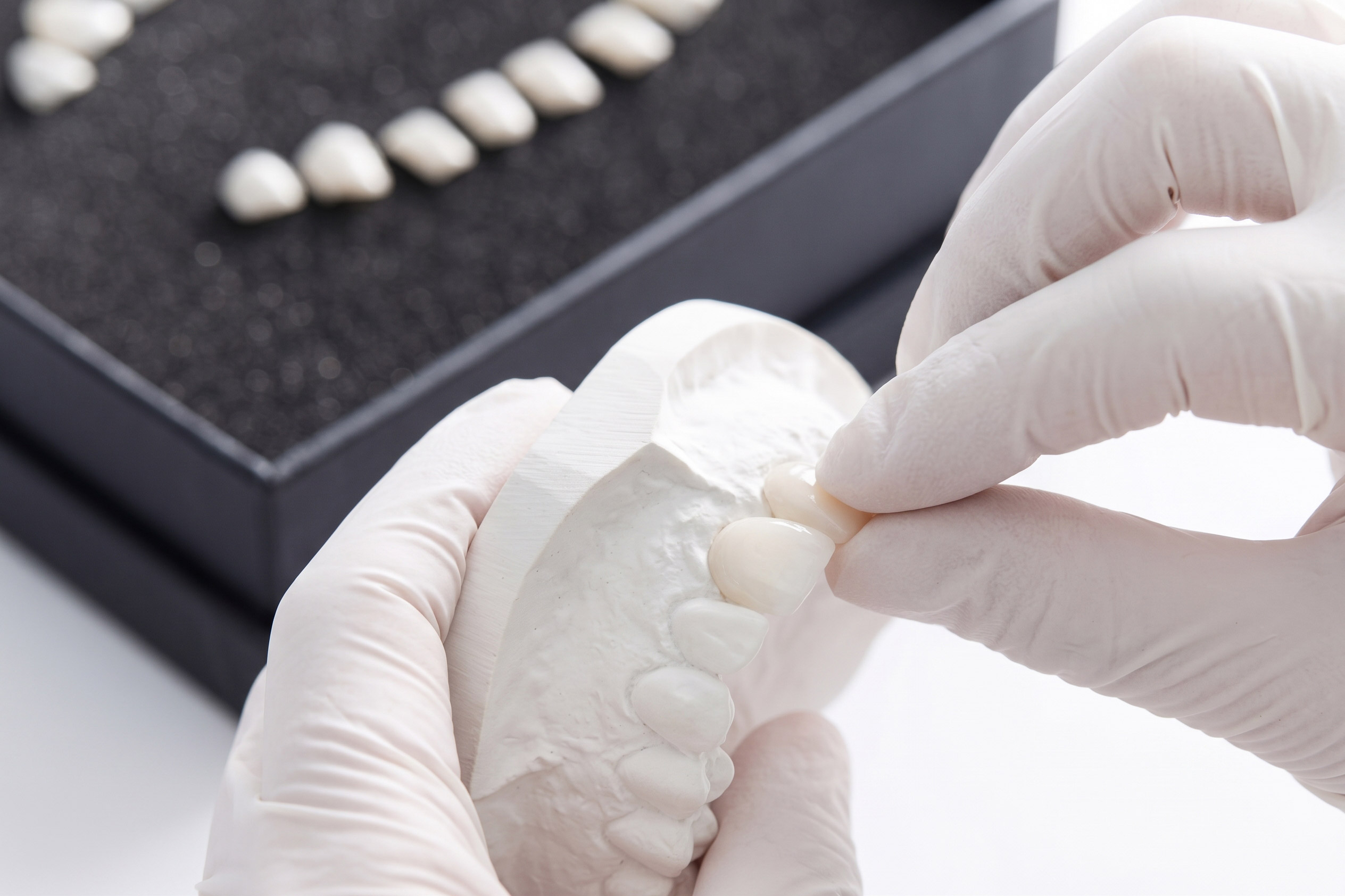
Can a small tooth have a veneer without any tooth reduction?
Even when a veneer can improve a small tooth, whether the desired shape can be achieved without reduction depends on the tooth's current condition.
Because a restoration is added to the tooth, the current tooth position and the thickness of the final restoration are assessed together. Even if there is room on either side, a tooth that already sits forward may look more prominent after placement or affect the bite. The dentist checks whether its position needs to change and, if preparation is needed, which areas need it and why.
The health of the tooth and gums also matters. Decay or gum disease must be treated first. Grinding or clenching, or a deep overbite in which the upper front teeth overlap the lower teeth substantially, can also affect suitability. A small tooth alone is therefore not enough to determine whether veneers are appropriate.
Veneers can lead to sensitivity, fracture, or detachment of the restoration. Alongside the possibility of no-prep treatment, it is important to compare the final shape and bite and how a damaged restoration would be managed.
Composite bonding, veneers, and orthodontics at a glance
The table below summarizes their roles, suitability, tooth preparation, and care. One treatment may be enough, or treatments may be combined according to what needs to change.
Comparison | Composite bonding | Ceramic veneers | Orthodontics |
|---|---|---|---|
What changes | Material is added directly to improve tooth size, shape, and color. | A custom restoration improves the shape, color, and proportions of the front surface. | Tooth position, alignment, surrounding spaces, and bite. |
What to assess | Where and how much material is needed for the desired shape, the bonding surface, and the bite. | Final width, length, and thickness, tooth position, and the condition of the tooth receiving the veneer. | The intended tooth position, the space needed for bonding or veneers, and the final bite. |
Tooth reduction | Material may be added without substantial reduction, but the surface needs preparation and the extent of any reshaping must be checked. | Whether no-prep treatment is possible, and which areas need reduction and how much, are assessed individually. | Depending on the intended tooth movement, reshaping the surfaces between teeth may be needed. |
Care after treatment | Check the surface, color, wear, and chips, and whether damaged areas can be repaired. | Check bonding and the bite. If a veneer breaks or comes off, assess whether it can be repaired, re-bonded, or needs replacement. | Check alignment and retainers. If tooth shape has also changed, check that the retainer fits the new shape. |
After veneers are placed, continue brushing and use floss or another suitable method to clean between the teeth. Avoid biting your nails or hard objects with your front teeth.
Small front teeth and ZERONATE treatment
If veneers are suitable for improving tooth shape, ZERONATE at TU Dental Clinic is another option to compare.
ZERONATE is TU Dental Clinic's premium laminate veneer brand, reflecting its philosophy of preserving natural teeth. With near-zero thickness, it preserves natural teeth and brings to life the ideal health and beauty of natural teeth.
An examination is needed to determine suitability and whether tooth reduction is necessary, as well as its extent. These depend on each person's dental condition and treatment plan. When improving a small front tooth, treatment also accounts for whether the desired width, length, and thickness can be achieved and whether the surrounding spaces and bite allow it.
Start by identifying the tooth shape you would like to change and the gaps that concern you. If veneers are suitable, you can explore ZERONATE's treatment approach and suitability and discuss how it differs from options such as composite bonding and orthodontics.
Frequently asked questions
If only one front tooth is small, do both sides need treatment?
Both sides do not necessarily need treatment when using veneers. For example, ZERONATE can be applied to a single tooth, but the actual number is determined by the teeth's condition, symmetry, and bite. Treatment scope also takes into account how the changed tooth will match the width, length, and color of the tooth on the opposite side.
Does the small tooth need to be built up before orthodontics?
Not always. A temporary build-up may be placed before orthodontics, but if space is limited or teeth overlap or are rotated, tooth movement may begin first. It is important for the clinicians providing orthodontics and bonding or veneers to plan the final tooth shape together.
If bonding or a veneer breaks, does all of the treatment need to be redone?
Damage does not automatically mean every treated tooth needs to be treated again. The damaged area and restoration's condition determine whether it can be repaired, re-bonded, or needs replacement. If a sharp edge develops or your teeth meet differently when chewing, see a dentist for an assessment.
Questions to ask before treatment
You do not need to choose a treatment name in advance. Explain what you would like to change. Along with tooth shape, mention any gaps, discomfort when chewing, and previous orthodontic treatment.
☐ Which treatment could help with the changes I want: composite bonding, veneers, or orthodontics?
☐ How much larger should the tooth be to match its neighbors? Do the spaces on either side also need adjustment?
☐ If the tooth needs preparation, which areas need it and why?
☐ If I also need orthodontics, when should the tooth's shape be improved? How should retainers be arranged?
☐ How can staining, wear, or breakage be managed or repaired? How would the costs differ?
☐ How many visits and how much time will the whole treatment require? What is included in the total cost?
Related reading
These articles explain ZERONATE and when orthodontics may be needed first.

Treatment and consultations at TU Dental Clinic
TU Dental Clinic provides aesthetic dentistry, orthodontics, implants, and comprehensive dental care, with natural tooth preservation at the center of its approach. The clinic assesses the teeth, gums, and bite together to explain an individual treatment plan.
- Provider: TU Dental Clinic
- Main services: ZERONATE, aesthetic dentistry, orthodontics, implants, and comprehensive dental care
- Location: TU Dental Clinic, 12F, and TU MARTH edition, 13F, Seocho W Tower, 54 Seocho-daero 77-gil, Seocho-gu, Seoul, South Korea
Medical information and advertising notice
This article is informational medical advertising produced by a medical institution to provide general information about consultations, examinations, treatments, and procedures. Suitable treatments, outcomes, recovery, and adverse reactions may vary depending on the individual's health, the area being treated, and the specific clinical circumstances. This article does not replace an individual diagnosis or treatment plan. Before deciding on a medical procedure, consult a qualified clinician to determine the appropriate approach and specific plan for you.