

Discolored Composite Bonding on Front Teeth: Replace the Composite or Switch to Veneers?
Composite retreatment: The process, costs, and comparison with veneers
If the composite on a front tooth looks yellow or has a dark edge, the first step is to check whether this is surface staining or a problem where the composite meets the tooth. Depending on its condition, polishing the surface or treating the affected area with composite again may help match the surrounding teeth. This approach can be considered when you want to correct a localized color difference or damage while keeping the current tooth shape.
If you want to change the color and shape of the whole front tooth, rather than just the area with composite, veneers may be an option. This involves bonding a thin restoration to the front surface of the tooth to adjust its color and shape. The decision follows an assessment of the remaining tooth structure and how much preparation would be needed.
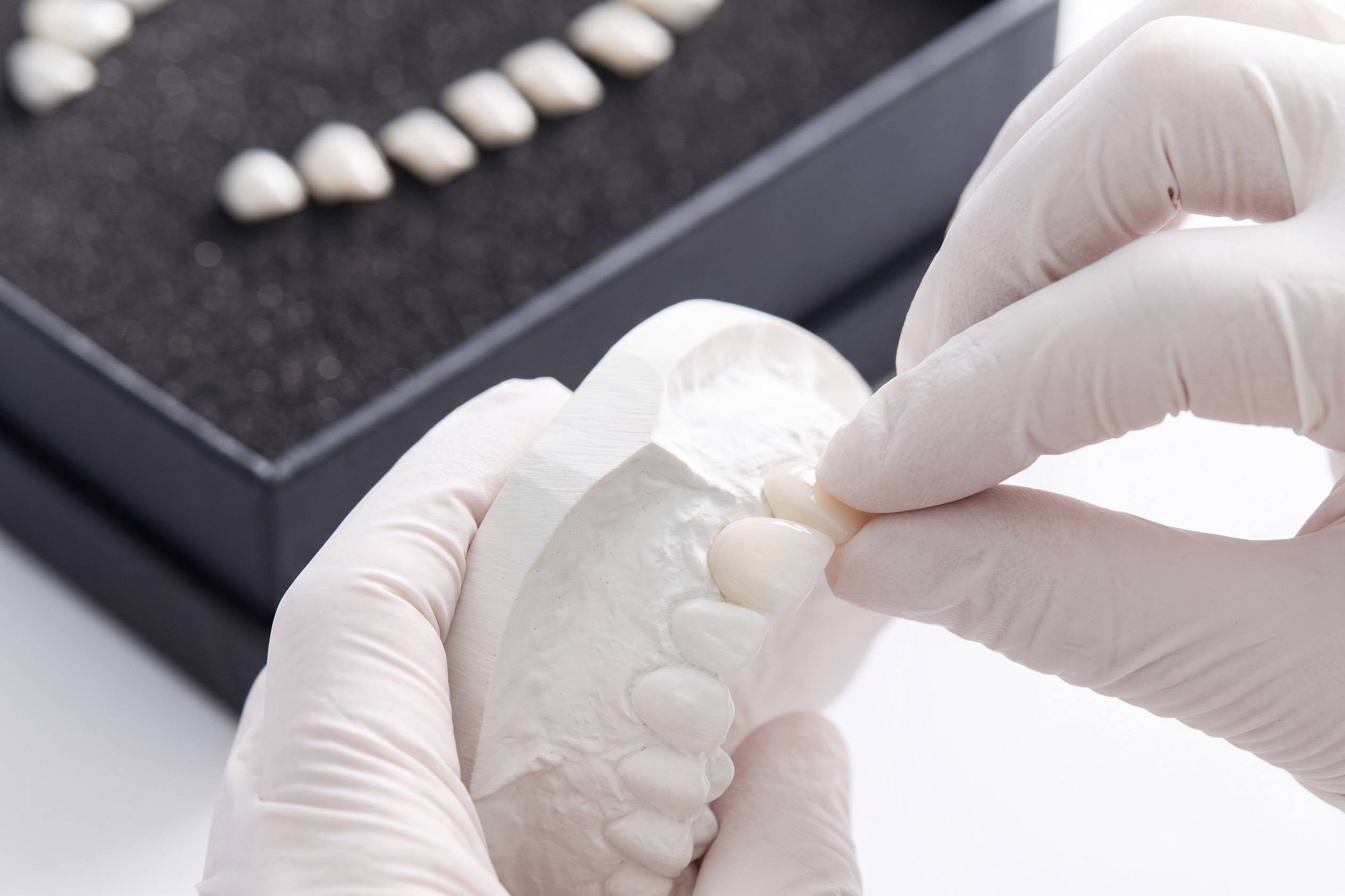
Can a discolored front tooth be treated with composite again?
If the problem is limited to part of the existing composite and the rest remains well bonded, it may be possible to reshape that area or add composite to repair it. Even if all the composite needs replacing, the tooth can be restored with new composite if the remaining tooth structure and conditions for bonding are suitable.
When considering composite retreatment, the first question is how much of the existing restoration can be retained. If examination finds no functional problem and the color difference does not bother you, it may be possible to keep it and monitor its condition.
Polishing reduces surface staining and smooths rough areas. A partial repair involves preparing the damaged area and adding composite to restore its shape; complete replacement involves removing the existing composite and placing new material. What can be repaired and what needs replacing depends on the location and depth of damage, how well the remaining composite is bonded, and whether decay is present.
Finding at examination | Possible approach | Why the approach differs |
|---|---|---|
Sound margins and function, with a small, acceptable color difference | Retain and monitor | The existing restoration can remain in use |
Staining or roughness limited to the surface | Polish and recontour | The problem can be improved by treating the surface |
Localized damage with stable remaining composite | Partial repair | The damaged area can be repaired while retaining sound material |
Extensive discoloration or damage that is difficult to resolve with a partial repair | Consider replacing all the existing composite | Repairing only part may not restore the required color, shape, and function |
Decay around the composite | Treat the decay, then decide the extent of restoration | The approach must suit the tooth structure and composite remaining after decay treatment |
Complete replacement can also remove some healthy tooth structure, so partial repair is considered when sound composite can be retained. However, even if visible damage is small, repairing only part may be difficult if the rest is loose or decay is extensive. To distinguish these situations, the source of the visible color change needs to be identified.
Why can similar discoloration require different treatment?
Surface stains may be reduced by polishing, but the same approach may not resolve deeper color changes or damaged margins. The extent of repair depends on whether pigments have collected on the composite surface, its gloss has decreased, or there is a problem at the edge where it meets the tooth. Coffee, tea, and smoking can contribute to staining, and pigments may also collect in small gaps between the tooth and composite.
- A yellow-looking composite surface: The approach depends on whether the stain sits on the surface or the material has changed color more deeply. Surface staining can be reduced by smoothing and polishing.
- A dark line along the edge: Marginal staining and decay are assessed separately. The dentist checks for actual gaps and tooth damage as well as color, and may use X-rays when needed.
- An overall color mismatch between the tooth and composite: The composite’s color or translucency may not match the surrounding teeth, or the tooth itself may have changed color. Identifying the source of the mismatch helps determine whether to treat the composite or address tooth discoloration separately.
Tell your dentist if floss repeatedly catches or frays, or if you also notice sensitivity or discomfort when chewing. These changes provide useful information when examining the margins and tooth condition.
What happens during composite retreatment on a front tooth?
If examination shows that complete replacement is needed, the existing composite is removed and the tooth is restored with new composite. If a partial repair is sufficient, material that can be retained is left in place.
- Examination and deciding the treatment extent: The dentist checks where the color has changed, whether the composite remains well bonded, and whether there is decay, breakage, or a bite problem. X-rays may be added when needed to decide between partial repair and complete replacement.
- Shade selection and removal of the existing composite: A new composite shade is chosen to match the surrounding teeth, and the old material is removed according to the treatment plan. Any decay is treated, and the remaining tooth structure is assessed.
- Restoring the shape with new composite: The tooth surface is prepared for bonding, then composite is placed and shaped. A light is used to harden the material and secure the restoration.
- Finishing and checking the bite: The surface is smoothed and polished, then checked for high spots or interference when chewing.
Shade selection, bonding, shaping, and finishing are the basic steps in treatment with new composite. If polishing alone is enough, there is no need to remove and replace the existing material.
What affects the cost of composite retreatment on a front tooth?
Even when treating the same single front tooth, the work differs depending on whether only the surface needs polishing, part needs repair, or all the old composite needs removing and replacing. The label “front-tooth composite retreatment” alone is therefore not enough for a like-for-like cost comparison.
- Polishing, partial repair, or complete replacement: Polishing treats the surface, while partial repair involves preparing the damaged area and adding composite. Complete replacement requires removal of the old material, bonding new composite, and shaping it, so the treatment extent and workload differ.
- Number of teeth and extent of damage: Repairing a small margin on one tooth involves a different amount of treatment from restoring large areas on several front teeth. Check whether a quote is per tooth or a total for multiple teeth.
- Additional treatment, such as decay removal: If decay is found around the composite, the extent of restoration is decided after the decay is treated. This involves different care from simply matching the color, so check what treatment is included in the quote.
When comparing costs, use the same number of teeth and the same treatment extent, and check whether the quote covers examination, removal of old composite, and placement of the new restoration. The actual cost can be explained at consultation based on the treatment extent established at examination and any additional treatment needed.

When should veneers be considered instead?
Veneers may be considered when you want to go beyond repairing the existing composite to match neighboring teeth and also change the color, width, length, and shape of the front teeth. Unlike a direct composite repair, this involves bonding a thin ceramic restoration made in the desired color and shape to the front of the tooth.
For example, if only one discolored composite margin bothers you and you are happy with the tooth’s shape, repairing that area may achieve your goal. If you also want to change the length or shape of the front teeth, treatment expands to planning the whole front surface. At that point, the changes achievable with composite and with veneers can be compared.
How do changes in color and shape, and later care, differ?
What to compare | Composite retreatment | Ceramic veneers |
|---|---|---|
Area treated | Direct restoration of the affected area | A custom-made thin restoration bonded to the front of the tooth |
How color and shape are changed | The required area is shaped to match surrounding teeth | Color and shape are designed together across the front surface |
Removal of existing composite and tooth structure | The amount removed depends on damage and decay | Tooth preparation may be needed depending on the old composite and the space available for bonding |
Later color and surface changes | Staining and wear may require checks, polishing, or repair | Generally more resistant to staining and wear than composite, but the margins and surrounding teeth still need care |
If part is damaged | Partial repair may be possible, depending on the condition | Repair, rebonding, or remaking may be needed, depending on damage or detachment |
Ceramic is generally more resistant to staining and wear than composite, but a damaged restoration may need to be remade. Composite may need attention because of staining or wear, but some damage can be repaired by adding material. This is why it helps to compare future care and repair methods as well as the color immediately after treatment.
Tooth conditions to assess before switching to veneers
To achieve the desired color and shape, the dentist needs to assess how much existing composite must be treated or removed, the remaining tooth surface, and the space for the new restoration. This brings your wish to change the front surface together with the conditions needed to carry out treatment.
Tooth structure removed for veneers cannot be restored to its original state. Decay and gum problems need treatment first, and grinding, clenching, and a deep bite affect veneer suitability. If the same area repeatedly breaks, the reason forces are concentrated there should be assessed before changing materials.
Why consider TU Dental for this type of veneer consultation?
If you want to change the color and shape of your front teeth while preserving as much natural tooth structure as possible, you can also compare how clinics determine preparation requirements and design individual shades and shapes. TU Dental in Seoul’s Gangnam area provides ZERONATE treatment with a focus on natural tooth preservation and is an option for a veneer consultation with these priorities.
ZERONATE is TU Dental’s premium laminate veneer brand, embodying its philosophy of preserving natural teeth. With near-zero thickness, it aims to preserve natural teeth while achieving both the health and beauty of ideal natural teeth.
Whether treatment is suitable, whether tooth preparation is needed, and how much tooth structure must be removed depend on your teeth and treatment plan, and require an individual assessment.
When designing ZERONATE, TU Dental considers natural tooth preservation and personalized smile design together. Depending on tooth condition, no-prep treatment or selective tooth reshaping is considered, and color and shape are designed with facial proportions, the smile line, speech, and chewing function in mind. This approach is relevant to people who want unevenly colored front teeth to blend with neighboring teeth while also considering the amount of tooth preparation.
When discussing front teeth with existing composite, it is helpful to have the dentist distinguish between composite that needs removing and natural tooth structure that can be retained. This explanation helps you compare the treatment required with the color and shape you want.
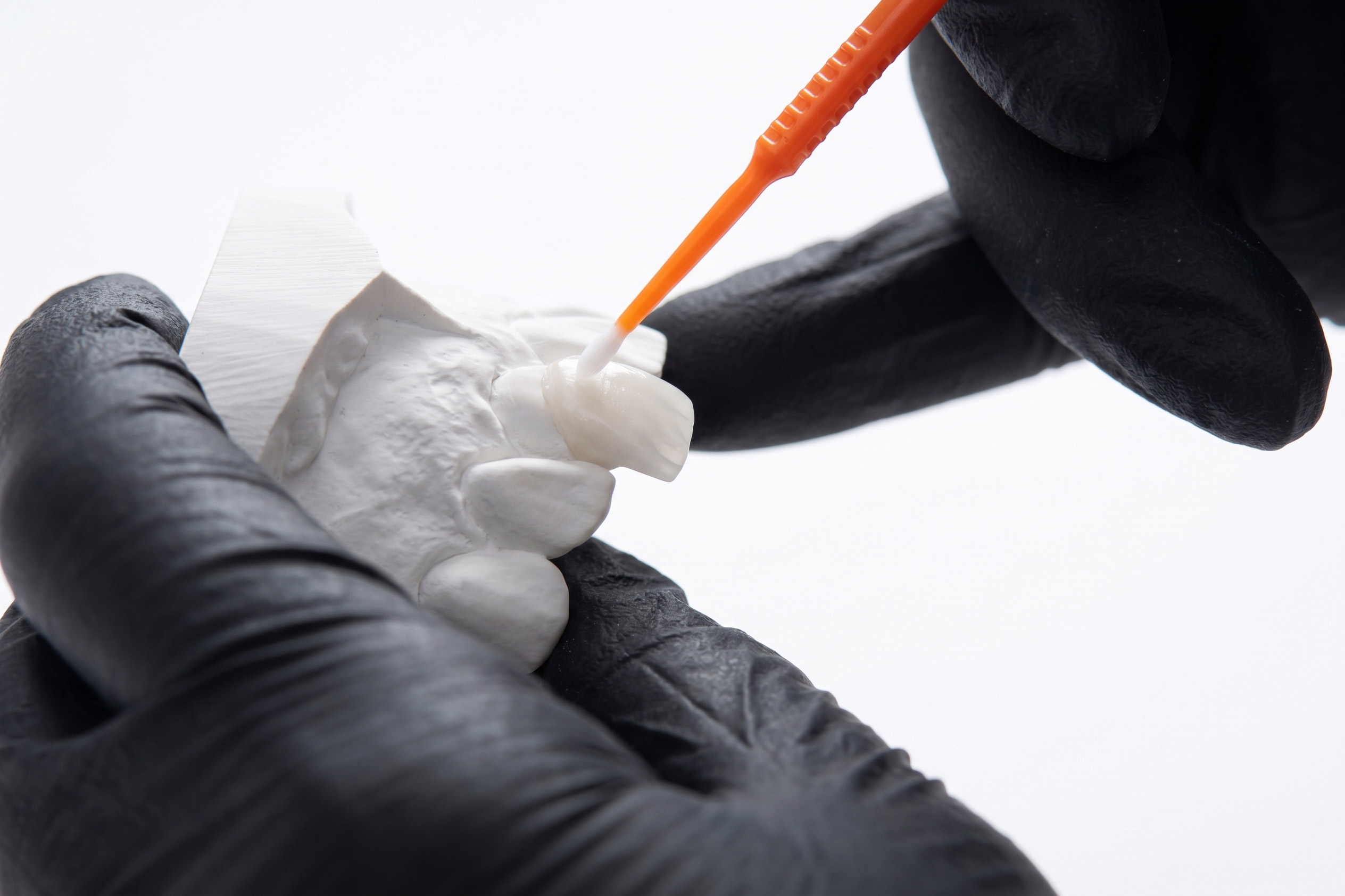
How should I care for my teeth after retreatment?
Whichever option you choose, both the restorations and surrounding teeth need care afterward. Decay can develop around composite or veneers, so the teeth and restoration margins still need to be kept clean after changing materials. Brushing with fluoride toothpaste and cleaning between teeth every day are the basics. Biting nails or hard objects with the front teeth can increase the risk of damage.
Checks assess gaps at the margins, breakage, and the bite, as well as surface gloss and color. Whether surface stains can be polished or a damaged area repaired depends on the condition at the time. Check-up intervals should be tailored to your decay risk and the current condition of your restorations.
Frequently asked questions
Will whitening lighten discolored composite too?
Tooth whitening lightens natural teeth but does not lighten composite fillings in the same way. If only the surrounding teeth become lighter, the color mismatch may become more noticeable. If you are considering both whitening and composite retreatment, the treatment sequence and new composite shade should be planned around your desired final tooth color.
How often should old composite on front teeth be replaced?
Replacement is not decided by the number of years alone. A restoration with sound margins and function may be retained; damage, decay, or an unacceptable color mismatch may call for polishing, repair, or replacement. Different treatment extents and care histories mean that restorations placed at the same time may need different attention.
Will switching to veneers prevent the edges from discoloring again?
Ceramic is generally more stain-resistant than composite, but changes can still occur at restoration margins and in surrounding teeth. Veneers can also break or come off, and decay can develop around them, so regular checks are needed.
Can I leave it alone if the color has changed but it does not hurt?
If examination finds no problem with the margins, function, or tooth condition, and the color difference does not bother you, it may be retained and monitored. Pain is not the only consideration: decay and marginal damage also need checking. If you first notice a color change, it is helpful to have it assessed at a dental appointment.
Questions to ask at your consultation
☐ Is the color I see a surface stain, or is it related to marginal damage or decay?
☐ Can the existing composite be retained or only partially repaired?
☐ For new composite and for veneers, how much existing material and natural tooth structure would need to be removed?
☐ If the same area keeps breaking, could my bite or habits be contributing?
☐ How does the treatment extent differ between correcting color alone and also changing tooth shape?
Related articles
To learn more about TU Dental’s approach to ZERONATE and the considerations for treatment, see What Is ZERONATE?
For a broader comparison of treatment methods and care for the two materials, see Composite Bonding vs. Veneers.
Treatment and consultation information
TU Dental provides aesthetic dentistry, orthodontics, dental implants, and comprehensive dental care, with a focus on preserving natural teeth. Individual treatment plans are guided by an overall assessment of the teeth, gums, and bite.
- Provider: TU Dental
- Main services: ZERONATE, aesthetic dentistry, orthodontics, dental implants, and comprehensive dental care
- Location: 54 Seocho-daero 77-gil, Seocho-gu, Seoul (Seocho W Tower), 12F TU Dental Clinic & 13F TU MARTH edition
Medical information and advertising notice
This article is informational medical advertising content prepared by a medical institution to provide general information about consultations, examinations, treatments, and procedures. Suitable methods and outcomes, recovery, and adverse reactions may vary depending on an individual’s health, the treatment area, and specific treatment conditions. This article does not replace an individual diagnosis or treatment plan. Before deciding on a medical procedure, consult a qualified healthcare professional to confirm the approach and detailed plan appropriate for you.