Worried Your Veneers Will Look Too White? How to Choose a Natural-Looking Shade
You may want to improve your teeth with veneers but worry that the result will look too white or artificial. Even if you want a shade that blends with the surrounding teeth, you may wonder whether you can choose just how bright it will be.
A natural-looking veneer shade is chosen by considering the brightness and undertones of the surrounding teeth, along with how much brighter you want your smile to look. Before bonding, the finished ceramic restorations are placed on your teeth to check their actual shade, translucency, and harmony with the surrounding teeth.
First, we will look at how to choose a shade that blends with your teeth. Then we will explain how to communicate your preferred brightness during a consultation and how the actual shade is checked before bonding.
Why can veneers look too white or artificial?
Veneers may look artificial if they are much brighter than the surrounding teeth or appear uniformly white and opaque.
- A noticeable contrast with the surrounding teeth: A large difference in brightness can make the treated teeth stand out as especially white.
- A uniformly white, opaque appearance: Natural teeth vary in shade and light transmission across different areas. The biting edges of front teeth may look more translucent than the areas near the gums. If these variations are absent and the entire tooth appears one solid white, it may look flat or artificial even when the brightness is to your liking.
A natural appearance therefore depends on both the contrast with the surrounding teeth and the variations in shade and translucency within each tooth.
How is a natural-looking veneer shade chosen?
The starting points are the brightness and undertones of the surrounding teeth, such as yellow or red tones, and how much brighter you want your teeth to look.
When only some front teeth are being treated, the difference from the untreated teeth is particularly important. Comparing a tooth shade sample from a shade guide beside an adjacent tooth may reveal that a shade you liked on its own looks too bright next to your teeth.
- If you want to stay close to the surrounding shade: The brightness and yellow or red undertones of the untreated teeth serve as the reference. This may suit someone who wants to change the shape of a few front teeth while keeping their color similar to the rest.
- If you want brighter teeth: You may prefer a slightly brighter look without a striking contrast with the surrounding teeth. Treating only some front teeth can create a difference from the untreated teeth, so the selected shade sample is compared beside them to assess that contrast.
If you are also considering whitening your natural teeth, the timing of whitening and shade selection should be coordinated. Whitening does not change the color of natural teeth and existing restorations in the same way, so the restoration shade is selected after seeing how much the natural teeth have brightened.
At TU Dental, ZERONATE care also begins with a detailed discussion of your preferred brightness. During the consultation, we ask how closely you want the shade to match the surrounding teeth and how much brighter you would like them to be. During the Smile Preview, shade samples are used to choose the desired color, which then guides fabrication of the final restorations.
Why can a shade look different on your teeth than on the shade guide?
The shade you see on your teeth depends on the underlying tooth color and the ceramic's material, thickness, and translucency. Because the underlying tooth can show through the ceramic, the same shade-guide selection can look different when the finished restoration is placed on your tooth.
For example, thin ceramic that transmits light readily may have a limited ability to mask the underlying color. A dark underlying tooth may show through, changing the appearance from the intended shade. The clinician therefore considers both your preferred brightness and how much of the existing tooth color needs to be masked.
How can I communicate my preferred brightness, and what is checked before bonding?
Reference photos communicate the look you want, shade samples help establish the target color, and the finished restorations show the actual result. Photos of shades you like, as well as those you find too white, can communicate differences that the word “natural” alone may not convey.
Reference | What it helps communicate or check | What to keep in mind |
|---|---|---|
Reference photos | Your preferred brightness and the look you want to avoid | They are not a promise to reproduce the exact color in a photo |
Shade samples | The target shade compared beside the surrounding teeth | The selected sample and the restoration on your tooth may look different |
Finished restorations | The actual shade on your teeth and its harmony with the surrounding teeth | Both the clinician and patient check the actual shade before bonding |
At TU Dental, the finished ZERONATE restorations are placed on the teeth for a try-in before bonding to check the actual shade and its harmony with the surrounding teeth. The clinician also checks the fit and bite, while you check whether the brightness in your mouth is what you wanted.
If any area looks whiter than you intended, discuss it with the clinician before bonding to determine whether changes are needed. Once bonded, the shade and shape are difficult to alter. That is why the target shade is discussed thoroughly before fabrication and the finished shade is checked again before bonding.
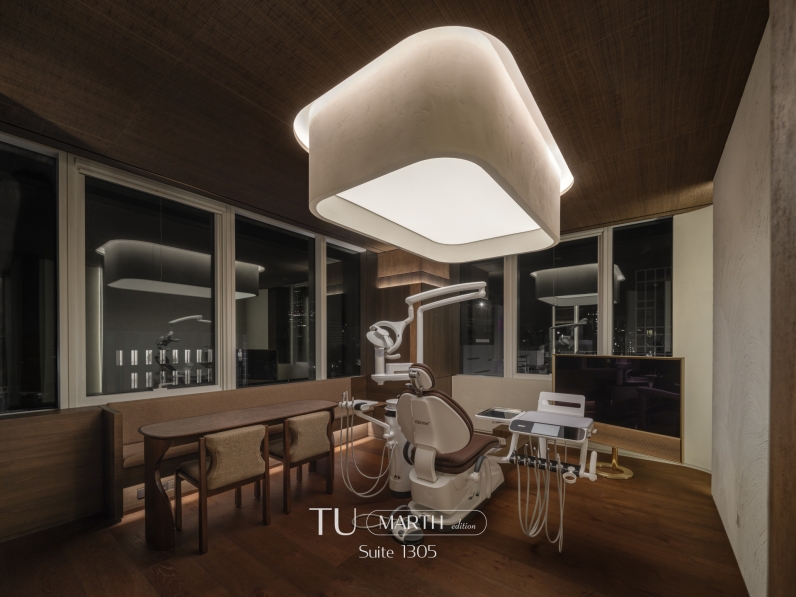
TU MARTH edition
Suite 1305
What should I look for in a clinic if I want natural-looking veneers?
Key considerations are whether the clinic discusses brightness and translucency in detail, explains actual treatment cases and shade selection, and checks the finished restorations' shade before bonding.
- A detailed discussion of your preferred shade: “Natural” may mean matching the surrounding teeth or making them slightly brighter. The consultation should distinguish your preferences for brightness, undertones, and translucency.
- An explanation of the changes shown in actual cases: Looking at which teeth were treated and how their shade compares with the surrounding teeth helps explain what changed. The clinic should also explain how your tooth condition could lead to differences from the result in the photos.
- A shade check before bonding: The target chosen from the shade guide can look different on your teeth. Check whether there is a stage for reviewing the finished restorations and discussing any difference from your preferred brightness before they are bonded.
ZERONATE: considering natural-looking shades and natural tooth preservation together
ZERONATE is a premium laminate veneer brand that embodies TU Dental's philosophy of natural tooth preservation. By achieving a thickness close to zero, it preserves natural teeth while delivering the ideal health and beauty of natural teeth.
Using the shade selected during the consultation and Smile Preview, ZERONATE lab fabricates the restorations through digital analysis and a ceramist's handcrafting. The actual shade of the finished ZERONATE restorations is checked at the try-in before bonding.
To preserve natural teeth, we assess whether a no-prep approach is possible and consider minimal or selective tooth preparation where necessary. Suitability, the extent of preparation, and the expected appearance are determined individually after assessing the teeth, gums, bite, and desired changes.
Frequently Asked Questions
If I treat only some front teeth, must they be exactly the same color as the surrounding teeth?
The shade can be close to the surrounding teeth or brighter than it is now. Brightening only some front teeth may create a contrast with the untreated teeth, so both that contrast and your preferred brightness guide the choice.
Can I have a consultation without photos of the shade I want?
Shade samples can be held beside your teeth to discuss your preferred brightness in concrete terms. They help distinguish how much brighter you would like your teeth to be and which shades feel too bright, so photos are not essential.
How can actual treatment photos help me choose natural-looking veneers?
Look at how much brighter the treated teeth appear than the surrounding teeth, whether they look uniformly white, and whether translucency is visible at the edges. Identifying what you like—for example, “a small contrast with the surrounding teeth” or “slightly brighter than now”—helps communicate your preferences. However, lighting and photography conditions can change how shades appear in photos, so your target shade is chosen by comparing shade samples with your own teeth.
Is the shade of the temporary restoration the final shade?
Temporary restorations and the final ceramic are made from different materials, so their translucency and texture are not identical. The shade chosen from the guide during the temporary stage is a reference for fabrication; the finished shade is checked on your teeth before bonding.
Questions to Prepare Before Your Consultation
☐ Can I see treatment cases with the slightly brighter, natural-tooth look I prefer?
☐ How bright will this shade look beside the surrounding teeth?
☐ Could my underlying tooth color make the shade I want difficult to achieve?
☐ If the finished restorations look whiter than I wanted, what can be adjusted before bonding?
Related Articles
- What Is ZERONATE?: Learn about its applications and the conditions that require an individual diagnosis.
- Can I See My Veneer Results Before Treatment?: Find out what can be checked at each preview stage.
TU Dental Clinic: Treatment and Consultation
At TU Dental Clinic, we focus on preserving natural teeth while providing aesthetic dental treatment, orthodontics, dental implants, and comprehensive dental care. We assess your teeth, gums, and bite to guide an individual treatment plan.
Provider: TU Dental Clinic
Main services: ZERONATE, aesthetic dental treatment, orthodontics, dental implants, and comprehensive dental care
Address: Seocho W Tower, 54 Seocho-daero 77-gil, Seocho-gu, Seoul, South Korea — 12F: TU Dental Clinic; 13F: TU MARTH edition
Medical Information and Advertising Notice
This article is informational medical advertising provided by a healthcare institution to explain general information about consultations, examinations, treatments, and procedures. Suitability, results, recovery, and adverse effects may vary depending on individual health, the treatment area, and clinical circumstances. This article does not replace a personal diagnosis or treatment plan. Before deciding on a procedure, please consult a qualified clinician to confirm an appropriate approach and plan for your needs.