

Black triangles after orthodontic treatment: How can dark gaps near the gums be reduced? Composite bonding vs. veneers
Your front teeth may be straight after orthodontic treatment, yet dark triangular gaps near the gums can still bother you. These spaces are called black triangles. They appear when the gum tissue between the teeth does not fill the space completely.
In some cases, black triangles after orthodontic treatment can be reduced by changing the shape of the teeth with composite bonding or veneers. If you want to keep the current color and shape of your front teeth and only reduce the gaps, composite bonding may be considered first. If you also want to change the shape and color of your front teeth, you can compare composite bonding with ceramic veneers. If further tooth movement or gum treatment is needed, that takes priority.
How can dark gaps near the gums be reduced after orthodontic treatment?
Changing the contours along the sides of the teeth and the areas where neighboring teeth touch can reduce the visible space near the gums. With composite bonding, material is added directly where needed. With veneers, custom-made restorations are bonded to the teeth to change their shape.
For example, the front teeth may touch near their biting edges but become narrower toward the gums, leaving a triangular space. Building up the sides of the teeth to extend the contact area toward the gums may help reduce the dark gap. Restoring the contours and contact areas between teeth with composite resin uses this principle.
This treatment changes tooth shape. It should be distinguished from treatment that regenerates lost gum tissue. How much of the gap can be reduced with restorations depends on the condition of the gums and the space that remains.
Why can gaps remain near the gums even when the teeth are straight?
Even after the teeth have been aligned, gaps may remain because of their shape and the height of the gum tissue between them. The location of tooth contacts, the direction of the tooth roots, tooth shape, and the height of the supporting bone are associated with black triangles.
- Teeth that narrow toward the gums: If a front tooth is narrower near the gums than at its biting edge, a gap can remain near the gums even when adjacent teeth touch.
- The direction of the teeth and their roots: The direction of the roots beneath the gums, as well as the visible alignment, affects the space between teeth and where they touch.
- The condition of the gums and supporting tissues: Gum disease and damage to the tissues supporting the teeth can also be associated with gaps. A black triangle may appear when the gum tissue between the teeth does not adequately fill the space.
The treatment plan therefore distinguishes between cases that need changes to tooth shape, cases that need further tooth movement, and cases that need gum treatment first.
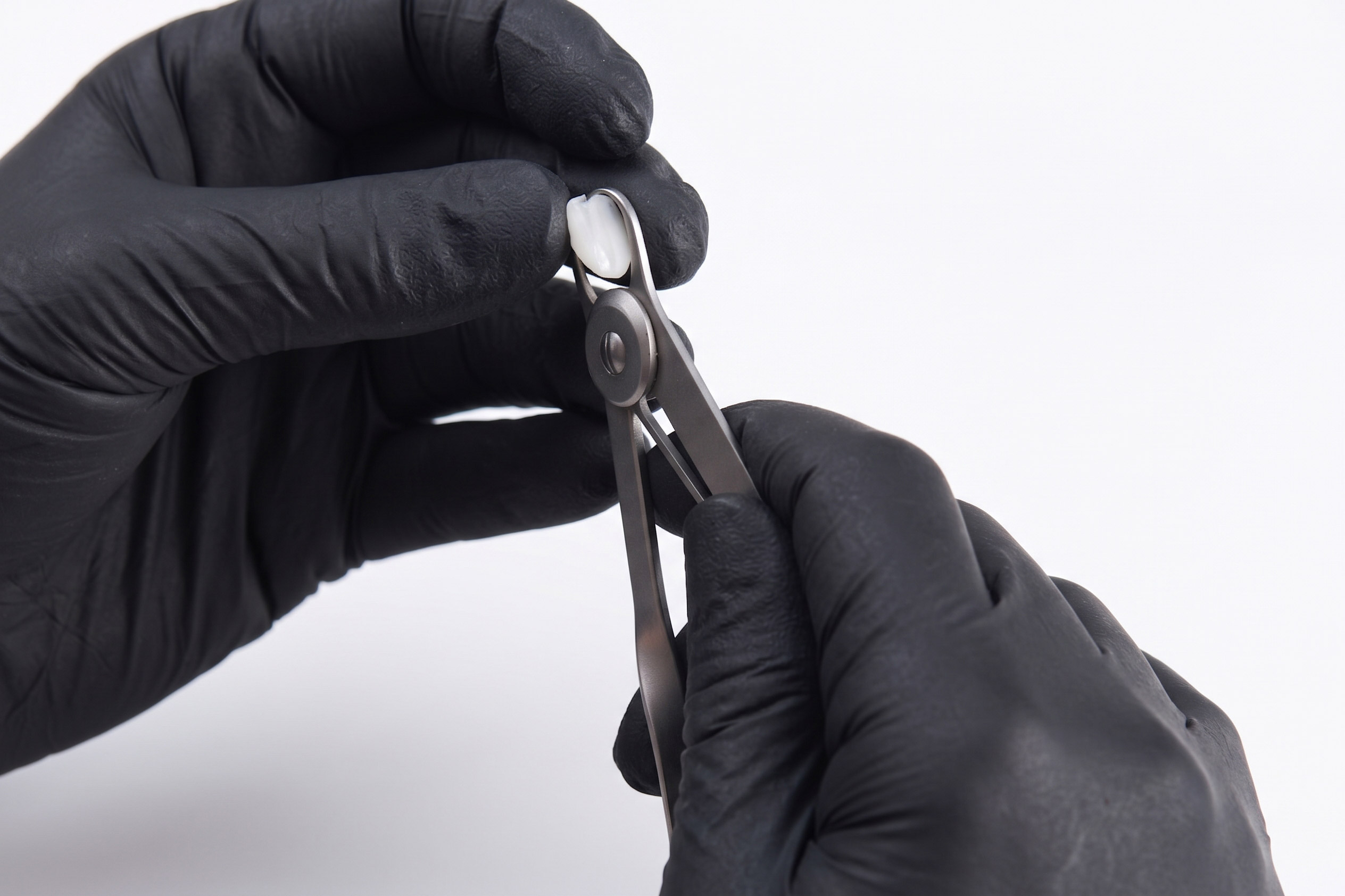
How do composite bonding and veneers differ in reducing gaps?
Composite bonding involves applying tooth-colored composite resin directly to a tooth, shaping it, hardening it with light, and finishing the surface. Resin can be added around a gap to improve tooth shape. It can also be used to change tooth color or the shape of other parts of the tooth.
In this article, veneers refer to custom-made ceramic restorations. When a restoration for the front surface of a tooth is made, its color, shape, and the contours between the teeth are designed together. Comparing the two treatments involves considering both the material and which areas you want to change, and by how much.
Comparison | Composite bonding | Ceramic veneers |
|---|---|---|
How they are made | Material is added directly to the tooth, shaped, and hardened. | A custom restoration is made separately and bonded to the tooth. |
Work needed on the tooth | Material can sometimes be added without substantial tooth reduction, but surface treatment is needed for bonding. | Whether the tooth needs to be reduced, and by how much, depends on its current condition and the planned final shape. |
Staining and wear | More prone to staining and surface wear than ceramic. | More resistant to staining and wear than composite resin. |
If damage occurs | Chipped areas are relatively easy to repair. | Repair, rebonding, or replacement is considered according to the damage. |
Composite resin and ceramic differ in their resistance to staining and wear and in how they can be repaired. Whether a tooth needs to be filed down, and how much tooth structure needs to be removed, is determined by the desired shape and the space needed for the restoration. Once enamel on the tooth surface has been removed, it cannot be restored to its original state.
You can also read our comparison of ZERONATE and composite bonding for differences in materials, treatment methods, and care.
Which treatment may suit each situation?
If you want to keep the current appearance of your front teeth and only reduce the gaps: Consider composite bonding first
If the gums are healthy and the teeth do not need further movement, adding composite resin directly around the gaps may be an option. For example, you may like the length and color of your front teeth but be concerned about the triangular gaps near the gums.
The final tooth width and thickness need to be appropriate, and you must still be able to clean between the teeth after the resin has been added.
If you also want to change the shape and color of your front teeth: Compare veneers with composite bonding
With ceramic veneers, the front surfaces and contours between the teeth are designed as part of the custom restorations. They may be considered when you want to reduce gaps near the gums while also changing the width-to-length proportions and color of your front teeth.
First, the dentist assesses whether composite resin can achieve the desired shape and color. If you are considering ceramic veneers, compare how much tooth reduction may be needed and how care after treatment differs.
If tooth tilt or root direction is contributing to the gaps: Assess whether further tooth movement is needed
If the tilt of the teeth or the direction of their roots leaves space near the gums, the first step is to assess whether further orthodontic treatment is needed to adjust their position and direction. If additional orthodontic treatment is planned, orthodontic and restorative treatment are planned together. The dentist determines which teeth need to move and by how much, then considers whether the remaining gaps should be reduced with composite bonding or veneers.
TU Dental Clinic provides both orthodontic and aesthetic dental treatment. If gaps near the gums remain after orthodontic treatment, you can discuss whether further tooth movement is needed and how much improvement may be possible with composite bonding or veneers.
If gum disease is diagnosed: Treat the gums before addressing the remaining gaps
If there is bleeding or swelling, the cause is assessed first. If examination confirms active gum disease, the inflammation is treated first. Once the gums are stable, the remaining space and tooth shape are assessed to determine whether composite bonding, veneers, or another approach is appropriate.

HAVE-IN
I + TM ... 50% + 50%
Could filling the gaps make the teeth look too wide or thick?
Adding material to the sides of the teeth can change their width and contours. The dentist needs to assess whether completely filling the gaps would suit the neighboring teeth and whether the areas near the gums would become too bulky.
Even with the same gap size, the final proportions can look different depending on the original tooth width and length. After restoration, the contact areas and contours near the gums are also checked to ensure that cleaning between the teeth is possible. If fully filling the gaps is expected to make the teeth too wide or difficult to clean, the dentist reassesses whether to move the teeth or reduce the gaps only to a certain extent.
What happens to retainers, and how should the teeth be cared for after treatment?
Retainers are made to fit the teeth and maintain their position after orthodontic treatment. If tooth shape is changed with composite bonding or veneers, the fit of the existing retainer needs to be checked. Removable retainers that cover the teeth, in particular, may need adjustment or replacement to fit the new contours.
When planning treatment, it is helpful for the clinicians responsible for orthodontic and restorative care to agree on the final tooth shape and retention plan. Whether a fixed retainer needs to be removed and reattached depends on the area being changed and the retainer's position.
After restoration, the gumline and spaces between the teeth still need thorough cleaning. Composite bonding should be checked for discoloration and surface wear. Veneers should be checked for secure bonding, chips, or detachment. Avoiding habits such as biting fingernails or hard objects with the front teeth is also part of caring for restorations.

ZERONATE when you want to change front-tooth shape and color as well as reduce black triangles
If veneers are appropriate for improving both the areas around the gaps and the shape and color of your front teeth, you may also consider TU Dental Clinic's ZERONATE.
ZERONATE is TU Dental Clinic's premium laminate veneer brand, embodying its philosophy of preserving natural teeth. With a thickness approaching zero, it preserves natural teeth and brings to life the ideal health and beauty of natural teeth.
An examination is needed to determine suitability, whether tooth reduction is necessary, and how much tooth structure may need to be removed, as these depend on your teeth and treatment plan. When addressing black triangles, the dentist also considers the final width and thickness, contours near the gums, and bite after the gaps have been reduced.
Frequently asked questions
Can I discuss treatment to reduce the gaps before my braces are removed?
Additional restorative treatment can be planned during the final stages of orthodontic treatment. The final tooth shape and the steps needed to finish orthodontic treatment depend on whether further tooth movement is needed or the remaining gaps will be addressed with composite bonding or veneers. Tooth-shape changes and orthodontic retention are planned together to determine the sequence of appliance removal, restoration, and retainer fabrication.
If part of the composite bonding chips, does everything need to be redone?
If the remaining restoration is in good condition and only a small part has chipped, repair of that area may be considered. The extent of damage, the remaining tooth structure, and the cause of the damage are assessed to decide between a partial repair and replacing the restoration. If a large portion has detached or decay is also present, the cause needs treatment, and further treatment to place a new restoration may be necessary depending on the extent of damage.
Do I still need to floss after the gaps have been reduced?
You still need to clean between the teeth with floss or other suitable tools after restoration. If floss repeatedly catches or shreds, it is advisable to have the restoration margins and contact areas checked.
Questions to prepare before your consultation
- Do I need gum treatment or further tooth movement first?
- How does the scope of treatment differ between reducing the gaps alone and also changing the shape and color of my front teeth?
- What will the final tooth width and thickness be? If tooth reduction is needed, which areas will be adjusted and why?
- Can I keep using my existing retainer? What is the sequence for adjustment or replacement?
Related reading
Learn more about the brand and treatment options for gaps between the front teeth.
TU Dental Clinic: Treatment and Consultation
At TU Dental Clinic, we focus on preserving natural teeth while providing aesthetic dental treatment, orthodontics, dental implants, and comprehensive dental care. We assess your teeth, gums, and bite to guide an individual treatment plan.
Provider: TU Dental Clinic
Main services: ZERONATE, aesthetic dental treatment, orthodontics, dental implants, and comprehensive dental care
Address: Seocho W Tower, 54 Seocho-daero 77-gil, Seocho-gu, Seoul, South Korea — 12F: TU Dental Clinic; 13F: TU MARTH edition
Medical Information and Advertising Notice
This article is informational medical advertising provided by a healthcare institution to explain general information about consultations, examinations, treatments, and procedures. Suitability, results, recovery, and adverse effects may vary depending on individual health, the treatment area, and clinical circumstances. This article does not replace a personal diagnosis or treatment plan. Before deciding on a procedure, please consult a qualified clinician to confirm an appropriate approach and plan for your needs.