Can I See My Veneer Results Before Treatment? From Smile Simulation to Checking No-Prep Suitability
Yes, you can preview your veneer results before treatment. You do not see the finished result all at once, though. Each of three stages lets you check something different. A veneer simulation (an on-screen design) built from photos and digital scans sets the overall direction. A smile preview, with temporary restorations placed in your mouth, shows the real length, proportions and volume and how they suit your face. A try-in, before the finished ceramic veneers are bonded, confirms the shade and the bite. Other people’s before-and-after photos are useful for explaining the look you want, but the stages that show the closest view of your own result are the smile preview and the try-in, where you see the design in your own mouth.
Once veneers are bonded, their shape and shade are difficult to change. That is why the shape you want should be discussed in detail before any tooth is prepared, and the final check should be completed before bonding.
Three stages for previewing your veneer results
Stage | What you look at | What you can check | Limits to keep in mind |
|---|---|---|---|
On-screen simulation (design) | Facial and dental photos and digital scan data | The direction for tooth length, proportions and shape, and how well they suit your face | Hard to show how your lips move when you talk or smile, or the real color and translucency of ceramic |
Smile preview | Temporary restorations made in the planned shape and placed in your mouth | Length, proportions and volume seen with your own face and lips, how much of the teeth shows when you smile, and the shade direction | Temporary materials differ from the final ceramic in translucency and surface texture |
Try-in | The finished ceramic veneers placed on your teeth before bonding | Shade, fit, bite and harmony with neighboring teeth | The last check before bonding; shape and shade are difficult to change afterwards |
ZERONATE is TU Dental's premium laminate veneer brand, built on a philosophy of preserving natural teeth. With a thickness approaching zero, it preserves natural tooth structure while bringing together the health and beauty of ideal natural teeth. Whether any tooth needs preparation, how much, and what the finished result will look like are decided for each person after an examination. In ZERONATE treatment at TU Dental, temporary ZERONATE veneers are placed in your mouth at the smile preview so you can see the planned design first. The finished ZERONATE veneers are made at the ZERONATE lab through digital analysis and the handwork of a dental ceramist, checked on a 3D-printed model that reproduces your mouth, and bonded only after you have checked them yourself at the in-mouth try-in.
Why an on-screen simulation alone is not enough
An on-screen simulation helps the dentist, the patient and the lab team look at the same image and agree on a direction. Differences that are hard to describe in words, such as “a little longer” or “rounder edges on the front teeth”, can be compared side by side.
However, the image is based on a single photo. Depending on the camera angle and lighting, tooth length and shade can look different from reality, and a still photo cannot show how your lips move when you talk or how much gum shows. The translucency of ceramic also cannot be reproduced exactly in on-screen colors. So even a design you like on screen may need its length or volume adjusted once it is tried in your mouth.
At the first visit, TU Dental records your current condition with panoramic X-rays, oral and dental photographs and digital scans. Your dentist then reviews your teeth, gums and bite together with your facial harmony before starting the design. The first visit, including imaging, examination and consultation, takes about two hours (ZERONATE treatment process).
How can AI-edited photos or other people’s before-and-after photos help?
Some patients now bring photos of themselves edited with AI to show the teeth they want. These images help communicate the impression you are after, because they show how bright and how long you would like your teeth to look far more clearly than words.
AI images do not reflect the actual size and position of your teeth, your gum line, how your upper and lower teeth meet, or how much preparation would be needed. Whether the look in the photo can be created is something that can only be known after your teeth are examined.
The same applies to other people’s veneer before-and-after photos. Each result comes from that person’s own teeth and face, so the same treatment will not necessarily give you the same result. They are most useful for explaining what you like and what you want to avoid, for example “I like this kind of look” or “I don’t want them this white”. When you look at before-and-after cases, also check how many teeth were treated, whether the case was no-prep or minimal preparation, and how many visits it took. This helps you judge how similar the case is to your own situation.
At TU Dental, the consultation includes specific questions about the change you want. The design can differ for the same teeth depending on whether you want a subtle change that is hard to notice or a clearer, brighter look. The direction you agree on can then be adjusted again with your dentist while you look at the actual result at the smile preview. TU Dental’s veneers in Seoul page shares real ZERONATE cases for tooth color, gaps, shape and alignment, each with the number of teeth treated, whether preparation was needed and the number of visits, so you can look for cases similar to yours.
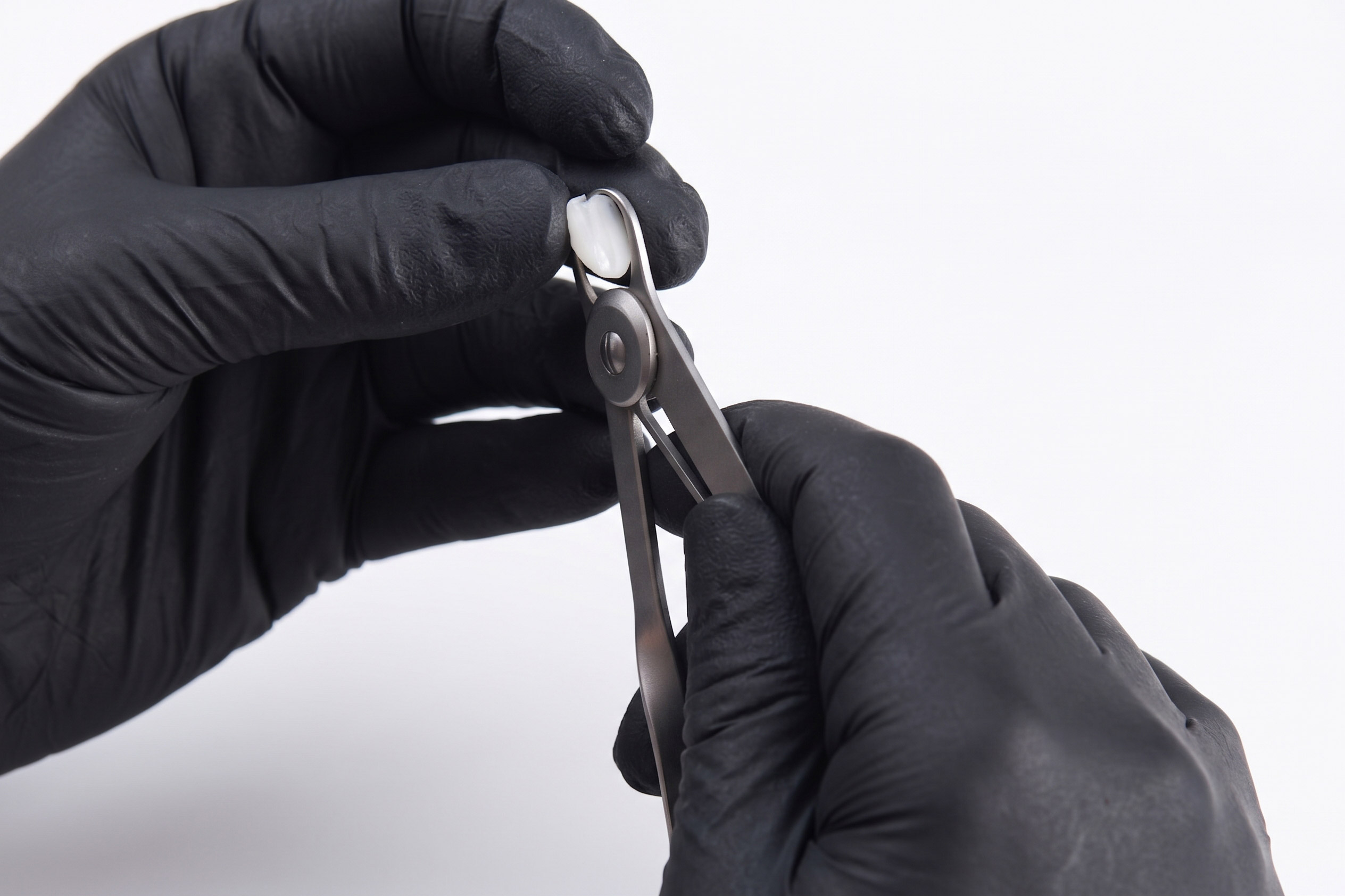
Whether no-prep veneers are possible is also decided at the preview stage
Previewing the result is also how the amount of preparation is decided. Comparing the planned final shape with your current teeth shows whether any part needs to be prepared to create that shape, and how much. For example, if the new shape must not sit further forward than your current teeth, some preparation may be needed. If adding a thin layer to the front of the teeth already gives the shape you want, treatment can proceed without preparation.
In ZERONATE treatment, this decision is made at the smile preview stage. If a no-prep approach is suitable, the teeth are not prepared and the design is checked with temporary ZERONATE veneers. If preparation is needed, minimal preparation or selective tooth reshaping is carried out only where necessary, within the enamel (the outer layer of the tooth), before the temporary ZERONATE veneers are placed (temporary veneers and temporary ZERONATE veneers).
Not every tooth can be treated without preparation (what makes no-prep veneers suitable). Whether preparation is needed, and how much, is decided after examining the position, shape and alignment of your teeth, your gums and bite, and the design you want. Prepared tooth structure cannot be restored, so share your thoughts on length and shape in detail before that point.
When can I still make changes if I don’t like the result?
What you can change depends on the stage.
- Design consultation: No tooth has been prepared yet, so this is when the direction for length, shape and volume can be changed most freely.
- Smile preview: The length, proportions and volume you see in your mouth can be adjusted, and your shade is chosen by comparison with a shade guide. The final restorations are made based on what is decided at this stage.
- Try-in: Before the finished ceramic veneers are bonded, the shade, shape and bite are checked, and final refinements are made if needed before bonding.
- After bonding: Once ceramic veneers are bonded, their shape and shade are difficult to change.
TU Dental’s guide to the ZERONATE procedure also explains that changes are difficult once the veneers are completed, which is why it is important to agree on the design at the smile preview (ZERONATE procedure). Final refinements can take extra time on the day of bonding, so we recommend keeping the rest of that day flexible.
Planning a trip to Seoul: when can you see the result?
The smile preview takes place before fabrication and the try-in after it, and both are done at the clinic. Your stay therefore needs to cover the fabrication period between them, unless a same-day option suits your case. At TU Dental, ZERONATE treatment involves three visits on average, and sometimes as few as two depending on the treatment plan. After the design is finalized and the final digital scan is taken, fabrication takes an average of 10 business days. Some cases can be completed within one day, depending on the ZERONATE option and the treatment plan; this is confirmed individually at your consultation.
TU Dental provides consultations in English, Chinese and Japanese. Before booking, share your arrival and departure dates, clear, unedited photos of your teeth and your previous treatment history so your visits can be planned around the smile preview and the try-in. You can also send reference images of the look you want, including AI-edited photos, to explain the direction you have in mind.
Frequently asked questions
How long does a smile preview take?
It depends on how many teeth are treated. According to TU Dental’s treatment process, it takes about 1 hour when only some teeth are treated, about 2 hours for one full arch, and about 3 hours for both upper and lower arches. The time may vary with your oral condition.
Can the shade I saw at the preview differ from the final shade?
The temporary restorations used at the smile preview are made of a different material from the final ceramic, so their translucency and texture are not identical. That is why the shade is chosen with a shade guide and checked again at the try-in, with the finished ceramic veneers placed next to your natural teeth.
Are my teeth prepared during the smile preview?
If your teeth are suitable for a no-prep approach, they are not prepared and only the design is checked. If preparation is needed to achieve the shape you want, it is done at this stage within the enamel and only where necessary, before the temporary restorations are placed. Which applies to you is decided after an examination, so it is best to discuss the shape you want in detail before the smile preview.
Questions to ask at your consultation
- At which stage of my treatment will I see the design placed in my mouth?
- At the smile preview, how much can be changed: length, shape or volume?
- When and how is the shade of my teeth chosen?
- Are my teeth closer to a no-prep or a minimal-preparation case, and if preparation is needed, where?
- What happens if I don’t like the shade or shape at the try-in?
If you would like to see your result before deciding, book a consultation at TU Dental near Sinnonhyeon Station in Gangnam, Seoul. Your dentist can explain whether no-prep veneers are possible for your teeth and what you can check and change at the smile preview. TU Dental is a five-minute walk from Exit 7 of Sinnonhyeon Station (Line 9 and Shinbundang Line).
Related reading
- For the full process from diagnosis and smile preview to fabrication and bonding, including the time each stage takes: How Was ZERONATE Developed? TU Dental’s Philosophy and Treatment Process
- For the treatment journey including the smile preview, real cases by concern, costs and visit schedule in one place: Dental Veneers in Seoul, Korea: Cost & Treatment
Care and consultations at TU Dental
TU Dental provides aesthetic dentistry, orthodontics, implants, and comprehensive dental care with a focus on preserving natural teeth. Treatment planning considers the teeth, gums, and bite together.
- Provider: TU Dental Clinic
- Main services: ZERONATE, aesthetic dentistry, orthodontics, implants, and comprehensive dental care
- Address: Seocho W Tower, 54 Seocho-daero 77-gil, Seocho-gu, Seoul, South Korea — 12F TU Dental Clinic / 13F TU MARTH edition
Medical information and advertising notice
This article is informational medical advertising prepared by a healthcare provider to share general information about consultations, examinations, treatments, and procedures. Suitable approaches, outcomes, recovery, and adverse reactions may vary with a person’s health, the treatment area, and specific clinical circumstances. This article does not replace an individual diagnosis or treatment plan. Before deciding on a procedure, consult a qualified healthcare professional to confirm an appropriate approach and a specific plan for your needs.