

TU Dental
Oral Design
About TU Dental
Patient Reviews
Understanding your care. The beginning of trust.
TU Dental created this glossary to help you understand treatment and make informed choices. We explain unfamiliar terms and treatment differences in plain language so you can prepare questions and have a meaningful conversation with your dentist.
All terms 687
3Y, 4Y and 5Y distinguish the yttria content used to stabilize zirconia. A higher number does not mean a better material in every respect.
An ultrasonic scaler is professional dental equipment that uses a vibrating tip to remove calculus and deposits from tooth surfaces. Its use is adapted to gum health and the treatment site.
Dental phobia describes intense fear related to dental care that can lead to avoiding visits or treatment. It should not be treated simply as poor tolerance; support needs should be assessed.
Dental CBCT uses a cone-shaped X-ray beam to produce three-dimensional images of teeth and the jaw region. It is considered when ordinary two-dimensional images do not provide the required spatial information.
Dental cement can refer to material that helps secure a prosthesis to a tooth. This entry focuses on luting cements, distinguishing temporary from definitive use and different material types.
Pulp vitality testing describes assessments of the tissue inside a tooth. Cold and electric response tests used in practice measure something different from blood-flow-based tests.
A collagen barrier membrane limits soft-tissue entry and protects a regenerative space during bone-regeneration treatment. Its role differs from that of the bone graft itself.
A periapical radiograph is an intraoral X-ray showing a tooth from its crown through the root tip and surrounding bone. It supports detailed assessment of roots and nearby tissues.
Periodontal probing uses a fine marked instrument to measure the space between teeth and gums. It records periodontal condition and helps compare changes before and after treatment.
Dental anxiety management assesses worry and tension around care and helps patients participate in treatment. Communication, pacing, psychological support and, when appropriate, sedation are considered individually.
Dental antibiotics are medicines prescribed to treat bacterial infection or prevent it in selected situations. They are different from painkillers and do not remove the cause of decay.
A dental laser is a medical device that uses light energy to act on selected tissues. Uses vary with wavelength, settings and target tissue; not every laser performs the same treatment.
A panoramic radiograph is an X-ray showing a broad view of the upper and lower teeth and jaws in one image. It supports assessment of overall arrangement and nearby structures.
Topical anaesthesia applies an anaesthetic such as a gel or spray to a surface to reduce sensation there. Dental use requires a product appropriate to the site and purpose.
Salivary testing is a collective term for tests measuring specific features of saliva, such as its amount or components. No single test assesses every oral or systemic disease.
Post-treatment pain management assesses pain after a procedure and plans relief and review. Both symptom control and addressing the underlying problem matter.
Infiltration anaesthesia places local anaesthetic into tissue near the treatment site to reduce sensation nearby. It is an administration technique, not a drug name, and is chosen for the required area.
Piezoelectric bone surgery uses ultrasonic microvibrations to cut bone. This entry describes the general principle, not a particular company's device.
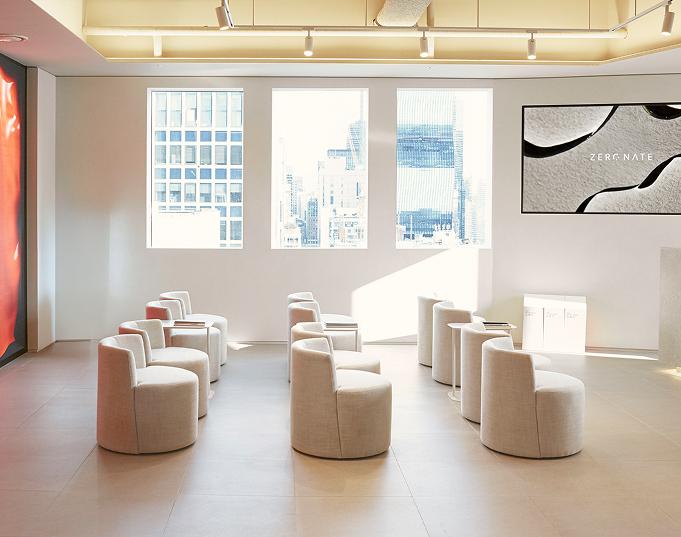
ZERONATE is TU Dental’s premium laminate veneer brand, built on a philosophy of preserving natural teeth. Its vision is to combine near-zero thickness with the health and beauty of ideal natural teeth, while preserving as much of your own tooth structure as possible.
TU DENTAL CLINIC
An informed choice starts with understanding your care. Talk with TU Dental about whether ZERONATE suits your teeth and how natural tooth structure can be preserved. We help you ask questions and understand your options.
Chat on WhatsAppLeave your email address to discuss treatment options and plan your visit.
54 Seocho-daero 77-gil, Seocho-gu, Seoul (Seocho W Tower)
12F TU Dental Clinic · 13F TU MARTH edition