

TU Dental
Oral Design
About TU Dental
Patient Reviews
Dental glossary
Explore terms in Exams, anaesthesia & materials. Read their definitions and related concepts to prepare questions for your dental visit.
Exams, anaesthesia & materials 27
Composite resin is a tooth-colored restorative material combining resin with inorganic fillers and other components. It can be used to fill areas damaged by decay. The term names a type of material, rather than the entire treatment process or a particular product.
Lithium disilicate is a type of glass-ceramic used to make dental restorations. The name refers to the material’s composition and structure, rather than a particular company’s product. Suitability depends on the intended use of the individual product and the condition of the tooth.
A 3D printer is a device that forms three-dimensional objects layer by layer according to a digital design. In dentistry it may be used to manufacture suitable models, appliances or restorations, but the printer alone does not replace diagnosis or verification of the finished product.
3D printing is a manufacturing method that builds or forms objects layer by layer from a digital model. In dental manufacturing, design, material selection, printing, post-processing and verification are linked. Unlike the term 3D printer, which names the equipment, this term describes the manufacturing approach and its associated workflow.
AI-assisted radiograph analysis uses artificial intelligence software to analyze specific findings on dental radiographs and support a dentist’s interpretation. The findings assessed and image types supported differ between systems. Results displayed on screen are supplementary information interpreted alongside the clinical examination.
AI-assisted dental image interpretation refers to clinicians using the results of artificial intelligence analysis of image features to inform clinical judgment. In dentistry this may include radiographic analysis, but the name does not establish that every image type or condition is covered. The image type and the software’s purpose must first be distinguished.
CAD/CAM stands for computer-aided design and computer-aided manufacturing. In dentistry it is used to design restorations and other items from digital data and manufacture them with equipment. It connects design and manufacturing rather than naming a specific material or a single device.
Cross-infection occurs when pathogens are transmitted between people or through contaminated instruments or surroundings and cause infection. Dentistry considers multiple routes of transmission to protect both patients and staff. Preventive measures are not reserved for patients with a confirmed infection.
An STL file is a 3D file format that represents the surface of an object as connected small triangles. It may be used to transfer shape data in digital dental manufacturing. The file format itself does not constitute a diagnosis or a completed treatment plan.
Light curing uses light of an appropriate wavelength to activate photoinitiators in a material and start polymerization. Dentistry uses this process for light-cured resin materials, among others. A curing light is the device that delivers light; light curing is the process occurring in the material.
A dental curing light delivers light to harden light-activated dental materials. It is used for resin restorations and some bonding materials, among other applications. The device emits light, while polymerization takes place inside the material.
Oral sedation uses medicine taken by mouth to reduce anxiety and tension during dental treatment. Oral describes the route of administration; it does not by itself establish the depth of sedation. Individual assessment and observation during treatment are needed.
Articulating paper leaves colored marks where upper and lower teeth meet, helping identify contact locations. It is used when checking the bite on teeth or restorations. The size of a marked area does not directly represent the amount of biting force.
Intraoral photography records the teeth, gums and oral lining with a camera. Here it means clinical photographs, distinct from X-rays. It helps document visible findings, explain them and compare changes over time.
Crystallization firing is a fabrication step that brings certain machinable glass-ceramic restorations to their final material state through a specified heat treatment. The intermediate state after milling must be distinguished from the finished restoration placed in the mouth.
PEEK stands for polyetheretherketone, a thermoplastic polymer. It is studied and used as a material for dental prostheses and appliances, but the material name alone does not establish suitability for every application.
A virtual articulator simulates the relationship and movement of upper and lower dental models on a computer. It helps assess the bite and contacts during movement when designing restorations. Movement on screen does not necessarily represent a direct recording of the patient’s actual movements.
A dental articulator holds upper and lower dental models to reproduce their bite relationship and some jaw movements outside the mouth. It supports restoration fabrication and assessment of occlusal relationships, but does not duplicate every function of the patient.
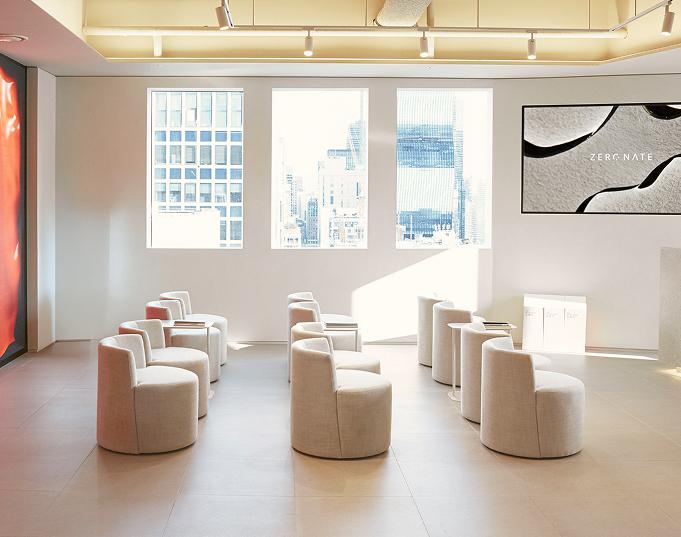
ZERONATE is TU Dental’s premium laminate veneer brand, built on a philosophy of preserving natural teeth. Its vision is to combine near-zero thickness with the health and beauty of ideal natural teeth, while preserving as much of your own tooth structure as possible.
TU DENTAL CLINIC
An informed choice starts with understanding your care. Talk with TU Dental about whether ZERONATE suits your teeth and how natural tooth structure can be preserved. We help you ask questions and understand your options.
Chat on WhatsAppLeave your email address to discuss treatment options and plan your visit.
54 Seocho-daero 77-gil, Seocho-gu, Seoul (Seocho W Tower)
12F TU Dental Clinic · 13F TU MARTH edition