

TU Dental
Oral Design
About TU Dental
Patient Reviews
Understanding your care. The beginning of trust.
TU Dental created this glossary to help you understand treatment and make informed choices. We explain unfamiliar terms and treatment differences in plain language so you can prepare questions and have a meaningful conversation with your dentist.
All terms 687
Implant surface activation describes treatments intended to alter a surface's physical or chemical condition before placement. UV photofunctionalization is one studied approach, but activation methods are not all equivalent.
An electronic apex locator uses electrical properties to estimate the position of an instrument in a root canal and help determine the length to be treated. It supports working-length determination during root canal treatment.
Computer-controlled local anaesthetic delivery uses a device to help regulate injection speed and related aspects of delivery. The clinician chooses the site and technique; the equipment does not replace clinical judgement.
Temporary dental cement holds a crown or another restoration provisionally. It does not mean definitive permanent bonding is complete; clarify its purpose and the follow-up plan.
A dental nerve block places local anaesthetic near a nerve to interrupt pain transmission from its territory. Its coverage can differ from infiltration close to a tooth.
Guided implant surgery uses a guide to transfer a planned implant position to surgery. This entry focuses on the static approach using a fabricated surgical guide.
Low-frequency electrotherapy is an expression for physical treatments using electrical stimulation. Methods vary, so this entry focuses on transcutaneous electrical nerve stimulation (TENS) for pain relief.
General anaesthesia uses medicines to cause unconsciousness so that you do not feel pain or remain aware during an operation or procedure. It differs from local anaesthesia, which numbs a specific area.
Zirconia sintering is a manufacturing process that densifies milled zirconia under specified heat-treatment conditions. Temperature, time and other settings must suit the product and process.
ZLS is a lithium-silicate glass-ceramic containing zirconia. It is used for indirect dental restorations but is not the same material as conventional zirconia restorations despite the name.
Dental CT uses X-rays to provide sectional and three-dimensional information around the teeth and jaws. Dental cone-beam CT can help assess relationships between structures that overlap in conventional images.
Chairside CAD/CAM connects digital records, computer design and manufacture of restorations at the clinical site. It does not mean every treatment finishes in one visit.
Dental infection prevention and control comprises procedures to reduce transmission risk during care. Hand hygiene, protective equipment, instrument processing and environmental care work together; one device is not the whole system.
A dental laser uses concentrated light energy during care. Types and settings differ in the tissues and purposes they address, so laser treatment is not one uniform procedure.
Dental anti-inflammatory medicines are used to manage inflammation-related pain and swelling. This entry focuses on non-steroidal anti-inflammatory drugs; the exact ingredient must be identified.
A dental operating microscope magnifies and illuminates the treatment area to help visualize small structures. In procedures such as root canal treatment, it supports detailed observation and controlled manipulation inside a tooth.
Dental radiation safety uses principles and procedures to obtain needed diagnostic information while avoiding unnecessary X-ray exposure. It does not mean avoiding all imaging or judging safety by a fixed number of scans alone.
Dental pain medicines reduce toothache or pain after treatment. Relieving pain is not the same as treating its cause, such as decay or infection.
ZERONATE is TU Dental’s premium laminate veneer brand, built on a philosophy of preserving natural teeth. Its vision is to combine near-zero thickness with the health and beauty of ideal natural teeth, while preserving as much of your own tooth structure as possible.
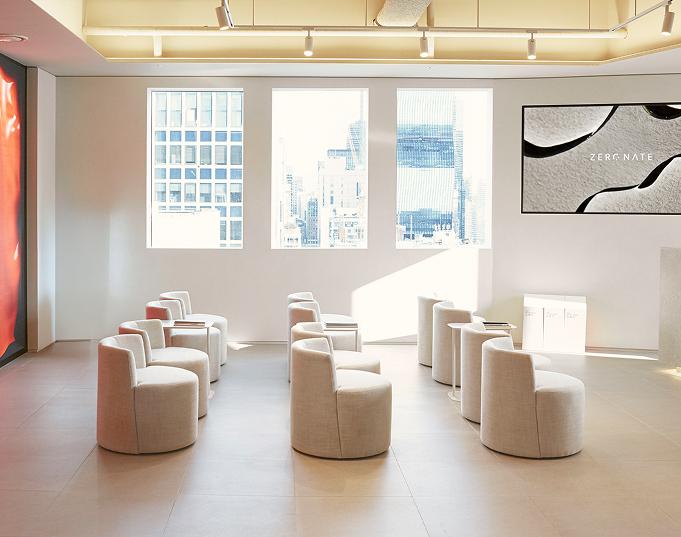
TU DENTAL CLINIC
An informed choice starts with understanding your care. Talk with TU Dental about whether ZERONATE suits your teeth and how natural tooth structure can be preserved. We help you ask questions and understand your options.
Chat on WhatsAppLeave your email address to discuss treatment options and plan your visit.
54 Seocho-daero 77-gil, Seocho-gu, Seoul (Seocho W Tower)
12F TU Dental Clinic · 13F TU MARTH edition