

TU Dental
Oral Design
About TU Dental
Patient Reviews
Understanding your care. The beginning of trust.
TU Dental created this glossary to help you understand treatment and make informed choices. We explain unfamiliar terms and treatment differences in plain language so you can prepare questions and have a meaningful conversation with your dentist.
All terms 687
“Painless anaesthesia” is an expression used in dentistry to describe approaches intended to reduce discomfort during anaesthesia. It should not be taken as a guarantee of no pain or as the name of one uniform drug or technique. Ask what will actually be done.
The duration of anaesthesia describes how long the anaesthetic effect persists and the course of sensation returning. This entry focuses on dental local anaesthesia and does not specify a single end time for every patient.
Single-use devices are clinical instruments designed for use on one patient and then disposal. The term does not mean they can be reused after washing or disinfection; their labelling and instructions determine the distinction.
An autoclave sterilizes instruments using high-temperature steam under pressure. In dentistry it is used for reusable instruments compatible with this process. Simply placing an instrument in the machine does not complete every stage of its care.
Glass ionomer is a dental material based on glass powder and a polymeric acid. Different types serve as fillings, liners or luting cements; products with this name are not interchangeable for every site.
Digital occlusal analysis records and interprets contacts between upper and lower teeth using equipment and software. Systems differ in whether they provide contact locations, relative force, timing or jaw movement.
A digital workflow connects dental data collection, assessment and design, production and checking through digital records. A partly digital process differs from a fully connected one.
A dental gold alloy combines gold with other metals for restorations such as inlays, onlays or crowns. It does not mean pure gold.
A digital dental X-ray sensor receives X-rays and converts them into electronic signals to create images of teeth. An intraoral sensor sits inside the mouth and has a different role from the X-ray source.
A digital diagnostic model records tooth and dental-arch surfaces for viewing on a computer. It can be made by scanning the mouth or an existing impression or model.
A dental milling machine cuts material according to a computer design to produce restorations or other items. In CAD/CAM it turns design data into a physical form.
Same-day restorations describe care in which a restoration is fabricated and fitted on the same day. Digital design and manufacturing may be used, but same-day completion is not possible for every tooth or material.
Digital dental imaging involves interpreting digitally acquired dental images alongside clinical examination. An image being digital does not automatically establish a diagnosis.
Lidocaine is one local anaesthetic ingredient used in dentistry. It is used to inhibit pain-signal transmission in a particular area. Its name alone does not determine concentration, dose or duration.
Pulp vitality testing is a term used for tests assessing pulp status. Common cold and electric pulp tests assess sensory responses to stimuli and differ from tests that directly measure blood flow.
Lithium aluminosilicate ceramic refers to a family of ceramic materials containing lithium, aluminium and silicon-based components. The abbreviation LAS alone does not identify a dental product's exact composition or indications.
Radiation safety involves principles and procedures that obtain needed diagnostic information while limiting unnecessary radiation exposure. Dental imaging is selected according to its purpose and the individual's circumstances.
Fluoride varnish is a topical fluoride product applied to tooth surfaces. Its place in a caries-prevention plan is decided according to factors such as individual decay risk and age.
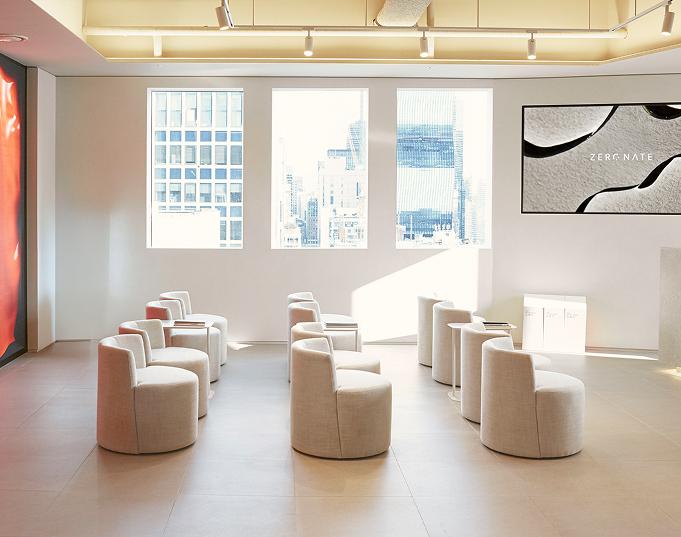
ZERONATE is TU Dental’s premium laminate veneer brand, built on a philosophy of preserving natural teeth. Its vision is to combine near-zero thickness with the health and beauty of ideal natural teeth, while preserving as much of your own tooth structure as possible.
TU DENTAL CLINIC
An informed choice starts with understanding your care. Talk with TU Dental about whether ZERONATE suits your teeth and how natural tooth structure can be preserved. We help you ask questions and understand your options.
Chat on WhatsAppLeave your email address to discuss treatment options and plan your visit.
54 Seocho-daero 77-gil, Seocho-gu, Seoul (Seocho W Tower)
12F TU Dental Clinic · 13F TU MARTH edition