

TU Dental
Oral Design
About TU Dental
Patient Reviews
Understanding your care. The beginning of trust.
TU Dental created this glossary to help you understand treatment and make informed choices. We explain unfamiliar terms and treatment differences in plain language so you can prepare questions and have a meaningful conversation with your dentist.
All terms 687
CAD/CAM stands for computer-aided design and computer-aided manufacturing. In dentistry it is used to design restorations and other items from digital data and manufacture them with equipment. It connects design and manufacturing rather than naming a specific material or a single device.
Cross-infection occurs when pathogens are transmitted between people or through contaminated instruments or surroundings and cause infection. Dentistry considers multiple routes of transmission to protect both patients and staff. Preventive measures are not reserved for patients with a confirmed infection.
An STL file is a 3D file format that represents the surface of an object as connected small triangles. It may be used to transfer shape data in digital dental manufacturing. The file format itself does not constitute a diagnosis or a completed treatment plan.
Light curing uses light of an appropriate wavelength to activate photoinitiators in a material and start polymerization. Dentistry uses this process for light-cured resin materials, among others. A curing light is the device that delivers light; light curing is the process occurring in the material.
A dental curing light delivers light to harden light-activated dental materials. It is used for resin restorations and some bonding materials, among other applications. The device emits light, while polymerization takes place inside the material.
Oral sedation uses medicine taken by mouth to reduce anxiety and tension during dental treatment. Oral describes the route of administration; it does not by itself establish the depth of sedation. Individual assessment and observation during treatment are needed.
Articulating paper leaves colored marks where upper and lower teeth meet, helping identify contact locations. It is used when checking the bite on teeth or restorations. The size of a marked area does not directly represent the amount of biting force.
Intraoral photography records the teeth, gums and oral lining with a camera. Here it means clinical photographs, distinct from X-rays. It helps document visible findings, explain them and compare changes over time.
Crystallization firing is a fabrication step that brings certain machinable glass-ceramic restorations to their final material state through a specified heat treatment. The intermediate state after milling must be distinguished from the finished restoration placed in the mouth.
PEEK stands for polyetheretherketone, a thermoplastic polymer. It is studied and used as a material for dental prostheses and appliances, but the material name alone does not establish suitability for every application.
A virtual articulator simulates the relationship and movement of upper and lower dental models on a computer. It helps assess the bite and contacts during movement when designing restorations. Movement on screen does not necessarily represent a direct recording of the patient’s actual movements.
A dental articulator holds upper and lower dental models to reproduce their bite relationship and some jaw movements outside the mouth. It supports restoration fabrication and assessment of occlusal relationships, but does not duplicate every function of the patient.
PMMA stands for polymethyl methacrylate, an acrylic polymer. This entry concerns its use in temporary crowns and bridges while the definitive restoration is being prepared. The name PMMA does not identify a particular product or treatment outcome.
Gutta-percha is a rubber-like material used to fill the space inside a tooth’s roots after cleaning and shaping during root canal treatment. It is commonly used with a sealing material called a sealer and has a different role from the definitive restoration of the upper part of the tooth.
An intraoral scanner uses light to capture digital information about the surfaces of teeth and gums. The data can support restoration design or orthodontic planning, but acquiring data and completing treatment are separate processes.
A digital impression records tooth and gum shapes and bite relationships in digital form. Information acquired by intraoral optical scanning can support restoration fabrication or orthodontic planning. The record itself is not a completed restoration or treatment result.
Local anaesthesia uses medicine to temporarily block pain signals in the area being treated. You usually remain conscious while that area is numbed. It differs from sedation and from general anaesthesia, which makes you unconscious.
The gag reflex is an involuntary protective response that helps protect the throat and airway from foreign objects. A strong response can make dental examination or treatment difficult; it is not simply a lack of tolerance.
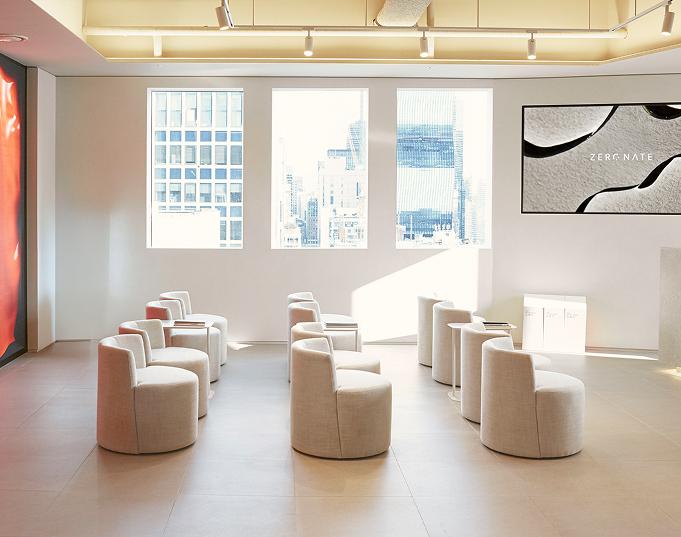
ZERONATE is TU Dental’s premium laminate veneer brand, built on a philosophy of preserving natural teeth. Its vision is to combine near-zero thickness with the health and beauty of ideal natural teeth, while preserving as much of your own tooth structure as possible.
TU DENTAL CLINIC
An informed choice starts with understanding your care. Talk with TU Dental about whether ZERONATE suits your teeth and how natural tooth structure can be preserved. We help you ask questions and understand your options.
Chat on WhatsAppLeave your email address to discuss treatment options and plan your visit.
54 Seocho-daero 77-gil, Seocho-gu, Seoul (Seocho W Tower)
12F TU Dental Clinic · 13F TU MARTH edition