

TU Dental
Oral Design
About TU Dental
Patient Reviews
Understanding your care. The beginning of trust.
TU Dental created this glossary to help you understand treatment and make informed choices. We explain unfamiliar terms and treatment differences in plain language so you can prepare questions and have a meaningful conversation with your dentist.
All terms 687
Dental attrition is tooth tissue wearing away as upper and lower teeth contact and rub against each other. Within the broader category of tooth wear, it describes the tooth-to-tooth contact mechanism. It differs from friction against other objects or acid erosion, although several factors may act together.
Tooth mobility describes how much a tooth moves; it does not identify one particular cause or disease. It may occur in different circumstances, including damage to the gums and supporting tissues or dental trauma. Increased looseness also differs from displacement, in which the tooth's position changes.
Tooth wear broadly describes loss of tooth tissue through chemical or mechanical factors. Attrition is the component caused by tooth-to-tooth contact. In Korean dental discussions, the word translated as wear may also be used more narrowly for friction against other objects, so it helps to clarify which mechanism is meant.
Tooth wear describes changes in tooth form as tissue is lost through chemical or mechanical factors distinct from decay. Tooth contact, external friction and acid erosion may contribute. A visible sign of wear does not automatically mean severe disease or an immediate need for restoration.
Tooth displacement means a tooth has moved from its original position. This article concerns traumatic injuries in which a tooth moves sideways, is pushed inward or is partly pulled outward. These differ from planned orthodontic movement or gradual shifting.
Dental fluorosis is a developmental change in enamel appearance resulting from excessive fluoride intake while teeth are forming. It may appear as white spots or lines, but not every white change is fluorosis. It must be distinguished from new discoloration in already formed adult teeth.
Dental subluxation is a traumatic injury to supporting tissues that increases tooth mobility without changing the tooth's position. It does not mean a tooth is partly pulled out. Gum bleeding or tenderness to light contact may occur.
Subluxation and luxation describe traumatic injuries to tooth-supporting tissues. Subluxation increases mobility without changing position; displacement injuries involve movement sideways, inward or outward. Complete avulsion, where the tooth leaves its socket entirely, requires a distinct emergency response.
Tooth avulsion is complete loss of a tooth from its socket following trauma. For a permanent tooth, this is a dental emergency requiring rapid action. A primary tooth must not be replanted or handled in the same way as a permanent tooth.
A traumatic dental injury is damage to a tooth and its supporting tissues caused by an external force, such as a collision or fall. It includes fractures, displacement, increased mobility and complete loss of a tooth from its socket. Nearby teeth, gums and bone may also be injured beyond the visibly damaged area.
Dental ankylosis is a direct connection between the root surface and surrounding bone. This differs from the normal periodontal ligament relationship and may affect eruption or tooth movement. During growth, the tooth may appear lower than nearby teeth, but a difference in height alone does not establish ankylosis.
Dental erosion involves damage to tooth tissue from acids other than the bacterial acids responsible for tooth decay. Acidic foods and drinks, as well as stomach acid reaching the mouth through reflux or vomiting, may contribute. Assessment also considers whether tooth-to-tooth contact or other friction is acting alongside erosion.
Tooth intrusion is an injury in which trauma pushes a tooth into the gum and alveolar bone. The tooth may look shorter or no longer be visible. It must be distinguished from an unerupted impacted tooth or a tooth completely knocked out of its socket. Supporting tissues and surrounding bone may also be damaged.
Dental caries, commonly called tooth decay, involves mineral loss from teeth caused by acids produced when oral bacteria use sugars and starches in food. Early lesions may have no obvious hole or pain. As the process progresses, tooth structure may break down and a cavity may form.
A 3D printer is a device that forms three-dimensional objects layer by layer according to a digital design. In dentistry it may be used to manufacture suitable models, appliances or restorations, but the printer alone does not replace diagnosis or verification of the finished product.
3D printing is a manufacturing method that builds or forms objects layer by layer from a digital model. In dental manufacturing, design, material selection, printing, post-processing and verification are linked. Unlike the term 3D printer, which names the equipment, this term describes the manufacturing approach and its associated workflow.
AI-assisted radiograph analysis uses artificial intelligence software to analyze specific findings on dental radiographs and support a dentist’s interpretation. The findings assessed and image types supported differ between systems. Results displayed on screen are supplementary information interpreted alongside the clinical examination.
AI-assisted dental image interpretation refers to clinicians using the results of artificial intelligence analysis of image features to inform clinical judgment. In dentistry this may include radiographic analysis, but the name does not establish that every image type or condition is covered. The image type and the software’s purpose must first be distinguished.
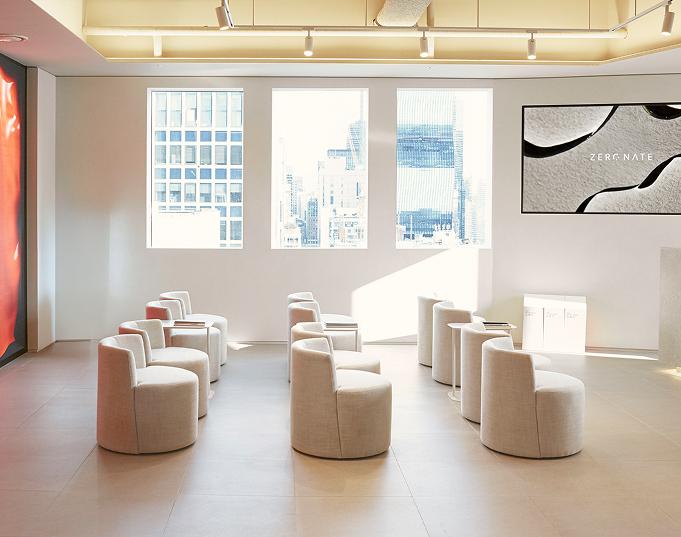
ZERONATE is TU Dental’s premium laminate veneer brand, built on a philosophy of preserving natural teeth. Its vision is to combine near-zero thickness with the health and beauty of ideal natural teeth, while preserving as much of your own tooth structure as possible.
TU DENTAL CLINIC
An informed choice starts with understanding your care. Talk with TU Dental about whether ZERONATE suits your teeth and how natural tooth structure can be preserved. We help you ask questions and understand your options.
Chat on WhatsAppLeave your email address to discuss treatment options and plan your visit.
54 Seocho-daero 77-gil, Seocho-gu, Seoul (Seocho W Tower)
12F TU Dental Clinic · 13F TU MARTH edition