

TU Dental
Oral Design
About TU Dental
Patient Reviews
Veneer thickness and the amount of tooth reduction are different things. Veneer thickness is the thickness of the restoration bonded to the front surface of a tooth to change the color or shape of the front teeth. Tooth reduction refers to how much of the natural tooth is prepared before that restoration is bonded.
A thinner restoration needs less space, which may help reduce the amount of tooth preparation. Exactly which areas need preparation, and by how much, depends on whether there is room for the restoration and bonding material, and whether bonding without preparation would achieve the desired shape.
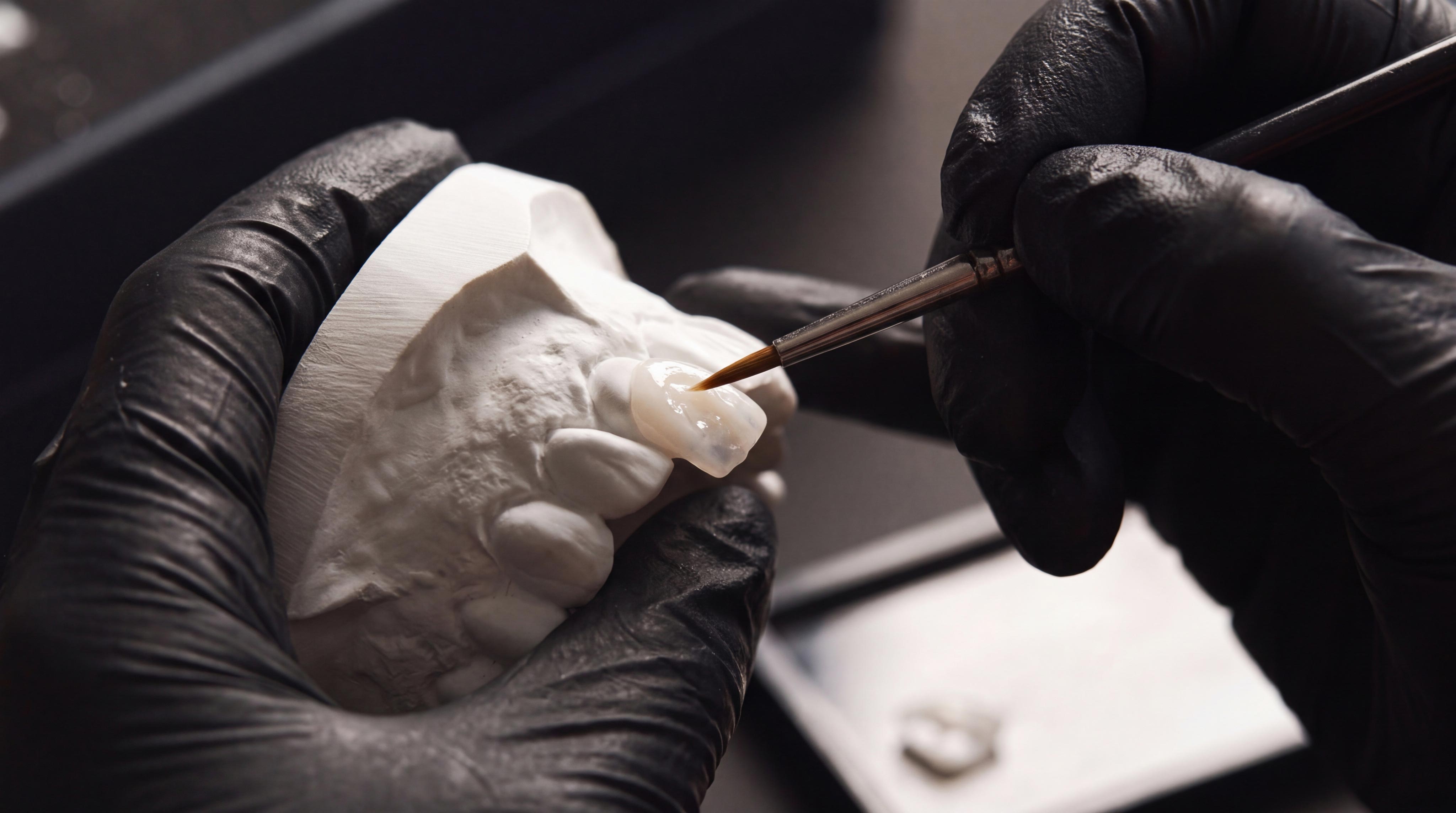
If there is enough room for the restoration and the desired shape can still be achieved after bonding, tooth preparation may not be necessary. In some cases, only the areas with insufficient space need preparation.
If a front tooth is slightly rotated, one corner may project toward the lip while the opposite corner sits a little farther back. The table below illustrates what might happen if restorations of the same thickness were placed on both corners of that tooth. Relative to the planned final shape, one side may have enough room for added material while the other does not.
| Two corners of the same front tooth | Space for the restoration | If bonded without tooth preparation |
|---|---|---|
| A. The corner that sits farther back | The tooth surface sits farther inward, leaving room to add a restoration. | If both the restoration and bonding layer fit and the desired shape can be achieved, this side may not need preparation. |
| B. The corner that projects forward | The tooth surface already projects toward the lip, leaving little room for added material. | The corner may project farther than the desired shape. |
The table does not contain measurements from an actual patient or recommended amounts of tooth reduction.
If a projecting corner like B does not have enough room for the restoration, one option is to prepare just that corner. Changing the restoration's shape or material to reduce the space needed for bonding may make it possible to achieve the desired shape with less tooth preparation.
If a larger area of the tooth's front surface projects beyond the planned shape, a larger area may need preparation. This does not necessarily mean any one point needs deeper reduction. For example, if only one corner that projects forward or overlaps the neighboring tooth needs preparation, the rest of the front surface remains untouched. This is why being told that a front tooth needs "a little preparation" does not explain which areas will be altered.
Adding material to enlarge a small front tooth is different from changing the position of a tooth that projects forward or overlaps another tooth. If overlap or protrusion is the main concern, the dentist also considers whether orthodontic treatment could change the tooth's position or angle before reshaping it through preparation. If a small change to the desired shape is enough, the plan can distinguish between areas where material will be added and areas that will be left as they are.
Changes in shape after bonding are not limited to the corners. Adding a restoration to the middle of the front surface makes the tooth more convex toward the lip. Even if there is room in the middle, an overly bulky restoration margin near the gum may not blend smoothly with the tooth surface and may make brushing difficult. Adding material to lengthen the biting edge can change where the tooth contacts the lower teeth.
The hard outer layer covering a tooth is called enamel. After preparation, enamel may remain on the surface where the restoration will be bonded, or the dentin underneath may be exposed. Enamel thickness varies across a tooth, so preparation to the same depth can leave different amounts of enamel in different areas.
For example, enamel near the gum on a front tooth may be thinner than enamel in the middle of its front surface. If both areas are prepared to the same depth, enamel may remain in the middle, where it is thicker, while the underlying dentin may become exposed near the gum.
Enamel provides a good surface for bonding restorations, so as much of it as possible is preserved during preparation. The long-term retention of restorations may differ between bonding to enamel and bonding to a surface with extensive dentin exposure. This does not mean that a restoration will come off if a small amount of dentin is exposed. Retention also depends on how well the restoration fits the tooth and where forces are applied when the upper and lower teeth meet, as well as on the condition of the bonding surface. This is why restoration thickness or preparation depth alone cannot determine how long a restoration will last.
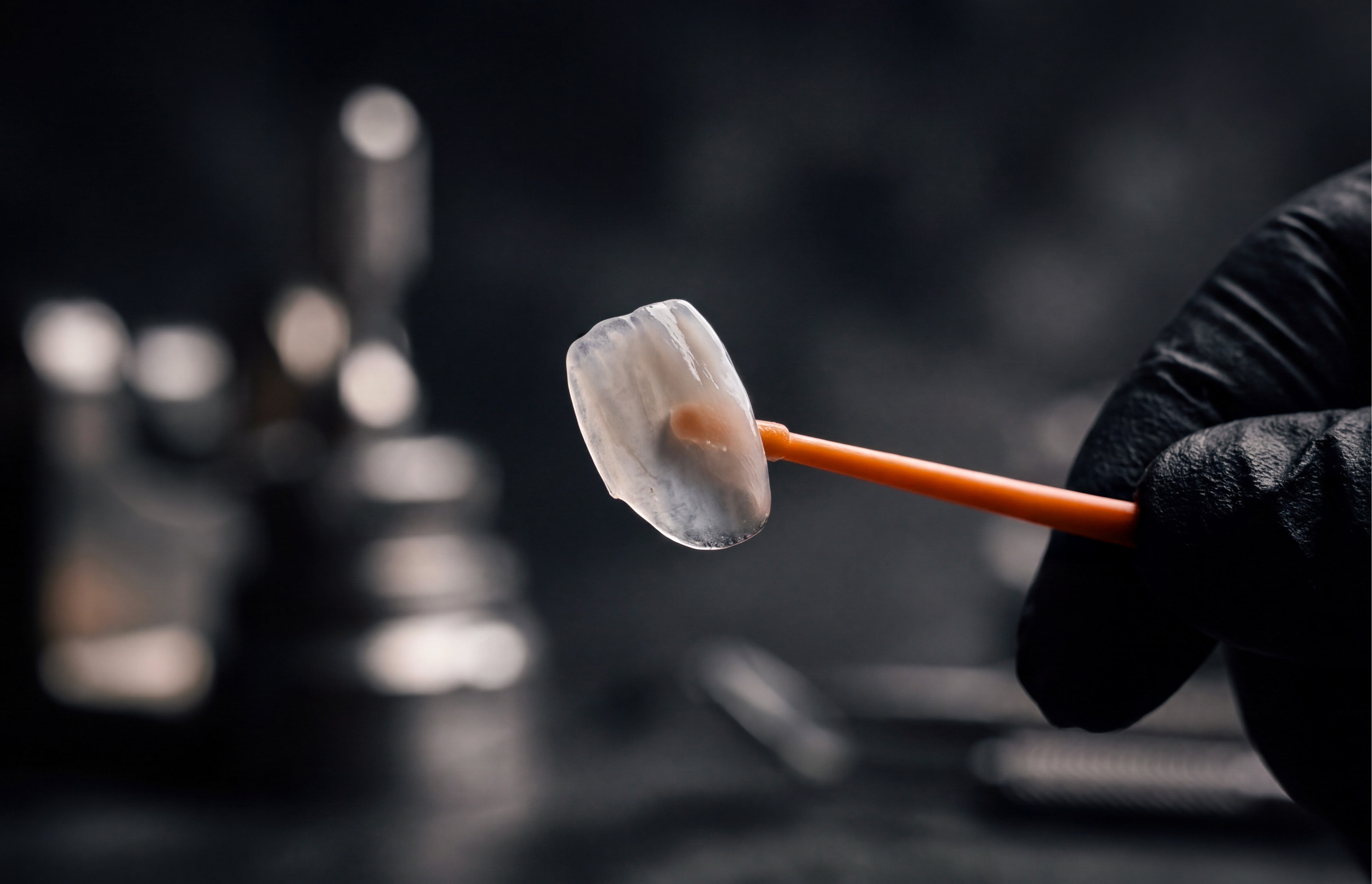
Even when the aim is only to brighten the color without changing the front teeth's shape, a thicker restoration may be needed to mask a dark underlying color. If translucent ceramic of the same thickness is placed on two teeth, a front tooth with a darker underlying color may still look darker than the neighboring tooth. If the difference between the original and desired color is small, however, allowing some of the underlying color to show through may help the restoration blend more naturally with the surrounding teeth.
How much underlying color shows through ceramic depends on the type and thickness of the material, the underlying color, and the bonding material. If a thicker restoration can be bonded as it is while achieving the desired shape, the added thickness does not require additional tooth preparation. If it would make the front tooth too prominent, alternatives include using a less translucent material or slightly adjusting the desired brightness.
If the thickness needed to mask the color requires more tooth preparation, less enamel may remain on the bonding surface in some areas. This is why the desired color and shape are planned together.
For ZERONATE treatment at TU Dental, restorations are designed to be thin within the limits needed to achieve the desired color and shape. Even in the same location, a thinner restoration requires less space. Where a thin restoration can achieve the desired shape, less natural tooth preparation may be needed, or the tooth may be left untouched.
After assessing the alignment, shape, underlying color, and bite of the teeth, the color and form are designed on screen. Temporary restorations are then placed in the mouth during the Smile Preview. Patients can directly check the length and proportions of their front teeth and how full the front surfaces look, and raise any concerns at that visit. If one corner of a front tooth appears to project beyond the desired shape with the temporary restoration in place, the dentist and patient can consider whether changing the restoration's shape alone would achieve the desired appearance or whether that area needs preparation. Whether preparation is needed and how much is required are determined individually after assessing the teeth.
Temporary restorations cannot fully reproduce the color or translucency of the finished ceramic. Once fabrication is complete, the finished restorations are placed on the teeth before bonding. This step is called the try-in. The dentist checks the fit, whether the color blends with the surrounding teeth, and whether there is any interference when the upper and lower teeth meet.
If you would like to know how your front teeth might change, you can discuss the options during a consultation: what can be previewed before bonding, and how much adjustment is possible to suit your desired shape.

When there are gaps between the front teeth, material can be added to the sides facing each other to narrow the spaces. A gap at the side does not necessarily mean there is enough room for a restoration on the front surface or near the gum. If the front surface already projects forward, adding a restoration may make it more prominent. Conversely, even without gaps, a front surface that sits farther back may have room for added material. Whether no-prep treatment is possible depends on why the gaps formed and how closing them would change the teeth's width, front contours, and bite.
Even for no-prep bonding, the tooth surface is cleaned and prepared for adhesion. Here, "no-prep" means that natural tooth structure is not reduced to make room for the restoration or to change the tooth's shape. Even if only one corner is prepared, removing tooth tissue means that reduction has taken place in that area.
Having composite resin on a front tooth does not in itself mean more natural tooth structure needs to be removed. The dentist first checks whether the existing resin can remain or whether discoloration or lifting margins mean it needs replacement. Even if the resin is removed, whether the surrounding natural tooth also needs preparation is assessed separately. The dentist also checks where enamel and any remaining resin are located on the surface the restoration will contact.
TU Dental provides aesthetic dentistry, orthodontics, dental implants, and comprehensive dental care, with a focus on preserving natural teeth. Individual treatment plans are guided by an overall assessment of the teeth, gums, and bite.
Provider: TU Dental
Main services: ZERONATE, aesthetic dentistry, orthodontics, dental implants, and comprehensive dental care
Location: 54 Seocho-daero 77-gil, Seocho-gu, Seoul (Seocho W Tower), 12F TU Dental Clinic & 13F TU MARTH edition
This article provides general information about dental care. Treatment outcomes, recovery and side effects can vary. Consult your dentist before deciding on treatment.