

How do veneers achieve the texture and translucency of natural teeth? The making of ZERONATE ceramics
Even when front teeth are matched to the same brightness, a tooth with a slightly translucent edge looks different from one that is opaque throughout. The way the surface catches the light also varies from tooth to tooth. Creating a natural appearance with veneers means considering translucency and surface texture as well as color.
When making ceramic restorations such as veneers, the color and translucency of each area, the surface contours and fine texture, and the gloss are adjusted together. Light passing through the ceramic and reflecting off its surface changes how the restoration’s color, translucency, and gloss appear. Here is how each part of the process contributes.
Why aren’t natural teeth a single shade of white?
Natural teeth vary in color and light transmission from one area to another. The inner dentin and outer enamel together create tooth color, while the way light passes through, reflects off, and scatters within the tooth also affects its appearance.
The subtle translucency at the edges of front teeth is one example. If the area near the gum and the biting edge are both made the same uniform white, the restoration may look different from neighboring teeth even at a similar brightness. Ceramic design therefore considers not only overall brightness but also where to add color and where to allow more light through.
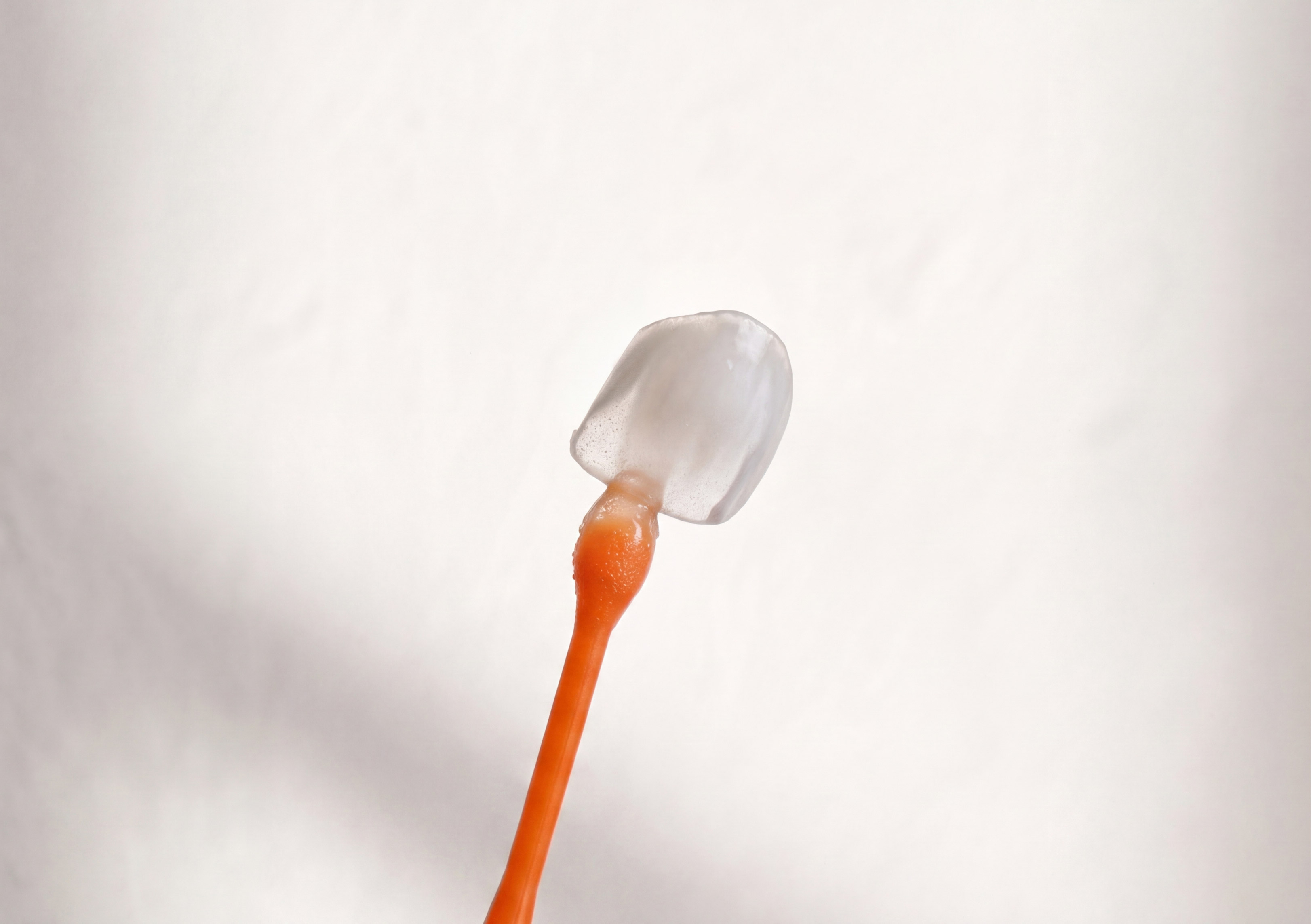
How are layers of color and translucent edges created in ceramics?
Building up dental porcelain in several layers is called layering. Porcelains with different shades and levels of light transmission are placed in specific areas, then heat-treated according to the product’s requirements to complete the restoration.
For example, the main tooth color can be expressed in the center, with translucency at the edge to blend with the surrounding natural teeth. What matters is less the number of layers than where each material is placed and how thick it is, because light transmission varies with the type, shade, and thickness of the ceramic.
The color of the underlying tooth is also important. Preserving the effect of a light underlying color calls for a different level of light transmission than masking dark discoloration. When discoloration needs to be covered, the material and thickness are chosen with both the visibility of the underlying tooth color and the target brightness in mind.
Adding color after creating the basic shape
Layering is not the only way to express color and translucency. Instead of building the entire shape with porcelain, the basic shape can be made using the following methods before further details are added.
- Milling: A ceramic block is cut to create the basic shape.
- Pressing: A dedicated ceramic material is heated and pressed into a mold to create the basic shape.
Additional porcelain can be layered onto selected areas of a milled or pressed form, or ceramic stains can be used to add color.
Stains can add localized color or details at the edges of front teeth without adding further porcelain layers. For example, IPS Ivocolor is a staining material used on pressed, milled, and layered ceramics. The combination of techniques depends on the product and the desired appearance.
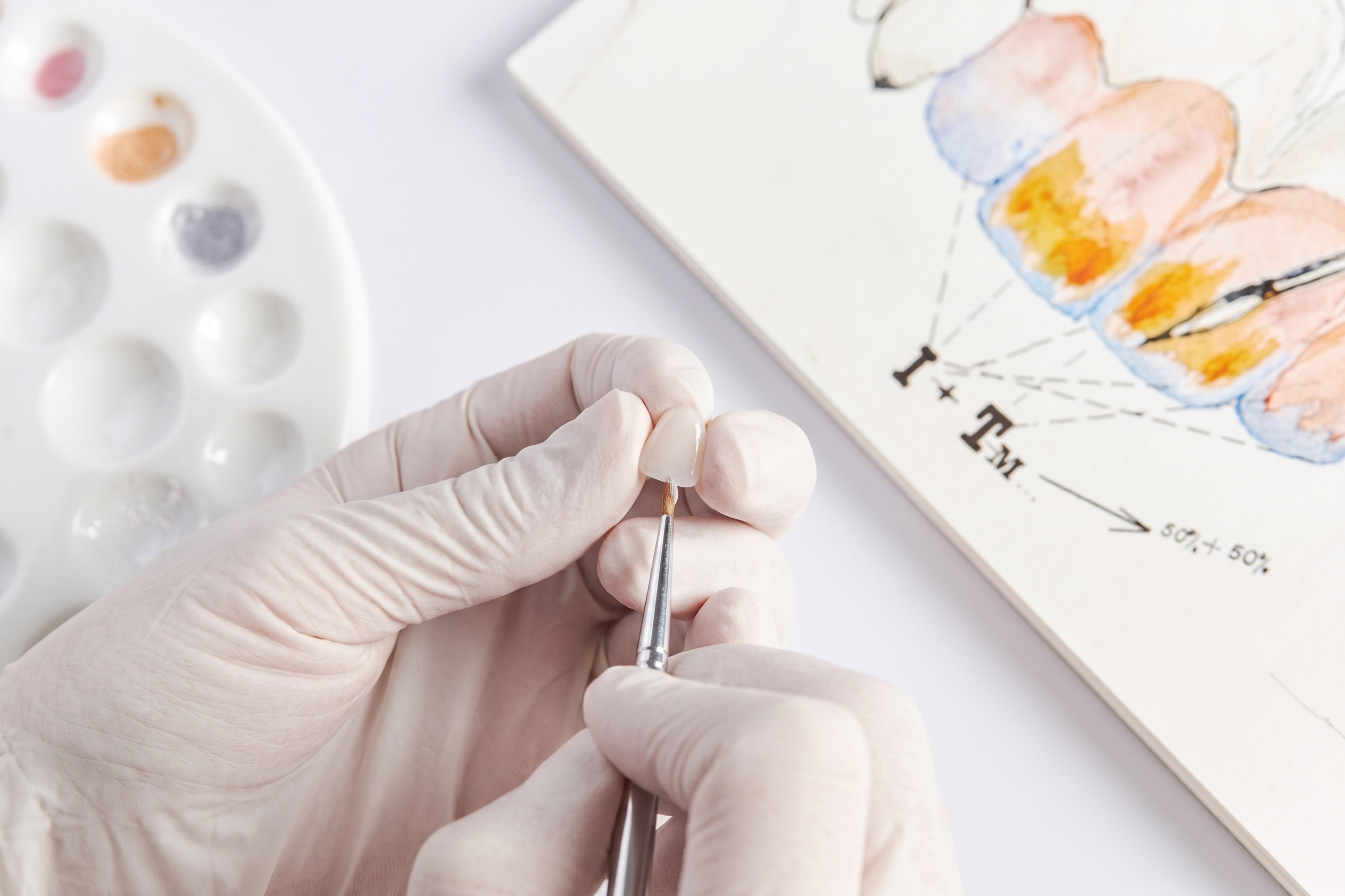
How do surface texture and gloss change the appearance of a tooth?
Surface texture refers to the fine contours and markings on the outside of a tooth. Gloss is the degree of shine produced by reflected light. Even with similar internal color and translucency, different surface contours and finishes change how light reflects.
Reproducing the texture of a natural tooth does not mean leaving the surface rough. The fine details should suit the tooth’s shape while the surface is finished smoothly. The gloss and fine texture of neighboring teeth also provide a reference.
A dental technician who makes ceramic restorations is called a ceramist. Surface work can be divided into the following tasks.
- Creating surface contours: Shaping the contours and fine markings to suit the neighboring teeth.
- Adjusting smoothness and gloss: Polishing or glazing the surface according to the material and fabrication process.
Glaze is a finishing material that gives the ceramic surface a glossy finish. The process of applying it is called glazing.
The roles of color, translucency, surface texture, and gloss can be summarized as follows.
| Element adjusted during fabrication | What is adjusted | Visible difference |
|---|---|---|
| Color layers | Placement and thickness of porcelains in different shades | Color differences between the center and edges, and depth of color |
| Edge translucency | Light-transmitting materials and their placement | How subtly the edges of front teeth allow light through |
| Surface texture | Surface contours and fine markings | Where and in what patterns light reflects |
| Gloss | Finishing methods such as polishing and glazing | How shiny the surface appears |
These elements work together. Even with a good color match, a restoration can stand out if its surface reflections differ greatly from those of neighboring teeth. Matching the gloss alone may not achieve the target color if too much of the underlying tooth color shows through.
Why is the completed restoration checked on the actual tooth?
The appearance after bonding depends not only on the ceramic itself but also on the tooth and bonding material beneath it. That is why a thin ceramic restoration may look different on its own and when placed on the actual tooth. The color of the bonding material can also affect the final color seen through the ceramic.
Placing the completed ceramic restoration on the tooth to check it is called a try-in. Even if the target color and shape were set before fabrication, this is the stage for assessing how the finished restoration fits in with the actual teeth. A shade guide, a preview, and a try-in each serve different purposes.
| Stage or tool | What is assessed | What is decided or checked |
|---|---|---|
| Shade guide | Samples used to compare tooth colors | A reference for selecting the target color |
| Preview | Planned tooth shape and proportions | Discussion of the desired appearance with the dental team |
| Try-in | The completed ceramic placed on the actual tooth | Color and translucency alongside neighboring teeth, fit, and bite |
If the try-in reveals a difference from the desired appearance, the cause is examined. Different work may be needed depending on whether the issue is gloss, color or translucency at the edge, or too much of the underlying tooth color showing through. Some cases require further laboratory work or a remake, so any necessary adjustments should be discussed with the dental team before final bonding.
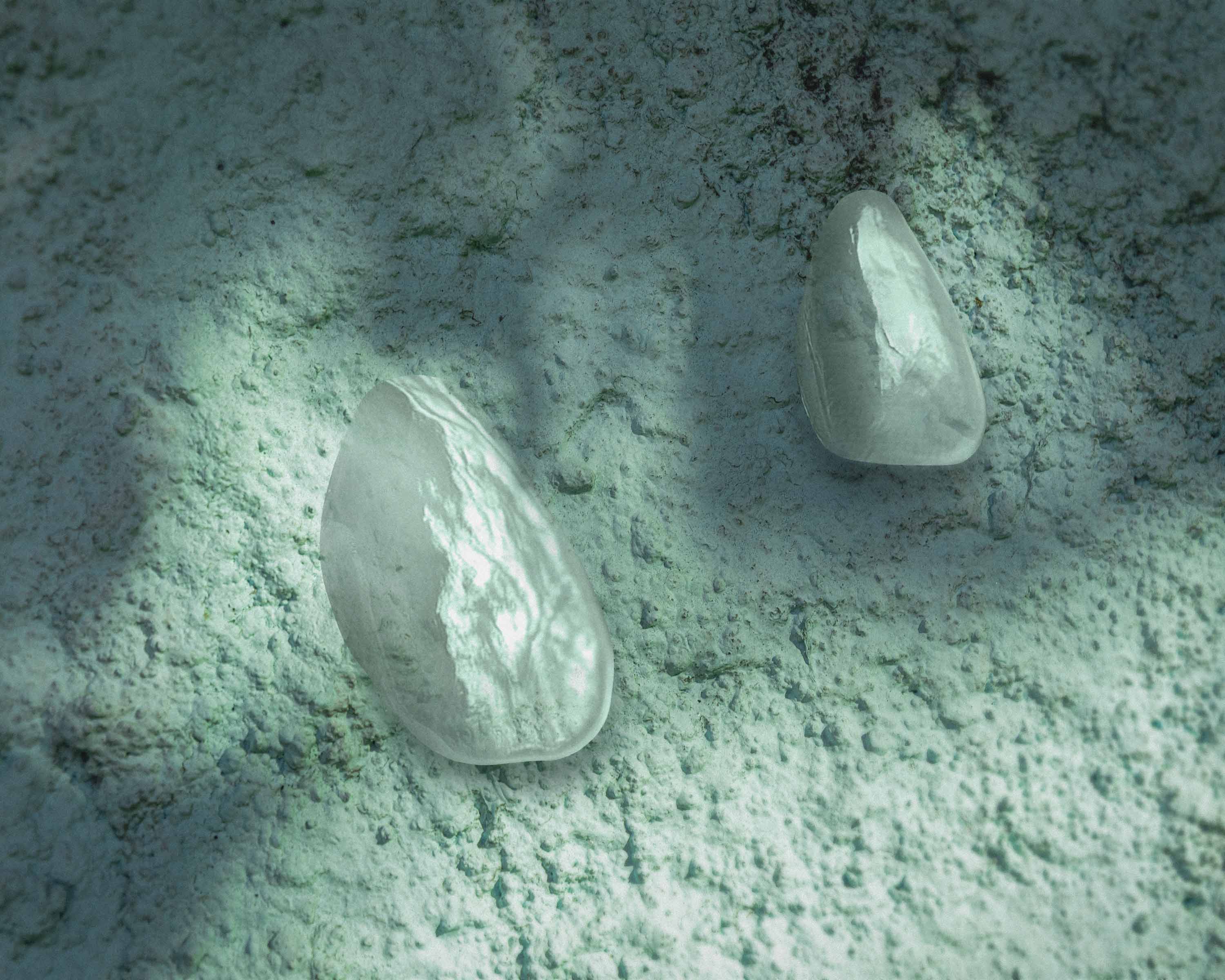
ZERONATE: designing color and texture with natural tooth preservation in mind
ZERONATE, TU Dental’s premium laminate veneer brand, designs ceramic restorations bonded to the front of the teeth according to each person’s dental condition. Creating the desired color and shape goes hand in hand with considering how much natural tooth structure can be preserved. Suitability, the need for tooth preparation, and the amount of preparation depend on the individual’s teeth and treatment plan.
Smile design and a preview are used to assess the desired tooth shape, proportions, and overall harmony, with adjustments where needed, before the fabrication design is finalized.
ZERONATE lab turns that design into a restoration. TU Dental uses lithium disilicate and feldspathic ceramics, combining digital technology with the ceramist’s precise handwork to make individualized restorations.
The fabrication plan reflects each person’s teeth and desired appearance, from overall brightness to edge translucency and surface texture. If you would like a color and texture that suit you while preserving as much natural tooth structure as possible, consider a ZERONATE consultation at TU Dental.
Consultation checklist
- How will edge translucency be adjusted for my underlying tooth color and desired brightness?
- How will the texture and gloss of neighboring teeth be reflected in fabrication?
- If the completed restoration looks different from what I want, what can be adjusted before bonding?
Frequently asked questions
Do more porcelain layers make a restoration look more natural?
The number of layers alone does not determine a natural appearance. Material shade and translucency, thickness in each area, and surface finish need to be adjusted to the target appearance. Even with the same number of layers, different placement and thickness can change the result.
Can color and texture still be added to a milled restoration?
After milling the basic shape, color can be added or porcelain layered onto selected areas as appropriate for the material. Surface contours and gloss can also be adjusted in subsequent steps.
Are more translucent veneers more natural-looking?
The translucency of neighboring teeth and the color of the underlying tooth are considered together. A dark underlying color can show through and alter the target brightness, so the desired translucency must be balanced with how much of that color needs to be masked.
Can color and gloss be changed after bonding?
Adjusting parts of the surface finish is different from changing the color or translucency within the ceramic. A remake may be needed depending on the desired change, so color and texture adjustments should be discussed before final bonding.
Related reading
For a comparison of material types and methods of creating the basic shape, see:
For the treatment process from design to checks after completion, see:
Treatment and consultation information
TU Dental provides aesthetic dentistry, orthodontics, dental implants, and comprehensive dental care, with a focus on preserving natural teeth. Individual treatment plans are guided by an overall assessment of the teeth, gums, and bite.
Provider: TU Dental
Main services: ZERONATE, aesthetic dentistry, orthodontics, dental implants, and comprehensive dental care
Location: 54 Seocho-daero 77-gil, Seocho-gu, Seoul (Seocho W Tower), 12F TU Dental Clinic & 13F TU MARTH edition
Medical Information and Advertising Notice
This article is informational medical advertising content prepared by a medical institution to provide general information about consultations, examinations, treatments, and procedures. Suitable methods and outcomes, recovery, and adverse reactions may vary depending on an individual’s health, the treatment area, and specific treatment conditions. This article does not replace an individual diagnosis or treatment plan. Before deciding on a medical procedure, consult a qualified healthcare professional to confirm the approach and detailed plan appropriate for you.