

TU Dental
Oral Design
About TU Dental
Patient Reviews
Understanding your care. The beginning of trust.
TU Dental created this glossary to help you understand treatment and make informed choices. We explain unfamiliar terms and treatment differences in plain language so you can prepare questions and have a meaningful conversation with your dentist.
All terms 687
Premolars are the teeth between the canines and molars. They break and crush food and are found only in the permanent dentition, not among primary teeth.
Pits and fissures are the small depressions and narrow grooves on tooth surfaces. Food and plaque can collect in them, particularly on the chewing surfaces of molars.
The dental arch is the curved structure formed by the arrangement of teeth in the upper or lower jaw. It describes the width and length of the dentition and how the upper and lower teeth meet.
Permanent teeth are the teeth that emerge after deciduous teeth and form the adult dentition. This includes teeth that replace primary teeth and new molars that grow behind primary teeth.
A cavity is an empty space created in a tooth or prepared for treatment. Depending on the context, a distinction is made between the hole created by a cavity and the space prepared for inserting a restoration.
Primary teeth are the first teeth to emerge during childhood, participate in chewing and speech, and help maintain space for the permanent teeth that will follow.
The proximal surface is the side of a tooth that faces the adjacent tooth. It includes the mesial surface, closer to the anterior midline, and the distal surface, farther from the midline.
The clinical crown is the part of a tooth visible above the gumline in the mouth. The visible extent varies with the position of the gums.
Mastication is the process in which teeth, jaw, muscles, and tongue move together to chew and break up food. It includes the entire movement of food handling, not just the moment the teeth touch.
Incisors are front teeth that cut food at the front of the mouth. It is divided into the central incisors in the middle and the lateral incisors next to them, and is also involved in pronunciation and the shape of the smile.
A midline is a central reference line dividing the body, face, or dentition into right and left sides. In dentistry, the lines between the upper and lower central incisors are compared with the center of the face.
The first permanent molar is the foremost of the permanent molars. It usually erupts behind the primary teeth around age 6 and is also called the six-year molar.
The interdental papilla is the gum tissue that fills the space between two adjacent teeth. The gums that appear triangular between the front teeth also correspond to interdental papillae.
The cervical region is the neck of a tooth, where the crown meets the root. The term is often used when describing wear, decay, or sensitivity near the gumline.
The crown of a tooth is the enamel-covered part of the head of a natural tooth. The cutting tips of the front teeth and the chewing surfaces of the molars are included in the crown.
The root is the part of a tooth that anchors it in the jawbone. Its outer surface is covered with cementum and connects to the surrounding alveolar bone through the periodontal ligament.
The root furcation is the area where the roots of a tooth with multiple roots separate. This is an important position when evaluating periodontal disease in molars.
The apex is the end of the tooth root. It is used to explain root canal treatment and root tip inflammation because the small hole through which nerves and blood vessels enter and exit is close to the surrounding tissue.
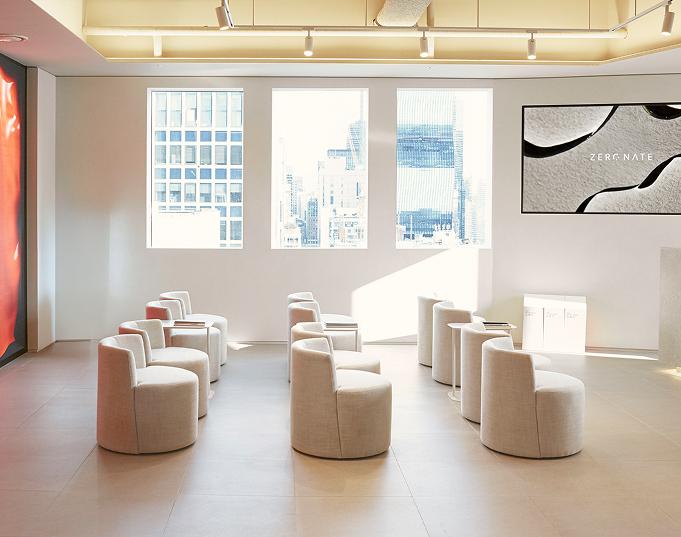
ZERONATE is TU Dental’s premium laminate veneer brand, built on a philosophy of preserving natural teeth. Its vision is to combine near-zero thickness with the health and beauty of ideal natural teeth, while preserving as much of your own tooth structure as possible.
TU DENTAL CLINIC
An informed choice starts with understanding your care. Talk with TU Dental about whether ZERONATE suits your teeth and how natural tooth structure can be preserved. We help you ask questions and understand your options.
Chat on WhatsAppLeave your email address to discuss treatment options and plan your visit.
54 Seocho-daero 77-gil, Seocho-gu, Seoul (Seocho W Tower)
12F TU Dental Clinic · 13F TU MARTH edition