

TU Dental
Oral Design
About TU Dental
Patient Reviews
Understanding your care. The beginning of trust.
TU Dental created this glossary to help you understand treatment and make informed choices. We explain unfamiliar terms and treatment differences in plain language so you can prepare questions and have a meaningful conversation with your dentist.
All terms 687
Intentional replantation involves deliberately removing a tooth, performing necessary root treatment and returning it to its original socket. It is considered in selected cases where conventional retreatment or surgical access is difficult.
Simple tooth extraction generally describes removal of an erupted tooth with dental instruments. Simple does not mean there can be no pain or complications.
Incision and drainage creates an opening to release a collection of pus. In dental infection, the causative tooth or tissue may also require treatment.
Dental haemostasis means controlling bleeding from an extraction or surgical site. Pressure and wound assessment are central, with additional measures selected by the clinician when needed.
A cyst is a sac-like lesion containing fluid or semisolid material. This entry focuses on cysts found in the mouth and jaws.
Post-extraction bleeding comes from the socket after a tooth is removed. Slightly blood-stained saliva differs from ongoing flowing blood; bleeding that does not stop needs assessment.
Cellulitis is a spreading soft-tissue infection. This entry focuses on spread from a dental or nearby infection into the face or jaw, distinct from a localized collection of pus.
An odontogenic cyst is a cystic lesion arising from tooth-related tissues. It may be found in the jaw, and its exact type is assessed through examination and, when needed, tissue analysis as well as imaging.
Alveoloplasty surgically reshapes the bone that supported teeth. It may be considered for prominent areas after extraction or contours interfering with prosthesis fit.
MIH is enamel hypomineralization mainly affecting first permanent molars and sometimes incisors. Although sometimes loosely called hypoplasia, its key feature is poor mineral quality rather than simply too little enamel.
Oral frenectomy removes a frenum, the tissue band connecting the lip or tongue. Need is assessed from actual functional restriction or symptoms, not appearance alone.
MIH refers primarily to under-mineralized enamel affecting first permanent molars and sometimes incisors. It is a qualitative developmental defect that can involve sensitivity or surface breakdown.
A space maintainer helps manage loss of space when a baby tooth is lost early and neighbouring teeth may move. Use is based on the successor tooth's eruption and available space.
Mouth breathing means breathing through the mouth rather than the nose. Nasal obstruction, sleep symptoms and everyday breathing patterns should be assessed together.
Early assessment examines a growing child for tooth alignment, bite relationships and eruption. Early assessment does not mean starting an orthodontic appliance immediately.
A children's sports mouthguard protects the teeth and mouth during sport or play. This entry concerns sports protection, not a grinding appliance.
Paediatric behaviour guidance uses communication and support to help a child understand and participate in dental care. Its purpose is not simply to suppress movement or stop crying.
Finger sucking is a non-nutritive sucking habit seen in young children. If persistent, it can affect alignment and bite, so duration, frequency and intensity are considered together.
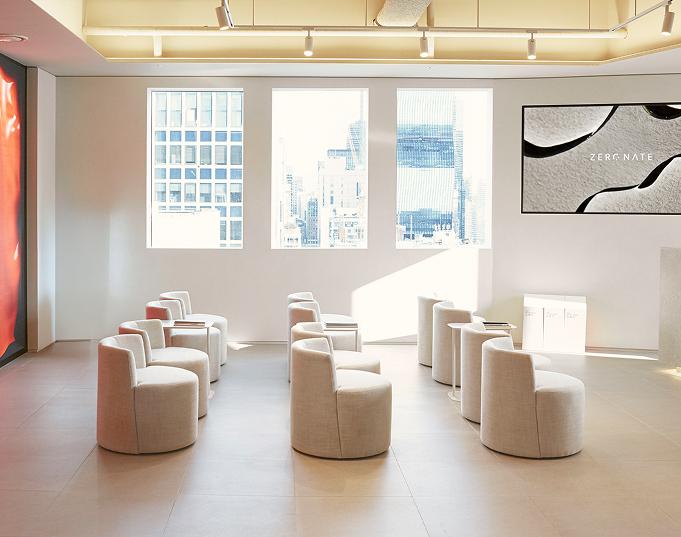
ZERONATE is TU Dental’s premium laminate veneer brand, built on a philosophy of preserving natural teeth. Its vision is to combine near-zero thickness with the health and beauty of ideal natural teeth, while preserving as much of your own tooth structure as possible.
TU DENTAL CLINIC
An informed choice starts with understanding your care. Talk with TU Dental about whether ZERONATE suits your teeth and how natural tooth structure can be preserved. We help you ask questions and understand your options.
Chat on WhatsAppLeave your email address to discuss treatment options and plan your visit.
54 Seocho-daero 77-gil, Seocho-gu, Seoul (Seocho W Tower)
12F TU Dental Clinic · 13F TU MARTH edition