

Yellow Teeth: Is Whitening Enough? When to Consider Veneers
Do your teeth look yellow in photos even though you brush carefully? You may be wondering whether a professional cleaning would help, whether you need whitening, or whether to explore ZERONATE as well.
For yellow teeth, stain removal or whitening may be considered depending on the cause. If whitening is unlikely to achieve the shade you want, or you also want to change the shape and proportions of your teeth, ZERONATE may be another option to discuss. Your dentist can assess your teeth and help you decide which approach and procedures are appropriate.
Let’s look at why teeth can appear yellow and what each approach may change. These points are just as relevant if you have never had your teeth whitened.
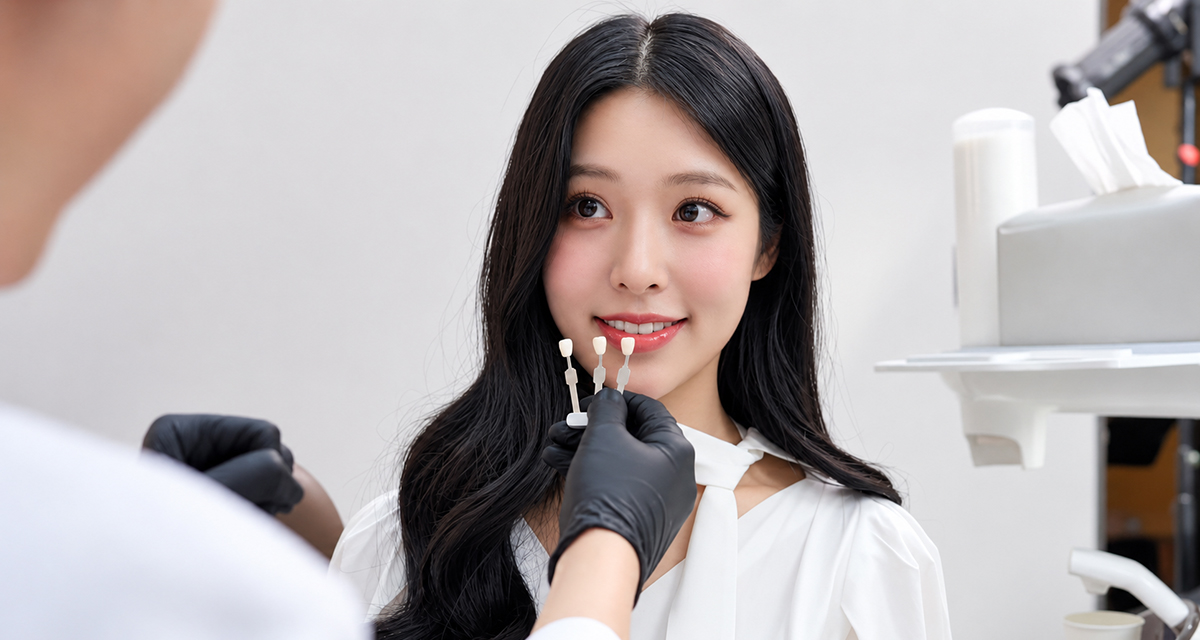
Discussing your current tooth shade and the brightness you would like to achieve.
Why Do Teeth Look Yellow?
Teeth can look yellow because of surface stains, their natural color, or changes with age. Yellow teeth are not always a sign of poor brushing or coffee stains.
Coffee, tea, and tobacco can stain the tooth surface. However, natural tooth color also varies from person to person, so even clean teeth may have a slightly yellow tone. This is partly because the color of the dentin beneath the outer enamel layer shows through. Tooth color can also change with age. Color alone does not mean you have been caring for your teeth incorrectly or that treatment is necessary.
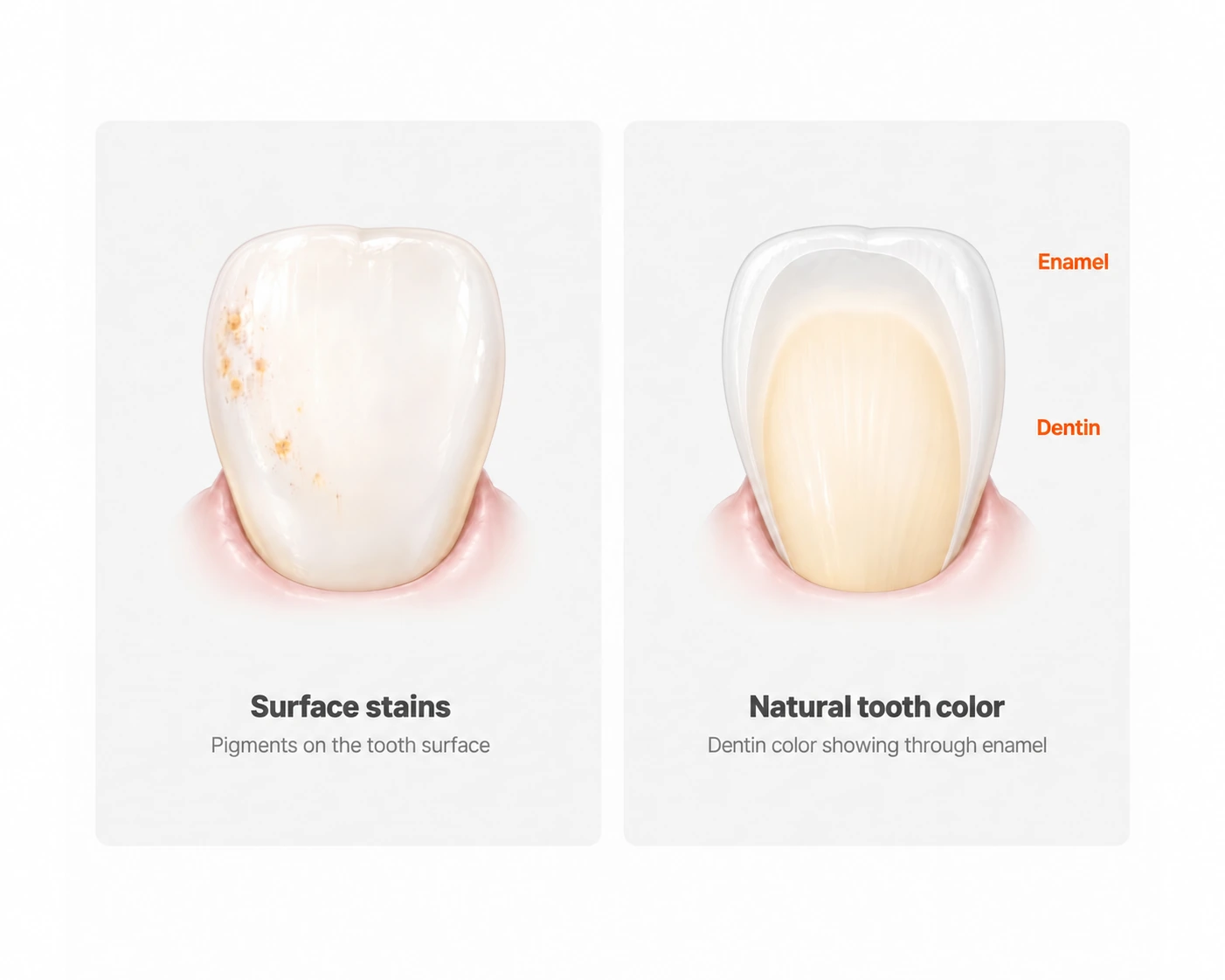
| Title | Description | Anatomy Labels |
|---|---|---|
| Surface stains | Pigments on the tooth surface | |
| Natural tooth color | Dentin color showing through enamel | Enamel, Dentin |
Left: pigments on the tooth surface. Right: the natural color of dentin showing through enamel.
Think about when you first noticed the change and which teeth are affected. Have all your teeth looked similar for a long time, or has one tooth changed recently? This helps clarify the possible cause. Older photos can help you explain when the color began to change during your consultation.
If one tooth suddenly becomes darker or changes color after an injury, have it checked before choosing a whitening method. The change may be related to a problem inside the tooth. Let your dentist know about any pain or sensitivity as well as the color change.
How Much Can Brushing or Professional Cleaning Brighten Yellow Teeth?
Teeth may look brighter when brushing or professional cleaning leaves their surfaces cleaner. However, removing surface stains or tartar is different from lightening the color of the tooth itself.
If your teeth still look yellow despite careful brushing, it helps to distinguish between tartar that brushing cannot remove and teeth that are naturally more yellow. Tartar needs professional removal. If the tooth’s own color is your concern, you can explore what whitening might achieve.
Scaling removes tartar. Depending on the stains, additional cleaning or polishing may also be considered. A single scaling session does not remove every type of stain. If a natural yellow tone remains afterward, it does not necessarily mean the cleaning was done incorrectly.
Approach | What it may change | Limitations and points to check |
|---|---|---|
Brushing | Helps control plaque, debris, and some surface stains | Cannot reliably remove hardened tartar or change natural tooth color |
Scaling and surface cleaning as needed | Removes tartar and surface stains for a cleaner appearance | Further care may be needed depending on the stains; it does not bleach the tooth itself |
Teeth whitening | Uses a whitening agent to lighten natural tooth color | Response depends on the cause of discoloration and tooth condition; existing restorations do not lighten along with natural teeth |
If coffee or tea has stained the surfaces of your teeth, removing those stains alone may reduce the yellow appearance. If the surfaces are already clean but you want an overall lighter shade, it may be worth discussing whitening. Brushing, scaling, and whitening are not a fixed treatment sequence that everyone must complete. The appropriate approach depends on your current teeth and the changes you want.
Can Whitening Give You the Shade You Want?
Whitening can lighten natural teeth, but not everyone will reach their preferred shade. The amount of change depends on the cause of discoloration and the condition of the teeth. Composite fillings and crowns do not lighten in the same way. It helps to discuss both your target shade and what can realistically change in each tooth.
Be specific about the change you would like. Reducing an overall yellow tone is different from addressing a color mismatch in one tooth. If you have a photo showing the shade you prefer, bring it to your consultation. It can help explain how bright—and how natural—you want your smile to look.
Existing composite fillings or crowns on front teeth also need to be considered. Whitening natural teeth does not change existing restorative materials to the same shade, so a mismatch may become more noticeable. Understanding what can change in each tooth helps set realistic expectations for an evenly brighter smile.
If You Were Unhappy with the Initial Whitening Result
Start by identifying the method you used. Using whitening toothpaste is not the same as dentist-supervised whitening following an assessment. Some products supplied by a dental clinic are used at home, so saying you did it “at home” does not tell the whole story. Explain the method you used and the changes you noticed.
If whitening provided by a dental clinic still fell short of your expectations, describe what disappointed you. Was the overall shade not bright enough? Did a particular area remain discolored? Did a restored tooth look different from the others? The next steps depend on the answer.
If You Liked the Initial Result but Your Teeth Look Yellow Again
Here, the focus is on how the color has changed since treatment and what care is appropriate now. Whitening results are not permanent, and habits and other factors can affect tooth color over time. Whether to manage surface stains or consider a whitening touch-up depends on the current condition of your teeth. Repeating treatment at fixed intervals is not automatically necessary.
If you experienced sensitivity during previous whitening, explain whether it occurred only at the time or is still present. Whitening can cause sensitivity or gum irritation. Rather than tolerating discomfort and increasing the number of treatments, discuss how to proceed with your dentist.
When Might Veneers Be Worth Considering? A Look at ZERONATE
Veneers may be worth considering if whitening alone is unlikely to provide the brightness you want, or if you also want to change the length, width, or proportions of your front teeth. Ceramic veneers are thin shells bonded to the front surfaces of teeth to adjust their visible color and shape. ZERONATE is TU Dental Clinic’s premium veneer brand, designed to improve tooth color and shape while prioritizing the preservation of natural teeth—one option to explore when considering ceramic veneers.
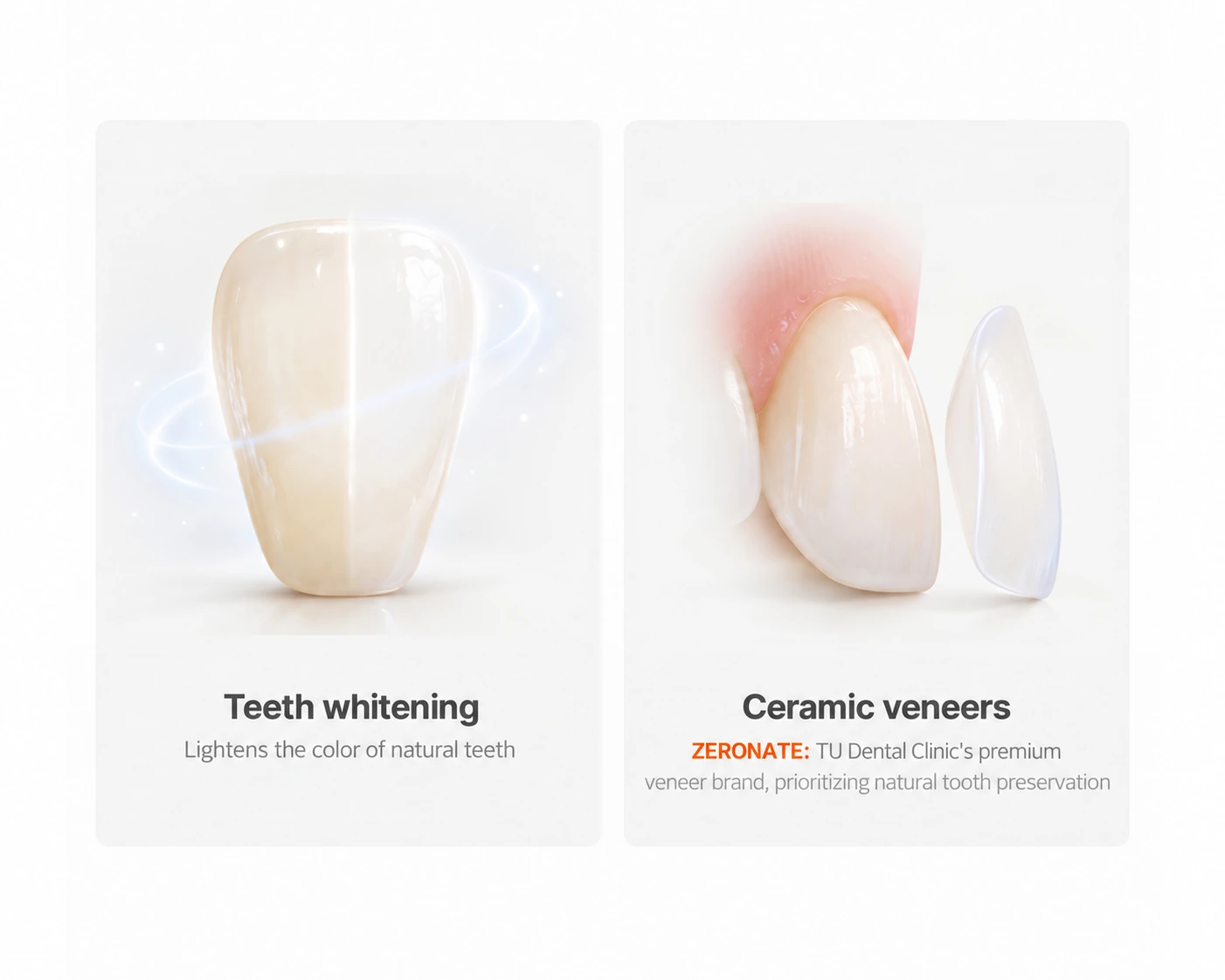
| Service | Description |
|---|---|
| Teeth whitening | Lightens the color of natural teeth |
| Ceramic veneers | ZERONATE: TU Dental Clinic's premium veneer brand, prioritizing natural tooth preservation |
Whitening lightens natural teeth. Ceramic veneers cover the front surfaces to adjust their appearance. ZERONATE is TU Dental Clinic’s premium ceramic veneer brand, with a focus on preserving natural teeth.
When Whitening Alone May Not Achieve the Brightness or Even Color You Want
You may be more concerned about a persistent dark area or differences between teeth than an overall yellow tone. After identifying the cause, if the expected whitening result is still far from your goal, veneers may be considered to address the visible color.
The final shade of ZERONATE also depends on the underlying tooth color and the thickness and translucency of the material. Your preferred brightness needs to be considered together with a natural-looking shape.
A close-up of a thin veneer.
When You Want to Change Front Tooth Length, Width, or Proportions as Well as Color
Even after teeth become brighter, you may still feel that your front teeth look short or that their edges are uneven. Whitening does not change tooth length or width. In this situation, the ability to address color and contours together can be a reason to explore ZERONATE.
For example, you might want to add width to a small front tooth or create a more even outline along the edges. These goals can be discussed alongside your preferred shade. How much material can be added, or how much tooth reshaping is needed, depends on the current shape and bite. If significant tooth movement is required, orthodontic treatment or another approach may be more appropriate.
When Previous Whitening Left You Looking for Other Options
Once you have reviewed your previous whitening method and results, explain what you would still like to change. Is the overall brightness acceptable, but the color of one front tooth bothers you? Or are the teeth brighter, yet their shape still feels unsatisfactory? These concerns help guide which color and shape changes to plan with ZERONATE.
If whitening alone is unlikely to provide the brightness you want, or you also want to change tooth shape, ZERONATE may be an option to discuss. Staining returning or sensitivity alone does not establish that ZERONATE is suitable for you.
Creating the desired color and shape also requires checking the space available for veneers and how your teeth meet. When planning ZERONATE, we first assess whether a no-prep approach is possible to preserve natural tooth structure. Depending on the teeth, selective reshaping may still be needed. If any tooth structure needs to be removed, ask which areas and how much will be affected, and understand that removed enamel cannot be restored to its original state before deciding.
After bonding, the surrounding natural teeth, veneer margins, and bond also need to be monitored. The color stability of ceramic is separate from changes elsewhere in the mouth. Chipping, breakage, or debonding may require repair, rebonding, or replacement.
People with similar concerns about yellow teeth may want different changes. Whether your priority is brightness, a more even shade, or front tooth shape affects why you might consider ZERONATE and what needs assessment. Use the table below to identify the concern closest to yours and organize the changes you hope for and the questions to discuss.
Your concern | Changes to explore with ZERONATE | What also needs assessment |
|---|---|---|
Whitening alone may not achieve the desired brightness or even shade | Visible color and harmony with surrounding teeth | Cause of discoloration, expected whitening response, underlying tooth color, and veneer thickness |
Yellow color plus concerns about front tooth length, width, or edges | Color, shape, and proportions together | Current tooth shape, bite, and any required tooth preparation |
Some concerns remain after previous whitening | Color or shape that still bothers you | Whether stain management or further whitening could help, the extent of veneer treatment, and aftercare |
For more detail on how the procedures and ongoing care differ, read about teeth whitening versus veneers.
Frequently Asked Questions
Can Teeth Look Yellow Even If I Don’t Drink Coffee?
Yes. Natural tooth color and age-related changes also play a role. Teeth can have a yellow tone despite careful brushing, so color alone does not indicate poor hygiene. If you have noticed a recent change, tell your dentist whether it affects all your teeth or just one.
If Whitening Toothpaste Did Not Help, Does That Mean Professional Whitening Won’t Work?
Not necessarily. Whitening toothpaste mainly targets surface stains, while professional whitening uses whitening agents to lighten natural tooth color. They can therefore produce different changes. Explain which product you used, for how long, and what disappointed you so your dentist can assess the next options.
Can I Have Whitening If I Have Composite Fillings or Crowns on My Front Teeth?
It may be considered depending on your situation, but composite fillings and crowns do not lighten like natural teeth. If the surrounding teeth become brighter, a color difference may become more visible. Before whitening, have the position and shade of existing restorations checked and discuss how your smile may look overall if the natural teeth reach your preferred shade.
Do I Have to Repeat Whitening If My Teeth Look Yellow Again?
Not necessarily. First, determine whether the change is due to new surface stains or a change in the shade achieved with whitening. Stain management or a whitening touch-up may be considered based on your satisfaction with the current color and the condition of your teeth. If you had sensitivity before, discuss it before deciding on further whitening.
Can I Ask About ZERONATE If I Have Never Had Whitening?
Yes. You do not need to have whitening before a ZERONATE consultation. Your dentist will assess your teeth and whether you want to change color alone or also front tooth length, width, and proportions. Discuss the expected changes, required tooth preparation, and aftercare for each option before deciding together on an appropriate approach.
Before Your Consultation: A Checklist
Make a few notes before your visit. You do not need to diagnose the cause or choose a treatment yourself. The important thing is to explain what bothers you and what you would like to change.
☐ When and where the color changed: Have your teeth always looked yellow, or is this recent? Does it affect all your teeth or particular teeth?
☐ Your preferred shade and what you want to keep: Do you simply want less yellow, or a brighter, more even shade? Note any aspects of your current teeth you would like to preserve.
☐ Concerns about shape: Would you also like to change the length, width, or edges of your front teeth? Separate color concerns from shape concerns when describing them.
☐ Existing dental work and symptoms: Mention front tooth fillings or crowns, sensitivity, pain, and any previous tooth injury.
☐ Previous whitening: Note the product or treatment method, timing, initial results, later color changes, and any discomfort. Skip this item if you have never had whitening.
Start by asking, “What changes can I realistically expect with my teeth?” If you are also considering ZERONATE, ask which teeth would be treated, what preparation would be needed, and what follow-up checks and care would involve.
Related Reading
To learn more about ZERONATE or compare the two approaches in greater detail, explore these articles.
TU Dental Clinic: Treatment and Consultation
TU Dental Clinic offers cosmetic dentistry, orthodontics, dental implants, and comprehensive dental care, with a focus on preserving natural teeth. We assess the condition of your teeth and gums, your bite, and other relevant factors to develop an individual treatment plan.
Healthcare provider: TU Dental Clinic
Services: ZERONATE, cosmetic dentistry, orthodontics, dental implants, and comprehensive dental care
Location: TU Dental Clinic, 12F, and TU MARTH edition, 13F, Seocho W Tower, 54 Seocho-daero 77-gil, Seocho-gu, Seoul, South Korea
Medical Information and Advertising Notice
This article is informational medical advertising prepared by a healthcare provider to offer general information about consultations, examinations, treatments, and procedures. Suitable treatment options, outcomes, recovery, and adverse effects may vary depending on individual health, the area being treated, and specific treatment circumstances. This article does not replace an individual diagnosis or treatment plan. Before deciding on a medical or dental procedure, consult a healthcare professional to confirm the options and specific plan appropriate for you.