

Differences Between Ceramic Treatments and ZERONATE Veneers: Comparing Tooth Reduction, Treatment Scope, and Timeline
When looking into front teeth ceramic treatments in Korea, the name ZERONATE veneers is often encountered. To understand the difference between the two treatments, it is first necessary to distinguish the scope that each term refers to.
The commonly used term "ceramic treatment" does not refer to a single procedure. Instead, it is an umbrella term covering various aesthetic and prosthetic treatments using ceramic materials, including crowns and laminate veneers.
ZERONATE refers not to a material, but to a specific treatment process. Through precise diagnosis and a wax-up — a process of pre-designing treatment results on a dental model — it is determined whether non-preparation is possible. If tooth shaping is required, it proceeds with selective preparation within the necessary scope, followed by designing the color and shape, and then fabrication and insertion
When comparing treatments, look beyond their names. It is essential to evaluate what kind of treatment the current teeth require, which areas are covered and to what extent, and whether there are any conditions that make the treatment difficult to perform.
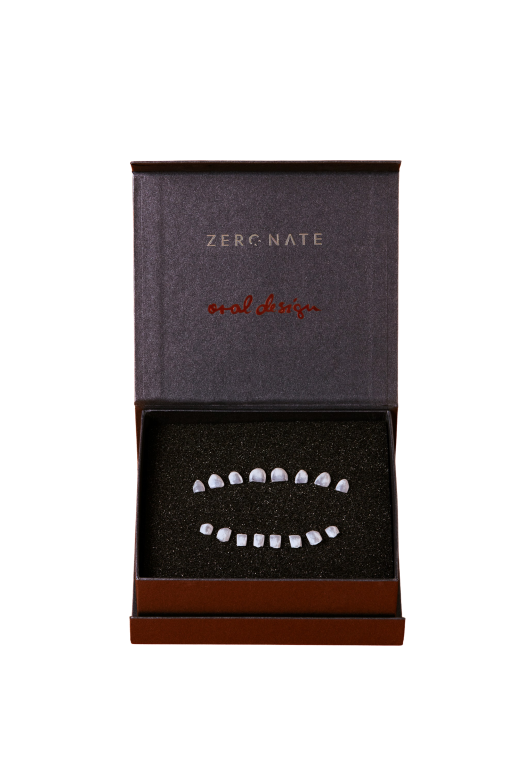
ZERONATE
oral design
What Does "Ceramic Treatment" Include?
Ceramic treatment broadly refers to dental procedures using ceramic materials. Depending on the treatment goal and coverage area, options range from ceramic crowns to laminate veneers.
Ceramic crowns fully cover the outer surface of the tooth. They are typically considered when teeth are damaged by decay or fracture, or when replacing existing restorations. Tooth reduction is often necessary to create adequate space for the restoration.
Ceramic laminate veneers primarily cover the outer surface of the front teeth to refine color, shape, and length. While their coverage area is smaller than crowns, they typically involve 0.5 to 1 mm of enamel reduction before bonding.
Even when using the same ceramic material, the treatment purpose, amount of reduction, and coverage area are not the same. When checking the amount of reduction, it is necessary to first distinguish whether it is a crown or a laminate, and what condition the current teeth are in.
How are ZERONATE Veneers Related to Ceramic Treatments?
ZERONATE veneers are an aesthetic dental treatment that can be considered when adjusting the color, shape, length, and gaps between teeth primarily in the front teeth, extending to the visible molar areas when smiling. Since they are crafted from ceramic, they can broadly fall under ceramic treatments.
However, ZERONATE veneers do not refer to the ceramic material itself. It represents an entire treatment process—from initial diagnosis and tooth reduction planning to shade and shape design, fabrication, and insertion.
A non-prep approach is determined by diagnosis, not guaranteed. It is determined based on criteria such as whether the dental alignment is even, if there is sufficient margin in tooth size, and whether the teeth are lingually inclined, verified through a wax-up model to evaluate volume changes. Non-prep cases are limited; if tooth reduction is required, selective preparation is performed at near-ZERO(0) levels on the labial surface.
Check ZERONATE Diagnostic Criteria & Process
How Do Tooth Reduction and Coverage Area Differ?
The two treatments differ in not only the extent of tooth reduction, but also which parts of the tooth they cover.
Category | Ceramic Treatment | ZERONATE Veneers |
|---|---|---|
Scope of Term | Various procedures using ceramic (crowns, laminate veneers, etc.) | Oral skincare veneer preserving natural teeth for ideal health and aesthetics |
Treatment Areas | Front and back teeth (varies by goal) | Overall shade, shape, and alignment (front teeth to molars) |
Tooth Reduction | Crowns often require space; laminate veneers typically involve 0.5–1 mm reduction | Non-prep or selective preparation at near-ZERO(0) levels on the labial surface |
Coverage Area | Full tooth or outer surface (varies by procedure) | Custom-designed (primarily labial surface) |
Thickness & Protrusion | Surface-added material may feel bulky depending on tooth position and thickness | Verifies thickness and protrusion on a pre-made model before deciding the approach |
Diagnostic Factors | Decay, remaining structure, gums, bite, and existing restorations | Facial/dental harmony, smile analysis, tooth size/alignment/discoloration, gums, bite, and past treatments |
Schedule & Visits | Varies by treatment area, method, and quantity | As fast as ONE DAY or 2 days/1 night; averages 1 business week (2–3 visits) |
Limiting Factors | Tooth/gum health and occlusion | Skeletal malocclusion, severe protrusion, or misalignment requiring separate planning |
While both treat front teeth, the necessary procedure varies depending on whether it covers only the outer surface or encases the entire tooth.
During the consultation, rather than simply checking whether it is a ceramic or ZERONATE veneers, it’s best to verify which teeth will be covered, the scope of coverage, and whether tooth reduction is required—and if so, to what extent.
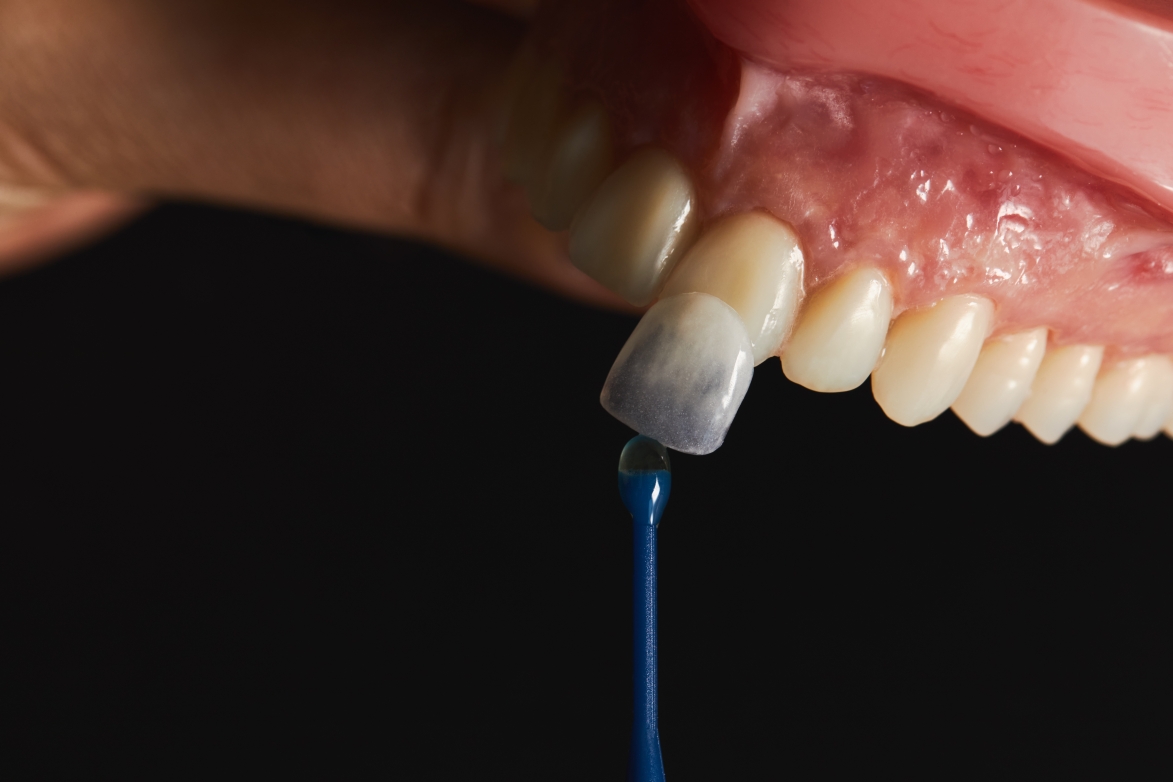
Do non-prep ceramics make teeth look bulky?
Applying ceramics without tooth reduction doesn't mean teeth will look bulky in every case. However, since a new layer is added to the natural tooth surface, a sense of protrusion may occur depending on the original tooth position and shape.
To evaluate potential thickness and protrusion, the following factors are reviewed:
Whether the existing teeth protrude forward
Whether there is sufficient space for the ceramic to be placed
Whether the margins with surrounding teeth can blend naturally
Whether protrusion occurs when closing the lips
Bite alignment between upper and lower teeth
Required thickness for the desired shade and shape
If teeth are set inward or have gaps between them, adding thickness to the surface can help reshape them. Conversely, if teeth already protrude or overlap, adding material without tooth reduction can cause noticeable bulk. In such cases, we may consider selective preparation or recommend orthodontic treatment first, depending on your alignment and bite.
ZERONATE veneers do not leave this judgment to intuition. The post-treatment shape is previewed using a wax-up model, which is then transferred into a guide to distinguish areas where volume can be increased from those that need reduction, ultimately confirming whether non-preparation is possible. Rather than choosing a treatment method based solely on the possibility of non-preparation, it is important to establish a plan by predicting the position of the teeth after insertion, the movement of the lips, and the harmony with surrounding teeth.
How do consultation, fabrication, insertion, and visit schedules differ?
Both treatments follow similar steps: diagnosis and consultation, tooth preparation, impressions or scanning, fabrication, insertion, and adjustment. Required visits and fabrication timelines vary by method and tooth condition.
Ceramic crowns may involve evaluating existing decay or restorations, tooth reduction, and wearing temporary crowns. If additional treatment is required for the gums or inner tooth structure, the overall schedule is adjusted accordingly.
ZERONATE follows a structured process: consultation and detailed diagnosis, wax-up design review, selective preparation if needed, fabrication, try-in fitting, insertion, and bite adjustment. While same-day (ONE DAY) or 2-day options are available, treatment typically takes about one business week on average, requiring 2 to 3 visits. However, timelines may vary depending on tooth and gum condition, scope, quantity, and fabrication method. In some cases, preliminary gum treatment may be needed before fabrication.
When planning treatment according to a stay schedule in Korea, it is best to check and distinguish the following:
First-visit examination & consultation scope
Whether selective preparation or gum treatment is necessary
Whether temporary teeth need to be used
Fabrication timeline
Post-insertion checks & bite adjustments
Completion dates cannot be fixed before diagnosis. Timelines vary based on tooth and gum condition, prior dental work, and fabrication methods—even for the same tooth count.
When Each Treatment Works—and When It Doesn't
When to Consider Ceramic Crowns or Laminate Veneers
When adjusting the color or shape of front teeth
When replacing existing crowns or restorations
When extensively covering teeth damaged by extensive decay or fractures
When prosthetic treatment is necessary considering the remaining tooth structure
Even with the same ceramic material, your treatment plan depends on whether you need surface-level adjustments or full coverage.
When to Consider ZERONATE Veneers
When adjusting the shape, length, and color of front teeth
When teeth are small, leaving visible spaces (microdontia)
When gaps between teeth are a concern (interdental spaces)
When designing shapes to harmonize with adjacent teeth
When determining the reduction range while preserving natural teeth as much as possible
Microdontia and interdental spaces are prime candidates for non-prep veneers. However, if teeth are significantly crowded, severely protruded, or experience strong upper and lower bite contact, proceeding directly with the desired method may be difficult.
Teeth that already have crowns or extensive fillings require a different treatment plan compared to natural teeth. Depending on the condition, existing prosthetics may be replaced, or application may be considered while retaining them if conditions allow, so the direction is determined based on the diagnosis results.
Diagnostic Criteria Before Treatment Names
When choosing aesthetic treatment for front teeth, treatment names alone do not determine candidacy. It is necessary to first check what kind of treatment the current teeth require.
During diagnosis, we evaluate:
How much of the natural tooth remains
Whether there are cavities, micro-cracks, or fractures
Whether there are existing fillings or prosthetics
Tooth position, alignment, and size
Gum height and the presence of inflammation
Bite alignment
The range of teeth visible when smiling
The desired shade, shape, and length
Even when reviewing the same front teeth treatment, the treatment scope can vary depending on the condition of the teeth. The treatment method is decided after checking whether a method covering the outer surface of the teeth is possible, whether prosthetic treatment covering the entire tooth is necessary, or whether orthodontic or gum treatment should be performed first.
"Ceramic treatment" covers various options like crowns and laminate veneers, so no single approach applies. ZERONATE veneers aren't always non-prep, either. Required tooth reduction, scope, thickness, and timeline are determined after diagnosing the tooth condition, occlusion, gums, existing treatments, and aesthetic goals. As results and side effects vary per person, it is advised to decide on treatment after consulting with a medical professional.
In summary, one is a broad term covering various procedures based on material, while ZERONATE veneers are an approach where candidacy and scope are determined through diagnosis. Required tooth reduction, coverage, and visit schedule are finalized after checking the state of the teeth, gums, occlusion, and existing treatments. Detailed consultation with a medical professional is recommended.