

TU Dental
Oral Design
About TU Dental
Patient Reviews
Understanding your care. The beginning of trust.
TU Dental created this glossary to help you understand treatment and make informed choices. We explain unfamiliar terms and treatment differences in plain language so you can prepare questions and have a meaningful conversation with your dentist.
All terms 687
Dental spacing describes gaps between neighbouring teeth within the dental arch. In orthodontic discussions it has the same meaning as interdental spacing. Assessment considers growth and eruption, tooth size, number and position, and gum health.
A chin cup is an extraoral orthodontic appliance that transmits force through a chin support and head attachment, aiming to influence forward lower-jaw growth and the jaw relationship. It may be considered for some growing patients with a Class III bite relationship, but it does not mean that lower-jaw growth can reliably be stopped or every prominent lower jaw corrected.
A quad helix is a fixed orthodontic appliance with four wire loops used to adjust dental arch width and tooth position. It is usually attached near the upper molars and sits on the palatal side. It may be considered for some posterior crossbites or narrow dental arches.
Jaw joint sounds include clicking, popping or grating felt around the joint when opening or closing the mouth. Painless clicking is common, and a sound alone does not mean that a temporomandibular disorder needs treatment or that bone is damaged.
In clear aligner treatment, an attachment is a small addition bonded to the tooth surface to help the appliance produce planned tooth movements. It is usually made from tooth-coloured composite resin, with its location and shape selected according to the movement plan.
Clear aligners are removable, transparent appliances that fit over the teeth and are used in sequence to guide tooth movement. Attachments or elastics may be used as part of the plan. Their purpose differs from that of retainers, which hold tooth positions.
A twin block is a functional orthodontic appliance whose upper and lower parts meet to guide the lower jaw forwards. The usual design is removable and may be considered for some Class II bite relationships during growth. It does not correct every small-looking chin or guarantee jaw growth.
A power chain is a series of small connected elastic loops attached to several orthodontic brackets to move teeth or close spaces between them. It is selected for the treatment stage and forces needed, rather than used throughout treatment for every patient.
An orthodontic facemask is an extraoral appliance connecting forehead and chin supports to an appliance inside the mouth, with the aim of guiding the upper jaw and upper teeth forwards. It may be considered for selected Class III bite relationships during growth. It differs from a device that only applies pressure to the lower jaw and from an ordinary face mask.
The Frankel appliance is a functional orthodontic appliance intended to work with the forces associated with the lips, cheeks and other oral soft tissues. Also called a functional regulator, it is designed to have relatively little direct contact with the teeth. Different designs address different bite relationships, so its name alone does not establish suitability.
Orthodontic headgear is an extraoral appliance connecting supports around the head or neck to an appliance in the mouth. It is used to influence tooth and jaw relationships or reinforce anchorage. Common designs include a facebow and connecting straps, with the design selected according to the diagnosis and force direction.
Tongue thrust describes the tongue moving forwards or between the teeth during swallowing or speech. Assessment also considers resting tongue position, nasal breathing, lip closure, speech, swallowing and the bite, rather than movement alone.
A tongue-thrust appliance is an intraoral device considered to reduce forward tongue movement between the front teeth or improve awareness of tongue position. Designs include fixed or removable palatal cribs. The term does not identify one product or imply that every tongue habit needs an appliance.
An orthodontic expansion appliance is a general term for devices intended to increase dental arch or upper-jaw width. Designs vary, using wires or screws and transmitting force through teeth or bone. Changes in tooth inclination must be distinguished from skeletal expansion.
Disc displacement means that the disc within the jaw joint is outside its usual positional relationship with the joint bones. It may return to that relationship during jaw movement or remain displaced. Sounds, pain and locking vary between individuals.
A night guard is an oral appliance usually worn during sleep to cover the teeth and help reduce damage associated with grinding or clenching. The name can overlap with stabilisation splints, so its actual design and purpose need clarification. It does not imply a cure for bruxism.
In jaw-joint and bruxism care, a splint is an oral appliance covering the teeth to protect them or manage symptoms by modifying tooth contacts. This article concerns occlusal stabilisation appliances, rather than splints that join traumatised teeth together for support.
An occlusal stabilisation appliance covers the teeth to protect them or modify contacts while managing jaw-joint or bruxism-related symptoms. It is also called a splint. This article concerns that use, rather than an appliance joining traumatised teeth together for support.
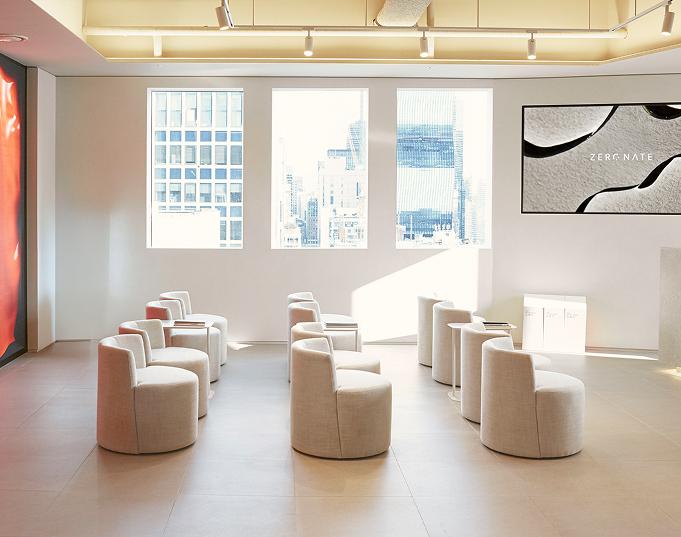
ZERONATE is TU Dental’s premium laminate veneer brand, built on a philosophy of preserving natural teeth. Its vision is to combine near-zero thickness with the health and beauty of ideal natural teeth, while preserving as much of your own tooth structure as possible.
TU DENTAL CLINIC
An informed choice starts with understanding your care. Talk with TU Dental about whether ZERONATE suits your teeth and how natural tooth structure can be preserved. We help you ask questions and understand your options.
Chat on WhatsAppLeave your email address to discuss treatment options and plan your visit.
54 Seocho-daero 77-gil, Seocho-gu, Seoul (Seocho W Tower)
12F TU Dental Clinic · 13F TU MARTH edition