

What Are No-prep Veneers? The Difference from Traditional Veneers
oral design J.ONE
What Are No-prep Veneers?
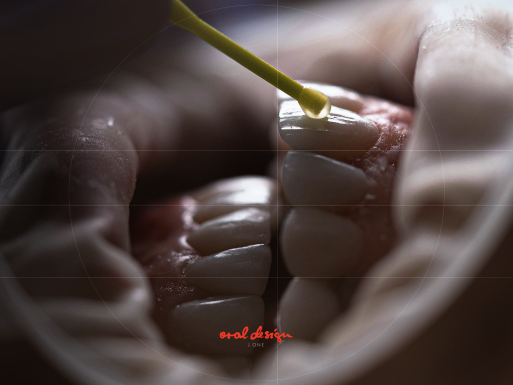
No-prep veneers are an aesthetic treatment method where thin ceramic restorations are attached to the tooth surface with little to no reduction of natural teeth. While traditional veneers are based on a process of grinding down the tooth surface by the thickness of the restoration first, the no-prep method is closer to an approach that plans aesthetic improvement while maintaining the existing tooth structure as much as possible. Recently, there has been a growing trend in global aesthetic dentistry that avoids excessive tooth reduction and emphasizes the preservation of natural teeth. Within this trend, interest in non-prep or minimal-prep methods is also increasing.
Key Differences from Traditional Veneers
Differences between no-prep veneers and conventional veneers appear in terms of the amount of reduction, design direction, and reversibility.
Category | Conventional Veneers | No-prep Veneers |
|---|---|---|
Amount of Reduction | Reduction of about | No reduction |
Enamel Preservation | Partial reduction of enamel | Prioritizes enamel preservation |
Design Direction | Fitting the restoration into the reduced space | Designing the restoration over the existing teeth |
Reversibility of | Difficult to reverse after reduction | A conservative method that allows considering the possibility of reversing to a state similar to the original condition |
Suitable Cases | Improvement of alignments and shades | Focusing on improving the shape and color of |
However, the above criteria are a reference to explain general differences, and the actual treatment direction can vary depending on an individual's tooth condition and treatment goals.
Advantages and Limitations of No-prep Veneers
Key Advantages
One of the reasons the no-prep method receives attention is due to its approach of preserving natural teeth.
Maintaining the enamel as much as possible often allows for safeguarding the healthy structure of the teeth.
There is a lower possibility of tooth sensitivity caused by tooth reduction.
Minimal or no reduction allows the treatment direction to be more open to reversibility.
However, cases where teeth can undergo no-prep veneer procedures are highly limited. Therefore, the claim that all cases qualify for a non-prep method requires verification.
Limitations to Keep in Mind
At the same time, the no-prep is not always the best choice.
When the teeth are not evenly aligned or are protruded, the non-prep approach alone may not bring natural results.
If the existing teeth are already pushed forward to some extent, adding a restoration on top can cause the teeth to look thicker.
In cases of severe discoloration or specific shade conditions, the non-prep method alone may not realize the most desired brightness and shade.
When tooth size is large or reducing tooth size is desired, the non-prep method cannot be applied.
In short, while no-prep veneers can demonstrate advantages in a very limited number of cases, not all patients can undergo the no-prep method.
TU MARTH edition MARTH lab
Are No-prep Veneers Possible for Everyone?
To jump straight to the conclusion, they are not. The suitability of the no-prep method depends on an individual’s tooth condition.
Cases Where the No-prep Method Can Be Considered
When tooth alignment is relatively even
When the tooth size itself is small, such as microdontia
When there are gaps between teeth
When the primary goal is the improvement of teeth shape and color
When bite issues are not significant
Cases Where Selective Preparation Is Also Considered
When teeth are pushed forward due to protrusion or projecting teeth
When designing the thickness of the restoration is challenging due to an uneven alignment
When preparation is required for bonding stability depending on the surface condition of the existing teeth
When securing a certain amount of space is necessary to cover color differences of certain teeth
As such, whether a completely no-prep approach is possible or whether Selective Preparation is required alongside it cannot be determined through photographs or visual inspection alone. The overall treatment direction will be finalized after assessing teeth alignment, bite, shade condition through a precise individual diagnosis.
An Aesthetic Treatment Prioritizing the Preservation of Natural Teeth — ZERONATE veneers
Ultimately, the common interest among those searching for no-prep veneers lies in whether aesthetic improvement is possible while preserving the natural teeth as much as possible.
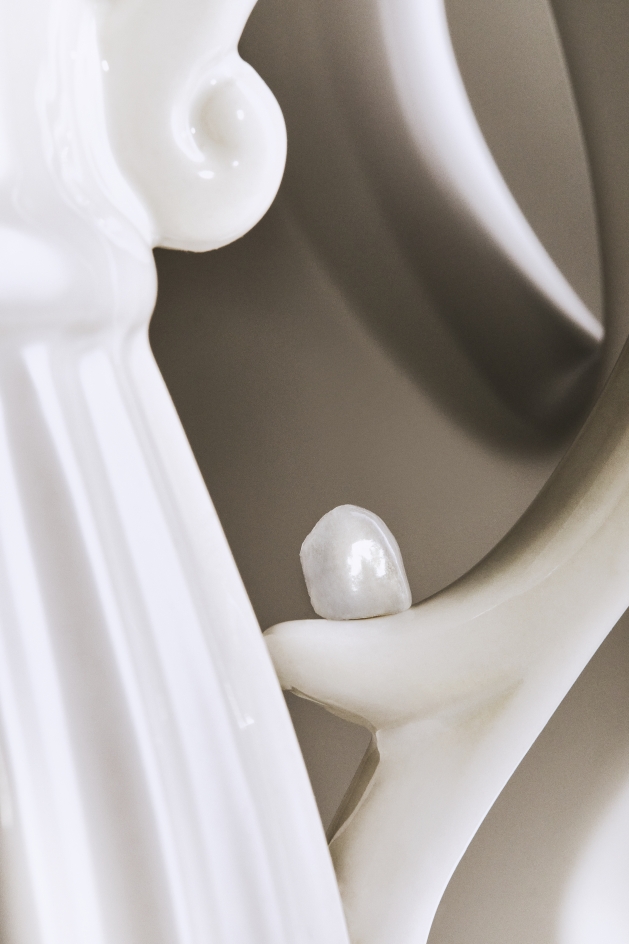
ZERONATE veneers represent an aesthetic treatment approach aligned with this direction. Crafted with ultra-thin ceramic restorations, ZERONATE veneers prioritize the preservation of natural teeth. This approach goes beyond simply brightening the teeth, designing a perfect harmony with the overall facial impression.
However, for ZERONATE veneers as well, cases are divided into those where a completely no-prep approach is possible and those where Selective Preparation is required, depending on an individual's tooth condition. What is important is that the no-prep approach is not the ultimate goal, but a process of preserving natural teeth as much as possible to realize natural aesthetic results.
👉 Learn more about ZERONATE veneers
Limitations and Precautions
Not all patients can undergo no-prep veneers. Selective Preparation may be required depending on an individuals’s teeth alignment, bite, and the level of discoloration, and suitability is determined through an individual clinical evaluation.
Conclusion
No-prep veneers are not simply “veneers without teeth reduction.” Rather, they represent an approach that designs an aesthetic treatments with the preservation of natural teeth as the starting point. In order to determine whether the no-prep approach is aligns with one’s tooth condition and goals, the current teeth alignment, bite, and desired range of results must be evaluated together first.