Why Celebrities' Teeth Look So Much Better
Why do celebrities' teeth look so much better? The answer might not simply be that they are white.
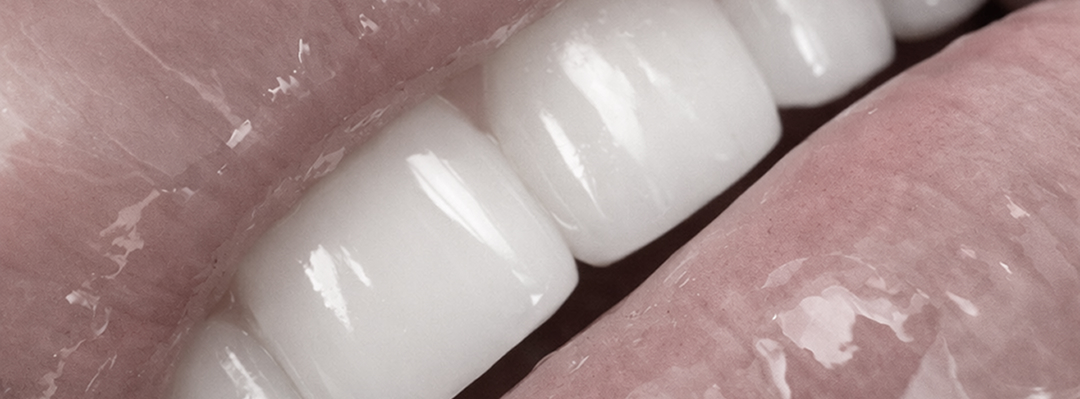
✔ Natural color, subtle translucency, and harmony with the face.
Good aesthetics are not just about increasing brightness, but lie in the perfection of color, translucency, and overall harmony.
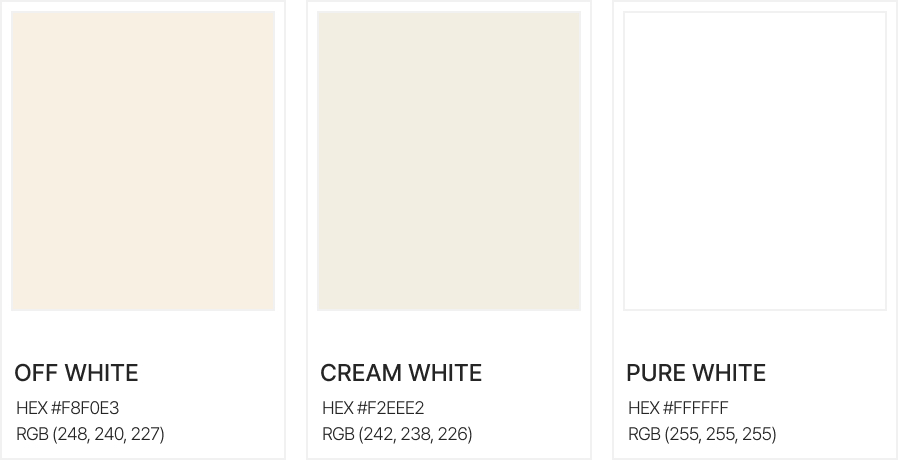
| Color Name | HEX | RGB |
|---|---|---|
| OFF WHITE | #F8F0E3 | (248, 240, 227) |
| CREAM WHITE | #F2EEE2 | (242, 238, 226) |
| PURE WHITE | #FFFFFF | (255, 255, 255) |
The color "white" is rarely just a single shade.
Depending on the subtle differences in value and chroma, the visual depth and mood it creates change entirely.
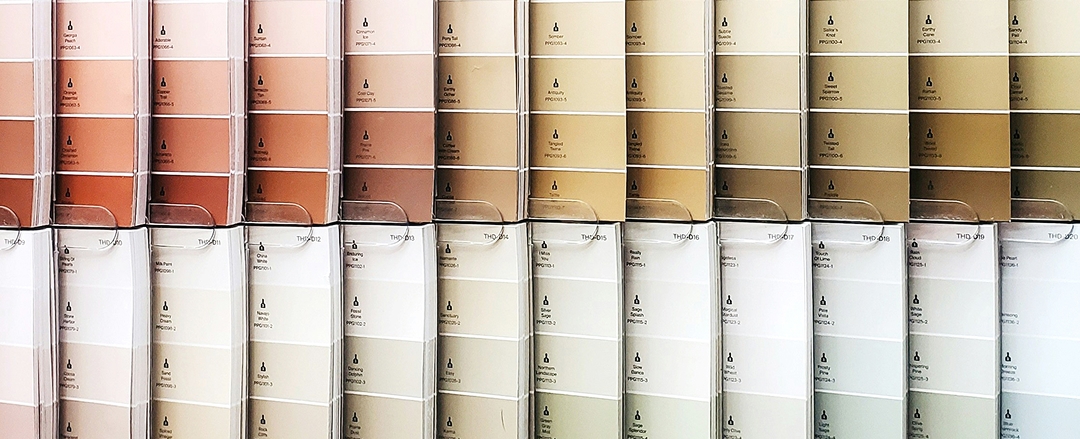
Even a single color comes in a wide variety of expressions.
The well-known Pantone Color system distinguishes colors by giving them unique names like “Cloud Dancer” or “Off-White.” Moreover, utilizing HEX codes like #FDDE01 enables a more precise, numerical visualization of colors.
To communicate colors more accurately, each industry utilizes its own unique standards and coding systems.
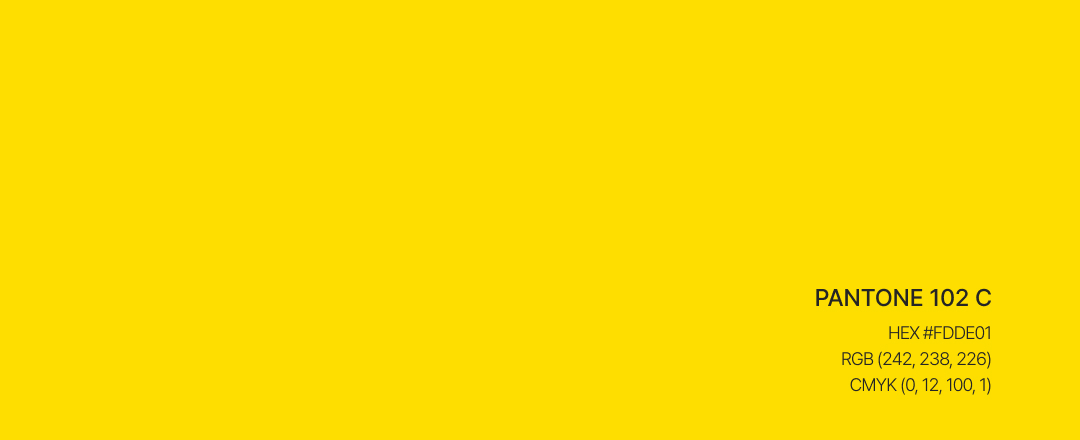
What are some of the most representative color systems?
From PANTONE, the most popular global standard, to CMYK, an essential for print media, and RGB and HEX, the benchmarks for digital displays. All these systems have evolved within their respective fields to achieve absolute color precision.

How is the color white expressed in aesthetic dentistry?
In aesthetic dentistry, PANTONE or RGB codes are not simply relied upon. To capture the subtle spectrum of natural teeth, a specialized tool called a Shade Guide is utilized. This is because natural teeth exhibit a diverse range of brightness, chroma, and hue— far too complex to be described as just “white.”
Here are the “three core elements that determine tooth color” to help build a foundational understanding.

Value : Refers to the brightness of the teeth.
Generally, a higher value makes teeth look whiter and cleaner, while a lower value creates a calm, more natural appearance.

Chroma : Refers to the intensity or concentration of the tooth's color.
Higher chroma makes the color appear richer and more vivid, while lower chroma makes it look lighter and softer.

Hue : Refers to the underlying color category of the teeth.
For instance, even with the same level of brightness, some teeth may lean toward a warm yellowish tone, while others may carry a cool grayish tint.
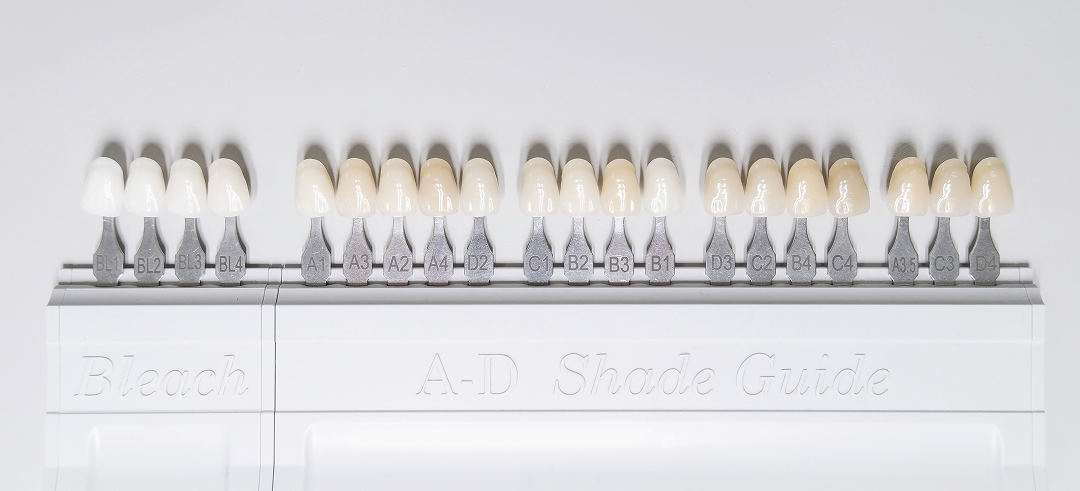
A-D Shade Guide
Bleach
- BL1
- BL2
- BL3
- BL4
A-D Shade Guide Items
- A1
- A3
- A2
- A4
- D2
- C1
- B2
- B3
- B1
- D3
- C2
- B4
- C4
- A3.5
- C3
- D4
The Long-Standing Standard in Clinical Dentistry: VITA Classical Shade Guide
The VITA Classical Shaded Guide has been the most widely adopted baseline for systematically expressing the three elements of tooth color. By assigning unique classifications such as A1, A2, and B1, it enables objective and consistent communication between clinicians and dental technicians worldwide.
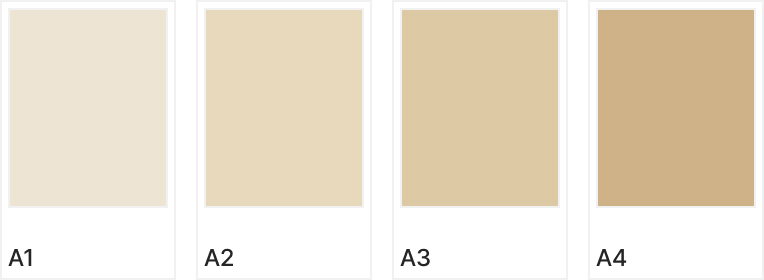
Decoding the Guide: What Do the Letters and Numbers Mean?
The VITA Classical Shade Guide is systematically organized based on Hue
A = Reddish Brown
B = Reddish Yellow
C = Grey
D = Reddish Grey
Meanwhile, the accompanying numbers indicate Chroma
For example, A2 represents a reddish-brown hue with a level 2 chroma within the VITA Classical Shade Guide system.
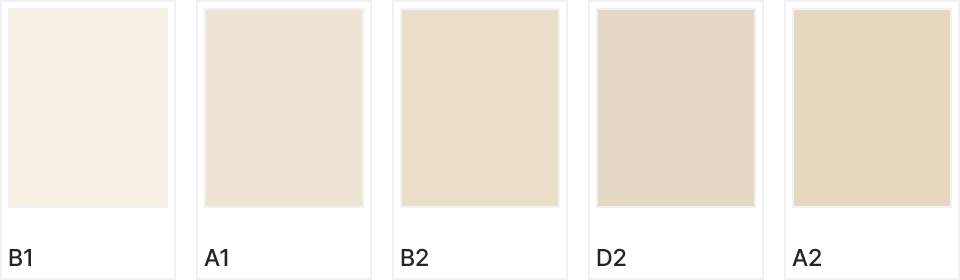
Limitations of the VITA Classical Shade Guide
While it is commonly assumed that A1 is the brightest shade based on the code, B1 is actually the brightest color in clinical practice.
Since the VITA Classical Shade Guide is organized around Hue rather than Value—the first element captured by human perception— limitations exist when intuitively selecting the optimal brightness for an individual.
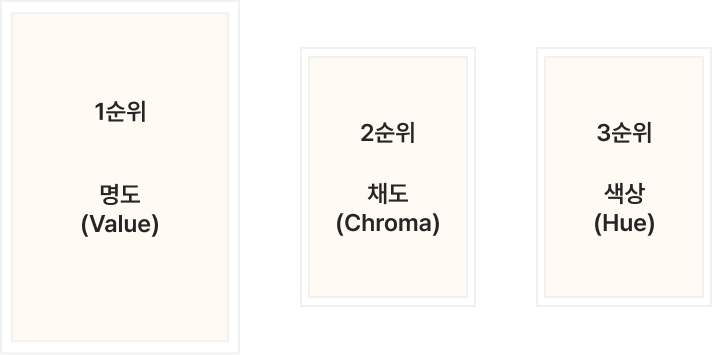
| 순위 | 속성 | 영문명 |
|---|---|---|
| 1순위 | 명도 | Value |
| 2순위 | 채도 | Chroma |
| 3순위 | 색상 | Hue |
Introducing the VITA 3D-Master Shade Guide
This advanced system was developed to perfectly address the classical limitations of the VITA Classical Shade Guide.
By prioritizing Value, which is the most visually critical element, it intuitively demonstrates which shade will look the brightest and clearest on a face.
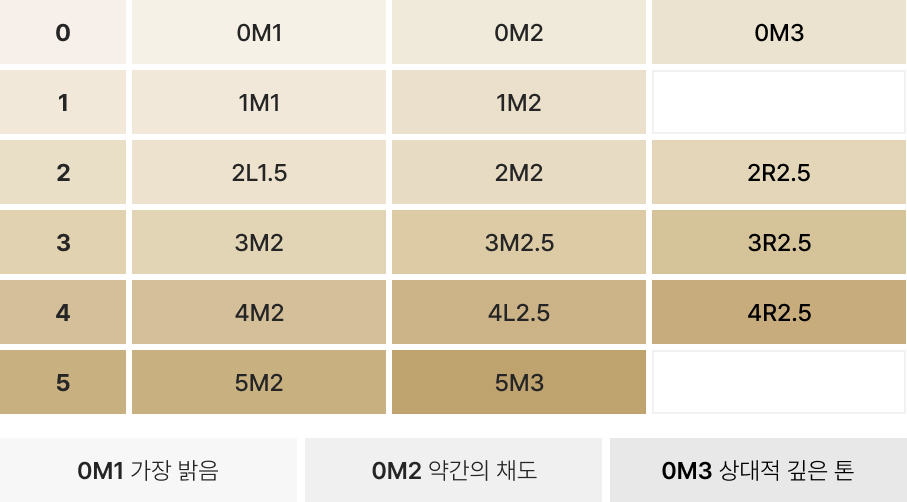
| Level | Column 1 | Column 2 | Column 3 |
|---|---|---|---|
| 0 | 0M1 | 0M2 | 0M3 |
| 1 | 1M1 | 1M2 | |
| 2 | 2L1.5 | 2M2 | 2R2.5 |
| 3 | 3M2 | 3M2.5 | 3R2.5 |
| 4 | 4M2 | 4L2.5 | 4R2.5 |
| 5 | 5M2 | 5M3 |
| Code | Description |
|---|---|
| 0M1 | 가장 밝음 |
| 0M2 | 약간의 채도 |
| 0M3 | 상대적 깊은 톤 |
The best example of this is the 0M1 shade, a true favorite in aesthetic dentistry.
0 (Value) | Peak Brightness : A beautifully bright Bleach shade that stays crystal clear without artificial
dullness.M (Hue) | Standard Color : A balanced Medium Hue that is perfectly balanced to give the most natural
match for Koreans.1 (Chroma) | Purest Concentration : The Lowest Chroma, leaving behind any cloudy tones to bring out
absolute clarity
This is the core premium shade that delivers a bright smile without any dullness.
How to Find the Most Harmonious Shade in Aesthetic Dentistry
When determining the most ideal tooth brightness in aesthetic dentistry, the color of a patient’s sclera (the white of the eyes) serves as a crucial baseline. In the human facial structure, the sclera sets the standard for visual brightness. If teeth are significantly brighter than the sclera, it can create an artificial optical illusion where only the teeth stand out awkwardly.
Conversely, when the brightness of the teeth naturally balances with the sclera, it brings a harmonious and stable aesthetic to the entire face. Therefore utilizing shade guides like the VITA Classical Shade Guide and VITA 3D Master Shade Guide to compare with the natural color of the sclera ensures the discovery of the most flattering brightness and hue for the teeth.
Here is Another Crucial Fact!
In aesthetic dentistry, there is a factor just as important as the shade guide.
That is “Translucency.”
The enamel, which is the outermost layer of a natural tooth, allows light to pass through naturally.
In aesthetic dentistry, this characteristic is defined as Translucency.
Translucency plays the most vital role in replicating the ideal appearance of natural teeth, especially within the enamel layer.
Just like a luminous gemstone, beautifully recreating this Translucency is essential in aesthetic dentistry.
When the ideal shade and Translucency come together in perfect harmony, natural and beautiful teeth are realized.

ZERONATE Veneers Consider Every Element to Pursue Ideal Natural Beauty
From Value, Chroma, and Hue to Translucency, ZERONATE veneers carefully consider every component that constitutes a natural tooth. To replicate the most ideal teeth, aesthetic dentists and master ceramists collaborate, co-designing the exact color and shape of each tooth based on state-of-the-art equipment and precise communication.
How ZERONATE Veneers Achieve the Ideal Tooth Shade
1 Shade Taking
Every individual dental characteristic— including Value, Chroma, Hue, and Translucency—is analyzed with utmost precision.
2 ZERONATE LAB Design
Based on the analyzed data, aesthetic dentists and master ceramists collaborate to design the shade, shape, and translucency of the teeth together.
3 ZERONATE Completion
Value, Chroma, Hue, and Translucency. Taking all these elements into consideration, master ceramists complete ZERONATE veneers, beautifully realizing the ideal beauty of natural teeth.
What Kind of Shade Do Your Teeth Have?
TU Dental designs the most ideal natural teeth, carefully considering Value, Chroma, Hue, and Translucency. To discover a uniquely personalized shade of white, experience a professional Shade Guide diagnostic consultation.